AIXX Pedia › Infrastructure Entries › GPU Server OEM / Integrator Landscape
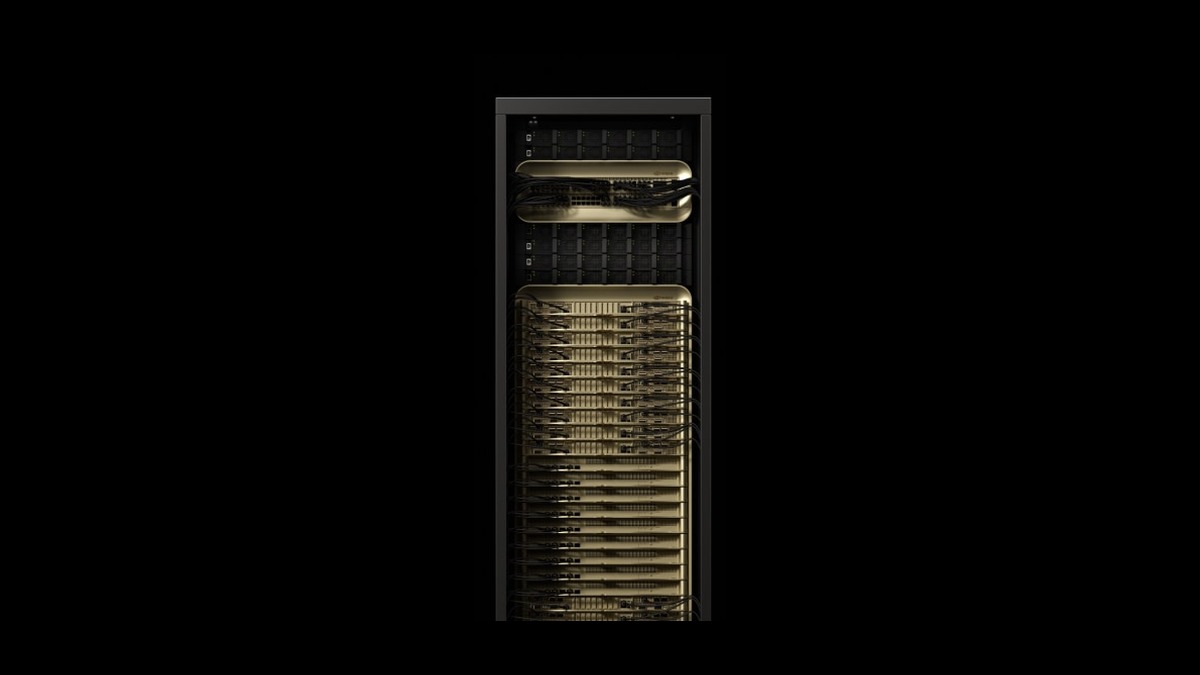
GPU Server OEM / Integrator Landscape
Overview OVERVIEW
GPU Server OEM / Integrator Landscape Answering a procurement question: Same GPUs — who do you buy the server from? NVIDIA defines the technology stack and supply chain roles (HGX baseboard / NVL rack reference designs[3]), while server OEMs / ODMs deliver differentiation on top of the reference designs in form factor, cooling, service, and regional coverage — the mainstream landscape in 2026 is three parallel tracks: US OEMs (Dell/Supermicro/HPE) + Chinese players (Lenovo/Inspur/H3C, etc.) + direct ODM supply (per public reporting and hands-on coverage[1][2])。
The near-term storyline is hyperscale customer customization : xAI's Colossus was built by Supermicro with rapid short-term expansion, and Dell entered its dual-supplier lineup — the model of top AI companies directly naming their server vendors is reshaping the traditional vendor-cloud provider relationship. The practical takeaway for selection: GPUs are standardized; server differentiation lies in form factor (air-cooled/liquid-cooled), delivery radius, and service. 。
This is a category landscape entry: it covers vendor camps, form factor spectrum, and selection guidance, not a single model. Servers have no unified market price — actual price subject to the seller's quote.
Form Factor Spectrum FORM FACTORS
AI server form factors are defined by NVIDIA platforms and delivered by server vendors (per this Pedia's compilation[3]):
Vendor Landscape VENDORS
The three-track landscape for AI servers in 2026 (per public reporting and hands-on coverage[1][2]; this Pedia is not a procurement recommendation):
| Camp | Representative Vendors | Positioning and Recent Moves (public sources) |
|---|---|---|
| US OEMs | Dell / Supermicro / HPE | Dell: XE9680 series in volume, entered xAI Colossus's dual-supplier lineup[2]; Supermicro: built xAI Colossus with rapid expansion[1], open MGX architecture definition; HPE: HPC and enterprise stronghold (Cray heritage) |
| Chinese Players | Lenovo / Inspur / H3C, etc. | Lenovo: SR680a V4 and other GB200-class server solutions (per official product guides[4]); Inspur: one of the earliest NVIDIA platform adopters (per NVIDIA press releases[3]); H3C and others hold enterprise strongholds (per public materials) |
| Direct ODM Supply | Taiwanese ODMs (Quanta/Wistron/Foxconn family, etc.) | The main channel for hyperscale customers (cloud providers / xAI-type) — NVIDIA defines supply chain roles with OEM/ODM running in parallel (per public reporting[2]) |
| Regional Europe | Eviden (Atos lineage), etc. | European HPC and sovereign cloud strongholds (JUPITER server, related to the GH200 entry[6]) |
Vendor information is based on official public sources[1][2][3][4]; this Pedia's discipline is not to cite market share figures that haven't been verified against original sources.
Selection Guide SELECTION
A practical selection guide for servers (with identical GPUs, all differences come from the server vendor):
| Decision Dimension | What to Look At | Practical Tips |
|---|---|---|
| Form Factor Fit | Facility air-cooling/liquid-cooling conditions × form factor spectrum | Air-cooled facilities get 8-GPU air-cooled servers; only discuss NVL16/NVL72 with liquid-cooling capability |
| Delivery Radius | The server vendor's service network in your region | Service response for server failures is the availability baseline for AI production lines |
| Firmware and Warranty | Factory-integrated vs. assembled firmware warranty differences | Server vendors' BIOS/BMC warranties cover GPU card interoperability issues |
| Supply Chain Role | OEM brand vs. direct ODM supply | Branded servers offer better service, direct ODM better pricing — choose based on ops capability |
| Used-Market Resale Value | Resale value curves of branded vs. white-label servers | Branded server pull-out parts have better liquidity (per this Pedia's inspection experience) |
Gallery GALLERY
Procurement & Acceptance PROCUREMENT
Acceptance checkpoints for server procurement (three items):
Glossary Cards GLOSSARY
OEM / ODM Dual Track
OEMs (original equipment manufacturers) deliver under their own brands (Dell/Lenovo, etc.); ODMs (original design manufacturers) design and manufacture, either branded by customers or supplied directly — two supply chains run in parallel in the AI server market, and hyperscale customers often use both (per public reporting[2])。
HGX Reference Design
NVIDIA's reference design specification for 8-GPU baseboard servers — every vendor's 'HGX H100/B300 server' shares the baseboard electrical and interconnect design; differences lie in cooling, chassis, power delivery, and service.
MGX
Supermicro's modular server architecture: modular compute/storage/IO combinations — a representative case of self-developed architectures among AI server vendors (per public reporting[1])。
Dual-Supplier Strategy
A procurement strategy where hyperscale customers bring in two server vendors for the same project (e.g., xAI Colossus's Supermicro+Dell arrangement[2]) — spreading capacity risk and providing pricing leverage; a defining feature of large deals in 2025-2026.
Limitations & Controversies LIMITS
- Market-share citation discipline : Market share data from IDC/TrendForce and similar reports is often distorted in secondhand retelling — this page does not cite market share figures unverified against originals; landscape descriptions rely on hands-on coverage and official press releases (this Pedia's discipline).
- Hidden differences among 'same GPU, different servers' : Identical baseboard electricals don't mean identical cooling and power designs — the same GPU model can perform differently at full load across server vendors; check third-party hands-on tests before buying.
- Limited spillover from hyperscale customization : xAI Colossus-style custom builds aren't directly purchasable — regular buyers face vendors' standard product lines; treat the customization narrative as reference only (per this Pedia's compilation).
- Geopolitics and supply cadence : Server delivery is affected by both GPU supply and geopolitical policy — volatile lead times and compliance status are the norm in 2025-2026 (per public reporting); this Pedia is not legal advice.
Market Notes MARKET NOTE
Project-based procurement dominates AI server purchasing — AIXX Pedia honesty principle: no market band; prices are subject to the seller's quote (GPU card-level market pricing follows each Model Entry).
Spot search: AIXX Exchange Hall › (Zero-commission Matching, hence neutral data).
Price milestone timeline MILESTONES
FAQ FAQ
Baseboard electricals follow NVIDIA reference designs, but cooling and power design differences affect full-load performance — the same GPU model may show different burn-in test temperatures and throttle thresholds in different vendors' servers; check third-party hands-on tests before buying.
Choose based on ops capability: branded servers (Dell/Lenovo, etc.) offer service networks and firmware warranties for worry-free operation, suited to teams without strong ops staff; direct ODM is cheaper but self-service — using both tracks is the industry norm for large customers.
GPU card residuals dominate (tracking card price curves), while vendor brand and form factor affect liquidity — branded server pull-out parts have better liquidity; liquid-cooled server residuals depend on CDU and loop condition (per this Pedia's inspection experience).
Identify each card's model and VRAM with nvidia-smi, cross-check the server BMC report against the contract list, verify serial numbers independently — server acceptance can't stop at POST; sample-test per the GPU Model Entry's six-point burn-in test.
Related Entries SEE ALSO
Selection Guide and Further Reading EXPLORE
References REFERENCES
- xAI Colossus and Supermicro/Dell delivery hands-on coverage (2024-2025) https://www.servethehome.com/
- NVIDIA Newsroom — partner and supply chain announcements (OEM/ODM role coverage) https://nvidianews.nvidia.com/
- NVIDIA website — HGX platform page (reference design coverage) https://www.nvidia.com/en-us/data-center/hgx/
- SR680a V4 Product Guide (official GB200-class server documentation) https://pubs.lenovo.com/sr680a-v4
- Available Listings — AIXX Exchange (Zero-commission Matching; no AI server market snapshot yet — actual price subject to the seller's quote) https://www.aixx.vip/hall.html