AIXX Pedia › Infrastructure Entries › Liquid-cooled CDU
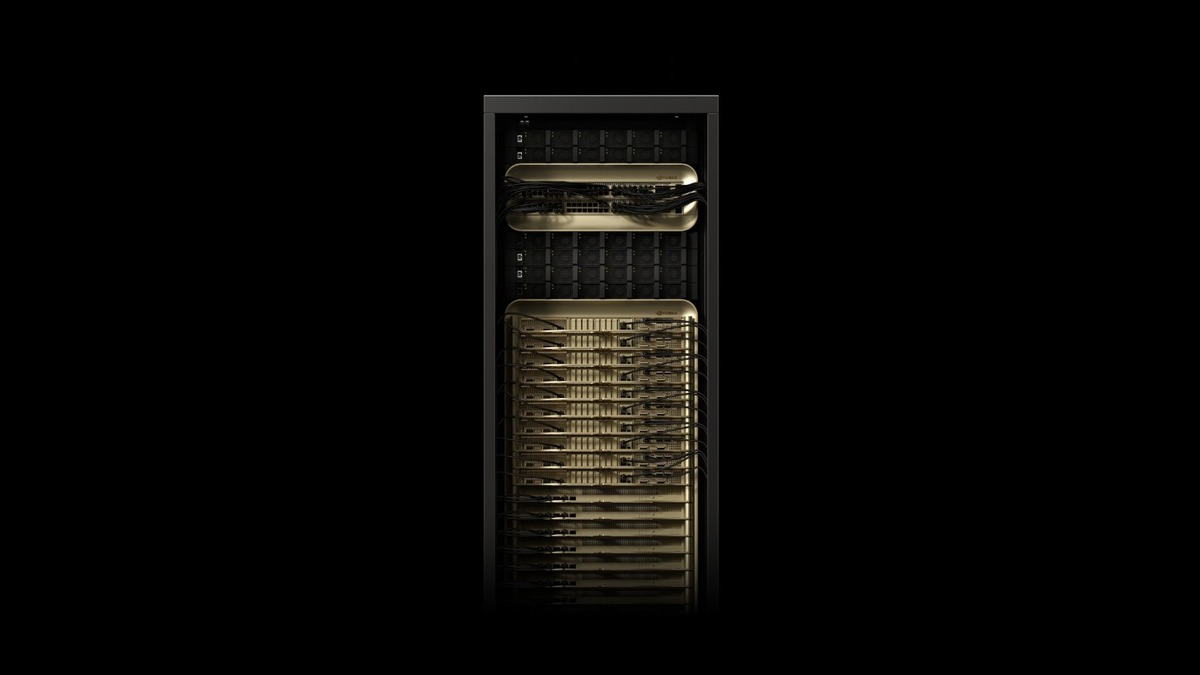
Liquid-cooled CDU
Overview OVERVIEW
Liquid-cooled CDU (Cooling Distribution Unit, CDU) is the core interface device It connects on one side to the facility's primary cooling water loop and on the other to the cabinet's secondary coolant loop (cold plates/manifolds/quick disconnects), carrying IT equipment heat back to the cooling source—heat exchange, flow distribution, water quality and temperature-differential control, and N+1 redundancy all handled in one unit (industry technical framing[4]).
Since 2025, it has become a keyword in AI data center construction GB200/GB300 NVL72-class Liquid-cooled cabinets are shipping at scale, and Liquid-cooled penetration in AI data centers is climbing fast (industry report framing: estimated above 30% in 2025[3]; GB300 cabinets come with Liquid cooling at a 100% attach rate, per public reporting[5])—without a CDU, NVL72-class cabinets simply can't be deployed.
This entry is a category selection entry : it differs from concept pages (CDU principles, see related entries) — this one covers device form factors, selection parameters, vendor landscape, and procurement acceptance. CDUs have no unified market price; actual price subject to the seller's quote.
Use Cases FIT
AIXX Index (0–100): weighted estimate based on form factor and scenario fit. 90+ flagship · 75+ Excellent · 60+ usable · below 60 not applicable.
History HISTORY
2010s HPC led the way: Liquid cooling was first proven in high-performance computing centers, and the CDU, as core Cold-plate Liquid Cooling infrastructure, evolved from engineering customization into a productized category (industry framing[4]).
2022–2024 AI pushed power density past the Air-cooled red line: per-cabinet power density jumped from the 20kW class to the 100kW class, making Cold-plate Liquid Cooling the standard for AI cabinets—CDU demand exploded accordingly, with domestic vendors (Envicool, Sugon DataEnergy, Golan, Tongfei, etc.) and international vendors (Boyd, CoolIT, Delta, etc.) advancing on parallel tracks (public reporting framing[5]).
2024–2025 NVL72 volume set the tone: the global rollout of GB200 NVL72 drove rapid gains in Liquid-cooled penetration (industry report framing: estimated above 30% in 2025[3]); in October 2024, Envicool was named to NVIDIA's list of core infrastructure suppliers for the Blackwell platform (public reporting framing[5]), formally bringing the domestic Liquid-cooled supply chain into the global mainstream.
2026 Category maturity: 100% Liquid-cooled configuration for GB300 cabinets (public reporting framing[5]); the CDU has shifted from "optional accessory" to "mandatory infrastructure"—with complete product lines across cabinet-level/row-level/in-rack tiers, and procurement and acceptance standards taking shape.
Selection Parameters SELECTION GUIDE
| Parameter | What to Look At | Basis |
|---|---|---|
| Heat exchange capacity (kW) | Size with headroom: number of racks × per-rack power | NVL72-class per-rack power density exceeds 100kW-class; CDU capacity planned per row (estimated; subject to rack configuration) |
| Temperature control precision | Stability of secondary-side supply temperature | Leading vendors reach ±0.5℃ class (public product framing[5])—temperature fluctuations directly impact GPU clock frequencies |
| Flow and pressure differential | Secondary-side flow must cover rack count; pressure must reach the farthest cold plate | Calculated from the pressure-drop curve of the rack's liquid cooling design |
| Redundancy | N+1 for pumps/heat exchangers/power | The fuse for Full Load failures — non-redundant designs are not recommended for production clusters |
| Coolant quality and working fluid | Primary/secondary water quality management, fluid type (deionized water/glycol solution, etc.) | Corrosion and scaling are chronic diseases of liquid cooling systems; water quality management is essential ops work |
| Form Factor | Rack-level / In-Row / rack-mounted (In-Rack) | Choose tier by cluster scale and facility conditions; see the three-tier comparison below |
| Monitoring interfaces | RS485/SNMP/BACnet integration into facility monitoring | Liquid cooling status must feed into the facility alerting system |
Selection criteria compiled by this library from public product documentation and industry reports (as of October 2026)[3][5]; specific parameters are subject to vendor product documentation. Items not listed in this table = unverified, not fabricated.
Three-tier form factor comparison THREE FORMS
| Form Factor | Scale supported | Use Cases | One-line buying advice |
|---|---|---|---|
| Rack-level (In-Rack) | Single rack to a few racks | Rack-mounted solution, small clusters expanded in phases | Flexible start, higher per-rack cost |
| Row-level (In-Row) | A row of racks | Mainstream form for AI clusters | Balance point of scale and redundancy |
| High-capacity rack-level / high-capacity row-level | Multiple rows / full NVL72 row | Hyperscale AI facilities | Capacity first, redundancy maxed out |
Tiering compiled from public product lines; CDU configuration for NVL72-class racks subject to the system OEM's liquid cooling solution.
Vendor Landscape VENDORS
The Liquid-cooled supply chain comprises four segments: cold plates, CDUs, manifolds, and quick disconnects (industry framing[5]). The vendor landscape for the CDU segment:
| Camp | Representative Vendors | Representative specs (public product data) | Status as of 2026 |
|---|---|---|---|
| Domestic leaders | Envicool | Temperature control precision at ±0.5℃ class; full chain from cooling source to CDU to piping to quick disconnects; named in October 2024 to NVIDIA's list of core infrastructure suppliers for the Blackwell platform (public reporting framing[5]) | Domestic representative in the global main chain |
| Domestic tier | Sugon DataEnergy / Golan / Tongfei / Shinylon | A common supplier for Liquid-cooled projects at AI computing centers and major internet companies (public reporting framing[5]) | Project-based circulation |
| International camp | CoolIT / Vertiv / Delta / Supermicro | CoolIT CHx2000 reaches 2MW-class; Vertiv CoolChip series covers 70–2300kW; Delta's GB300-dedicated 4U CDU up to 1.5MW; Supermicro's 250kW/40℃ warm water solution (per each vendor's public product data) | Overseas main chain |
| System OEMs' bundled solutions | ODM/OEM supplied with racks | NVL72 full-rack solutions come with their own liquid distribution design (blind-mate manifold + floating quick disconnects); CDU selected per the solution | Mainly delivered with racks |
Vendor information comes from public reporting and industry reports[3][5]; this library does not constitute a purchasing recommendation. Refer to official vendor documentation and actual testing for specifics.
Gallery GALLERY
CDU unit photos will be added per acceptance batches; AI-generated images are never passed off as real photos.
Deployment & Complementary Components DEPLOYMENT
CDU deployment is a facility-level project : the primary side must integrate with the facility's chilled water system (align supply temperature/flow/quality), the secondary side with the rack's liquid cooling design (manifold/quick disconnect/cold plate pressure-drop curves); deployment location (between rack rows / at the facility side) affects pipe length and heat exchange efficiency. The three complementary components — manifold (fluid distribution inside the rack), quick disconnect (tool-free, drip-free), and cold plate (chip-level heat exchange) — are selected and accepted in the same batch as the CDU.
Ops tip: the chronic disease of liquid cooling systems is water quality (corrosion/scaling/microbial growth); CDU-side filtration and water quality monitoring are routine work. Leaks are the biggest failure source — negative pressure design, leak detection ropes, and N+1 redundancy are the baseline for production clusters (library-compiled basis).
Procurement & Acceptance PROCUREMENT
Three key acceptance points for CDU procurement:
For the full six-point acceptance criteria, see this entry 'How to Inspect' section.
How to Accept ACCEPTANCE TEST
Six-point acceptance framework (liquid-cooled equipment acceptance): Unboxing and Inventory → Pressure and Leak Testing → Temperature Control Accuracy → Flow and Pressure Differential → Alarm Interlock → Long-duration Joint Commissioning.
Shipping & Delivery LOGISTICS
Glossary Cards GLOSSARY
CDU (Coolant Distribution Unit)
The interface device of a Liquid-cooled system: completes heat exchange, flow distribution, temperature control, and redundancy management between the primary loop (facility cooling water) and the secondary loop (rack coolant) — the 'pacemaker' of a liquid-cooled data center.
Primary Loop / Secondary Loop
Primary loop = the facility cooling water source side (chilled water/cooling tower water); secondary loop = the IT equipment coolant side (deionized water/ethylene glycol solution, directly connected to cold plates). The two loops exchange heat through the CDU in isolation — secondary-side water purity protects server cold plates, while the primary side interfaces with the building water system.
Manifold
The coolant distribution component inside the cabinet: it evenly distributes secondary-loop coolant to each server's cold plate loop—the "main water pipe" of cabinet-level Liquid cooling, and one of the four key components of Liquid cooling alongside quick disconnects and cold plates (industry framing[5]).
Quick Disconnect (QD)
A tool-free plug-and-play liquid connector: servers can be inserted into or removed from the rack without interrupting flow or dripping — the operational friendliness of the liquid-cooling system depends entirely on it; mating-cycle life and sealing reliability are key procurement points.
Air-Liquid Heat Exchange (RDHx)
Rear-door/side-door heat exchangers: hot exhaust from Air-cooled racks passes through water-cooled coils for heat exchange — a transitional solution for 'partial liquid cooling' in legacy air-cooled data halls, running on the same loop as the CDU.
Limitations & Controversies LIMITS
- Leakage is the original sin of liquid cooling : quick disconnect drips and piping weld leaks in a Full Load data hall constitute major incidents — negative-pressure designs, leak detection, and redundancy are the baseline, but the industry anxiety that 'liquid cooling always leaks' coexists with the reality of 'zero leakage with mature solutions'. Judge vendors by their engineering track record, not their slogans (as compiled in this Pedia).
- Water quality management is a long-term task : corrosion, scaling, and microbial growth run through the entire lifecycle of a liquid-cooling system — systems lacking water quality management see significant heat-exchange efficiency degradation after two to three years (industry common knowledge), so budget for operations and maintenance in advance.
- Standards are still evolving Interface standards for CDUs and quick disconnects, as well as monitoring protocols, vary across vendors—compatibility must be verified in advance for mixed-brand deployments (CDU and cabinet from different vendors); a single-vendor full-chain solution is the hassle-free option (public reporting framing[5]).
- Residual value and the second-hand market are immature : a CDU is an engineering device, and metrics for Second-hand Market Circulation (heat-exchange efficiency degradation, pump module lifespan) have yet to take shape — factor the acceptance cost of a used CDU into the total price (based on this Pedia's inspection experience).
- This entry takes a category selection perspective For Liquid-cooling principles and system architecture, see the concept pages (related entries); vendor information on this page comes from public reporting[5] and does not constitute a purchasing recommendation.
Market Notes MARKET NOTE
CDUs are mainly procured on a project basis (bundled with rack solutions), and form factor/capacity/redundancy configuration makes prices highly dispersed — there is no verifiable unified market snapshot yet, AIXX Pedia honesty principle: no market band; prices are subject to the seller's quote 。
Spot search: AIXX Exchange Hall › (Zero-commission Matching; no involvement in transactions; no knowledge of or speculation on transaction prices — hence data neutrality). This section will switch to a standard market band once enough snapshots accumulate.
Price milestone timeline MILESTONES
FAQ FAQ
No: liquid cooling is the entire system (cold plates/manifolds/quick disconnects/CDU/piping/cooling source), and the CDU is its core interface device — responsible for heat exchange and distribution between the primary/secondary loops. For liquid-cooling principles from a system perspective, see the concept pages in this Pedia; this entry focuses on CDU equipment selection.
Yes: GB200/GB300 NVL72 are fully liquid-cooled racks, and heat from the secondary loop must be transferred via the CDU to the primary cooling water — the CDU is a mandatory item for deploying these racks (GB300 racks are 100% liquid-cooled, public reporting standard).
Leave headroom based on the actual power curve of the racks it serves: NVL72-class single-rack power density exceeds the hundred-kW level, so size CDU capacity for the entire row and start with N+1 redundancy. For temperature control accuracy, look for the top-tier ±0.5℃ class (public product standard), and calculate flow and pressure differential based on the water resistance of the farthest rack.
Two mature supply chains: domestic (Envicool as the representative of the global mainstream chain, with Sugon DataEnergy/Highlan/Tongfei common in projects) and international (Boyd/CoolIT/Delta serving North American cloud providers) — select based on engineering track record, local service coverage, and compatibility verification with the rack solution; this Pedia does not constitute a procurement recommendation.
With caution: heat-exchange efficiency degradation, pump module lifespan, and water quality history are all invisible variables, and inspection costs for used CDUs are high — for production clusters, buy new with redundancy; if buying used is unavoidable, price it only after on-site testing of the four items: pressure and leak testing, temperature control accuracy, flow and pressure differential, and alarm interlock.
Related Entries SEE ALSO
Selection Guide and Further Reading COMPARE
References REFERENCES
- TrendForce — public reports on liquid cooling penetration in AI data centers (August 2025 industry standard) https://www.trendforce.com/
- Envicool official website — full-chain liquid cooling product line (Coolinside rack-mounted CDU, etc.) https://www.envicool.com/
- NVIDIA official website — GB300 NVL72 product page (rack liquid-cooling solution standard) https://www.nvidia.com/en-us/data-center/gb300-nvl72/
- East Money Securities Research Institute — public liquid cooling industry reports (supply chain segments and vendor landscape, December 2025) https://pdf.dfcfw.com/
- In-Sale Search — AIXX Exchange (Zero-commission Matching; no CDU market snapshot yet, actual price subject to the seller's quote) https://www.aixx.vip/hall.html