AIXX Pedia › Model Entry › GH200
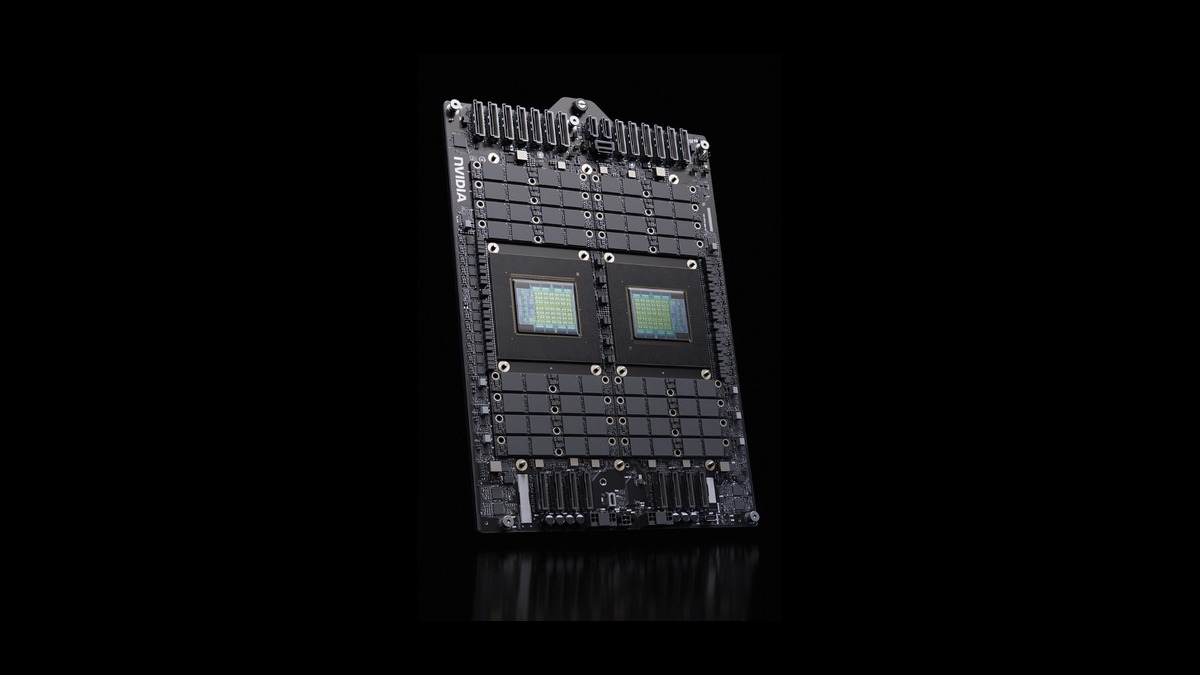
GH200
Overview OVERVIEW
GH200 (Grace Hopper Superchip) is NVIDIA's first-generation CPU+GPU Superchip : 1 Grace CPU (72-core Arm Neoverse V2) and 1 Hopper GPU (H100-class Tensor Core) packaged as one via NVLink-C2C (900GB/s coherent bandwidth, equivalent to 7× PCIe Gen5) — the CPU side's 480GB LPDDR5X and the GPU side's 96GB HBM3 (or 144GB HBM3e) form up to 624GB of fast memory in total (official datasheet figures[2]).
It is the A proven contender for mixed scientific computing and AI workloads : Full production in May 2023 (COMPUTEX figures[3]); in 2024, nine new supercomputers worldwide adopted the GH200 (ISC figures totaling 200 EFLOPS of power-efficient AI compute[5]); JEDI (the JUPITER development machine), top of the Green500 energy-efficiency list, is powered by GH200 (TOP500 figures[6]) — "energy efficiency" and "large coherent memory" are its two trump cards versus pure GPU cards.
On the 2026 spot market, GH200 circulates in multiple forms: DGX GH200 systems, NVL2 variants, and single-superchip modules (mostly research and cloud project inventory). Procurement is a system-level engineering effort (Arm software stack + C2C acceptance); this entry carries no market pricing — actual price subject to the seller's quote.
Use Cases FIT
AIXX Index (0–100): weighted for CPU-GPU co-processing scenarios (superchip-specific methodology).
History HISTORY
May 30, 2022 , ISC 2022: NVIDIA announced the Grace Hopper platform and its first OEM partners (Atos/Eviden predecessor, Dell, GIGABYTE, HPE, Inspur, and others, per NVIDIA press release[4]) — the Grace brand moved from teaser into product cadence.
May 28, 2023 , COMPUTEX double bill: GH200 announced as entering full production (Cisco/Dell/HPE and others joined, per press release[3]); announced at the same event DGX GH200 — 256 GH200s fully interconnected via the NVLink Switch System, an AI supercomputer with 1 EFLOPS and 144TB of shared memory (press release[7]).
August 8, 2023 , SIGGRAPH upgrade: the new-generation GH200 featuring the world's first HBM3e processor (144GB HBM3e version, dual-chip configuration with 144 Arm cores per official figures, press release[8]) — GH200's memory tier takes another step up.
2023–2025 , the harvest season for scientific supercomputing: Europe's flagship JUPITER is powered by GH200 (announced at SC23, press release[5]); at ISC 2024 NVIDIA announced adoption by nine new supercomputers worldwide (200 EFLOPS of power-efficient AI compute combined); the Green500 No. 1 JEDI and the TOP500 No. 4 JUPITER Booster (793.4 PFlop/s in initial testing, TOP500 June 2025 figures[6]) validated it in succession.
2026 , spot-market positioning: GH200 circulates mainly as research inventory and cloud project surplus, with Grace Blackwell (GB200 series, see entry) as its successor. Cross-border circulation policy for superchip-class equipment is still evolving; this database's statements reflect publicly reported figures and do not constitute legal advice.
Technical Specifications SPECIFICATIONS
| Item | Specifications (GH200 · official datasheet figures; dual-memory variants noted where listed separately) |
|---|---|
| Superchip Composition | 1× Grace CPU + 1× Hopper GPU · single package via NVLink-C2C (air-cooled/liquid-cooled) |
| CPU | 72-core Arm Neoverse V2 · base 3.1GHz / SIMD 3.0GHz · L3 114MB |
| GPU Memory | 96GB HBM3 (4TB/s) or 144GB HBM3e (4.9TB/s; commonly marketed as 141GB usable, 144GB per datasheet) |
| CPU Memory | 480GB LPDDR5X ECC (also 120GB/240GB tiers) · 384–512GB/s |
| Total Fast Memory | Up to 624GB (CPU+GPU, datasheet figures[2]) |
| NVLink-C2C | 900GB/s coherent bandwidth (=7× PCIe Gen5; over 5× lower power than PCIe interconnect, press-release figures[3]) |
| FP64 / FP64 Tensor | 34 / 67 TFLOPS |
| FP32 | 67 TFLOPS |
| FP8 Tensor Core | 3,958 TFLOPS (sparse) / 1,979 TFLOPS (dense) |
| BF16/FP16 Tensor | 1,979 TFLOPS (sparse) / 990 TFLOPS (dense) |
| INT8 | 3,958 TOPS (sparse) / 1,979 TOPS (dense) |
| Power | Configurable 450–1000W (memory+CPU+GPU combined, not a fixed TDP) |
| PCIe | Up to 4× PCIe Gen5 x16 |
| Variants | GH200 NVL2 (dual superchips NVLink interconnected · 144 cores/288GB HBM3e/1.2TB fast memory) |
Specifications subject to NVIDIA's official datasheet (C4 official figures snapshot 2026-10[2]); at system level, DGX GH200 = 256× GH200 fully interconnected (1 EFLOPS + 144TB shared memory, press-release figures[7]).
Three Generations of Superchips Compared THREE GENERATIONS
| Item | GH200(Grace Hopper) | GB200(Grace Blackwell) | GH200 vs GB200 in One Sentence |
|---|---|---|---|
| Combination | Grace + Hopper GPU | Grace + 2× B200 | Hopper generation vs Blackwell generation |
| GPU Memory | 96GB HBM3 / 144GB HBM3e | 192GB HBM3e ×2 | Blackwell doubles memory capacity |
| Total Fast Memory | 624GB | GB200 details in its entry | Both take the C2C coherence route |
| Precision Focus | FP64/FP8 dual strengths (HPC+AI) | FP4/FP8 (AI extreme) | HPC → GH200; extreme AI → GB200 |
See the GB200 entry for details; GH200's FP64 edge (34/67 TFLOPS) is the unique territory where it differentiates from the Blackwell generation.
Family Members FAMILY
The superchip family tiers by combination generation; GH200 is the first-generation production mainstay:
Cooling & Deployment COOLING
GH200 offers both air-cooled and liquid-cooled form factors (official datasheet figures[2]), with configurable power of 450-1000W (memory+CPU+GPU combined) — "configurable power" is its deployment hallmark: the power tier of the same superchip varies with memory configuration and GPU tier, and rack power should be budgeted per actual configuration. DGX GH200-class systems, meanwhile, are machine-room-scale Liquid-cooled engineering projects (same as the NVL72 entry).
A special note on software deployment: Arm CPU-side toolchain inventory (per the Grace CPU entry) + the programming model for C2C coherent memory (viewed through CUDA Unified Memory) — GH200's performance dividend is realized by architecting to "keep data in the 624GB coherent pool"; code in the traditional "CPU prepares data, GPU computes" pattern runs unmodified but won't be fully utilized (this database's compilation).
Use-Case Fit WORKLOAD FIT
| Workload | GH200 Performance Profile | AIXX Index |
|---|---|---|
| HPC-AI Convergence Supercomputing | Green500 champion track record (JEDI) + FP64 34/67 TFLOPS — dual strengths in efficiency and double precision | 92 |
| Vector Retrieval / RAG | Official figures: RAG embedding generation 30× faster than the x86+H100 PCIe combination (product-page figures[1]) — a direct beneficiary of the 624GB coherent pool | 90 |
| Recommenders / GNN | Official figures: GNN training up to 8× faster (product-page figures[1]) — large embedding tables feast on coherent memory | 88 |
| General CUDA Production-Line Migration | Runs, but not fully utilized — the C2C architectural dividend requires redesigning data flows around coherent memory | 62 |
Workload figures come from NVIDIA's official product pages and public track records[1][6] (vendor figures; not a performance guarantee); actual gains should be verified by benchmarking in your own data center.
Gallery GALLERY
Software & Ecosystem ECOSYSTEM
| Item | Requirements / Status |
|---|---|
| CUDA Compatibility | Native CUDA on the Hopper GPU side — existing CUDA code runs, but C2C coherent memory must be reworked under the unified-memory model to be fully exploited |
| Operating system | Mainstream Linux Arm distros (per the Grace entry) |
| Cluster Software | DGX GH200 uses the Base Command family; academic HPC centers mostly use Slurm-family schedulers (per public cases such as JUPITER) |
| HPC Stack | FP64/FP32 HPC libraries (cuSolver family) + MPI — migration friendlier for traditional HPC users than pure AI clusters |
| Track Record References | TOP500/Green500 public rankings (publicly listed systems such as JEDI/JUPITER, figures[6]) |
GH200's ecological niche is the "scientific HPC × AI" intersection; versions evolve over time, so defer to official NVIDIA releases.
Procurement & Acceptance PROCUREMENT
Three acceptance checkpoints for GH200 procurement:
Acceptance Quick Reference QUICK CHECK
GH200 four-step quick check:
Shipping & Delivery LOGISTICS
Glossary Cards GLOSSARY
Superchip
A product form combining CPU+GPU in a single package: GH200 (Grace+Hopper) pioneered it, GB200 (Grace+2×B200) carries it forward — the on-package C2C interconnect turns 'cross-device copies' into 'coherent memory access.'
NVLink-C2C 900GB/s
GH200's CPU-GPU coherence bandwidth: officially equivalent to 7× PCIe Gen5, with 5× lower power versus a PCIe interconnect (per press release) — '7× the bandwidth, 1/5 the power' quantifies the value of the superchip.
624GB of fast memory
GH200's CPU LPDDR5X (480GB) + GPU HBM (96/144GB) add up to a 'fast memory pool' from a coherence perspective — the capacity headroom for vector search, large KV caches, and large embeddings (per datasheet).
DGX GH200
A system-level flagship with 256 GH200s fully connected via the NVLink Switch System: 1 EFLOPS and 144TB of shared memory (per press release) — the peak of the GH200 ecosystem, proving the scaling ceiling of the superchip route.
Green500
The global Green500 list: JEDI (JUPITER development machine), powered by GH200, topped the 2024-11 edition (per TOP500) — energy efficiency is a hard criterion for scientific HPC procurement, and the substance behind GH200's track record.
Limitations & Controversies LIMITS
- The C2C dividend requires architectural support : Traditional 'CPU prepares data, GPU computes' code runs on GH200 but leaves performance on the table — restructuring data flows around coherent memory is a precondition for realizing the performance (per this entry's compilation).
- Arm software stack inventory : Same as the Grace CPU entry — Arm availability of enterprise long-tail software must be confirmed case by case; friction points are in-house and legacy components.
- Configurable power is a double-edged sword : The 450-1000W configuration flexibility means "same model, different tiers" — procurement contracts must specify the power configuration tier, and data center planning should be rechecked against the delivered configuration (datasheet figures[2]).
- Residual-value pressure from the successor generation : The GB200 series is shipping in volume (Blackwell generation); GH200's FP64/efficiency niche remains, but the generational gap is widening on the main AI battleground — residual value should be assessed separately for scientific computing vs. AI demand (per this entry's compilation).
- Cross-border trade policy variables : Superchip-class devices are export-control-sensitive models (per public reporting) — this entry only flags the policy landscape and does not constitute legal advice.
Market Notes MARKET NOTE
GH200 circulates through research-installed-base channels and residual cloud project stock; form factor (module/NVL2/DGX system) and power configuration create wide price dispersion — AIXX Pedia honesty principle: no market band; prices are subject to the seller's quote 。
Spot search: AIXX Exchange Hall › (Zero-commission Matching, hence neutral data).
Price milestone timeline MILESTONES
FAQ FAQ
Look at the workload mix: for HPC-AI convergence and FP64 needs, choose GH200 (FP64 34/67 TFLOPS + Green500 efficiency record); for pure-AI peak compute and memory (FP4/288GB×2), choose GB200. Both follow the C2C coherence route with a shared software stack.
It comes down to architecture: put CPU-side hotspots like vector tables, KV cache, and embeddings into the coherent memory pool to directly exploit C2C bandwidth — the traditional 'CPU only schedules' pattern captures none of the benefit. The vendor's vector-search/RAG/GNN speedup figures are all based on this model.
CUDA runs natively on the GPU side (Hopper architecture); the CPU side is Arm — host software needs Arm builds, and cross CPU-GPU coherent memory programming should follow the CUDA Unified Memory model. Existing code runs, but full performance requires refactoring data flows.
Four steps: dual identification (lscpu + nvidia-smi) → measured C2C bandwidth (≥85% of the 900GB/s class counts as Pass, derived figure) → measured bandwidth of both HBM and LPDDR5X pools → real runs of target workloads (vector search/GNN/HPC benchmarks). A C2C anomaly is a package-level hard defect — resolve within the return window.
Depends on use: for scientific supercomputing and HPC-AI convergence workloads, GH200's efficiency and FP64 position is still in its service prime (JUPITER and other large systems keep running); for pure AI training pipelines, the gap to GB200 is clear. Assess used residual value as 'HPC value,' not 'AI flagship' value.
Related Entries SEE ALSO
Model comparison and selection COMPARE
References REFERENCES
- NVIDIA website — GH200 Grace Hopper Superchip product page (current performance figures, 2026-10) https://www.nvidia.com/en-us/data-center/grace-hopper-superc…
- NVIDIA official — GH200 Datasheet PDF (primary spec document, C4 official snapshot 2026-10) https://www.nvidia.com/en-us/data-center/grace-hopper-superc…
- NVIDIA Newsroom — GH200 Enter Full Production(2023-05-28 COMPUTEX) https://nvidianews.nvidia.com/news/nvidia-grace-hopper-super…
- NVIDIA Newsroom — DGX GH200 AI Supercomputer(256×GH200/1 EFLOPS) https://nvidianews.nvidia.com/news/nvidia-announces-dgx-gh20…
- NVIDIA Newsroom — GH200 with HBM3e(2023-08-08 SIGGRAPH) https://nvidianews.nvidia.com/news/gh200-grace-hopper-superc…
- TOP500 — 2024-11 Green500 No. 1 JEDI (GH200 efficiency record) https://www.top500.org/lists/top500/2024/11/highs/
- TOP500 — 2025-06 list: JUPITER Booster at 793.4 PFlop/s, No. 4 worldwide https://www.top500.org/lists/top500/2025/06/highs/
- Listings search — AIXX Exchange (Zero-commission Matching; no market snapshot for GH200 yet, actual price subject to the seller's quote) https://www.aixx.vip/hall.html