AIXX Pedia › Model Entry › GB300 NVL72
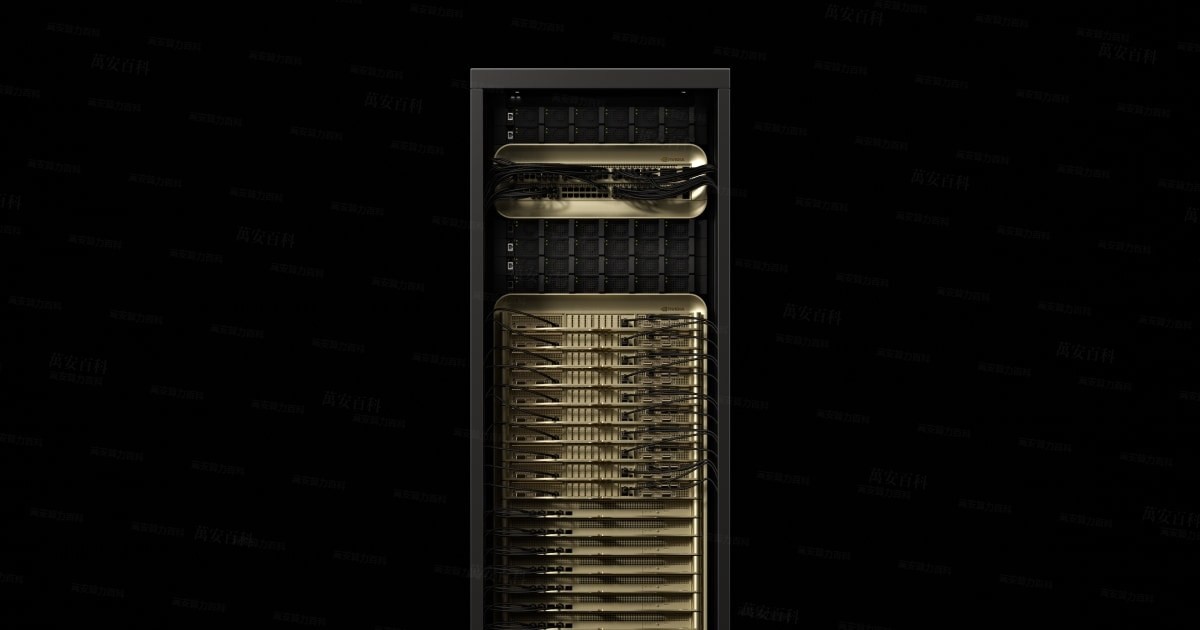
GB300 NVL72
Overview OVERVIEW
GB300 NVL72 (Full name NVIDIA GB300 NVL72, the flagship form of the Blackwell Ultra platform) is the rack-level supernode released by NVIDIA at March 18, 2025 during GTC: packing 72 Blackwell Ultra GPUs and 36 Grace CPUs into a fully liquid-cooled rack, with fifth-generation NVLink full interconnect totaling 130TB/s — to the software stack, the entire rack behaves as a single accelerator. It is the vehicle for the three letters "NVL72" in conversations: N = NVLink domain, 72 = the number of GPUs in one domain. Officially, it delivers a 1.5×[1][3]。
speedup over the previous-generation GB200 NVL72, with official FP4 Tensor Core specs FP4 Tensor Core, dual columns per the official page 1,440 | 10,802 PFLOPS (verified against the official page, October 2026; both figures follow the official footnotes), 20TB combined GPU memory 20TB HBM3e and ~132kW power delivery — rack-level delivery means you need a server room that can actually hold it before you buy [1][2][3].
In the 2026 spot market, the GB300 NVL72 is the fleet flagship of large-scale training and inference factories: : In August 2025 CoreWeave became the first to bring it to the public cloud, and in September 2026 it posted its first public scores in MLPerf Inference v6.1 — the same round where its successor, the Vera Rubin NVL72, debuted with up to 3.7× the performance of GB300 (public figures [6]). Flagships never wait, but the deployment barrier and the system price are of an entirely different magnitude (see 'Cooling & Deployment' and the price band).
Use Cases FIT
AIXX Index (0–100): Estimated by this Pedia with weighted public specs — rack memory scale 40% + interconnect 30% + ecosystem 30%, weights adjusted by scenario, on a rack-level estimation basis (not comparable with single-GPU entries). 90+ flagship class · 75+ Excellent · 60+ usable · below 60 not applicable. Methodology is transparent and auditable; not a performance guarantee.
History HISTORY
March 18, 2025 At the GTC keynote, NVIDIA launched the Blackwell Ultra platform: officially, GB300 NVL72 is 1.5× faster than GB200 NVL72, with Cisco, Dell, HPE, Lenovo, Supermicro and 16 partners in total shipping full racks from the second half of that year, each GPU paired with a ConnectX-8 SuperNIC at 800Gb/s [3].
July–September 2025 , first systems landed: CoreWeave announced the first GB300 NVL72 arrival in July, and on August 19 the world's first GB300 NVL72 cloud instance went commercial (delivered by Dell); its Q3 report was filed under 'First to deploy NVIDIA GB300 NVL72 systems'. Quanta began shipping in September [8].
September 2026 , MLPerf Inference v6.1: GB300 NVL72 made its MLPerf debut, with MoE benchmarks up to 2.5× over the previous generation; the next-generation Vera Rubin NVL72 also debuted in the same round, up to 3.7× over GB300 (per NVIDIA's official blog) — the first public benchmark to pit 'the reigning flagship vs. its successor' side by side [6][7].
China-market status (neutral) : GB300 falls under US export controls and is not on the approved list for China (public figures as of October 2026; the US maintains a 'presumption of denial' policy on licensing top-tier chips to China, with the January 2026 BIS framework continuing). What was approved for China in July 2026, in volume, was the H200 — GB300-class was not approved, so spot availability runs mainly through overseas and free-trade-zone channels. This database records only publicly reported figures and does not constitute legal advice [10].
Technical Specifications SPECIFICATIONS
| Item | Specs (GB300 NVL72 rack level · official figures) |
|---|---|
| Configuration | 72× Blackwell Ultra GPU + 36× Grace CPU (2,592× Arm Neoverse V2 cores) |
| FP4 Tensor Core | 1,440 PFLOPS (dense) / 10,802 PFLOPS (sparse) — launch coverage and partner catalogs also cite "~1.1 EFLOPS FP4 inference" |
| FP8 / FP6 Tensor Core | 720 PFLOPS |
| FP16 / BF16 · TF32 | 360 / 180 PFLOPS |
| FP64 | 100 TFLOPS |
| Total GPU memory | 20TB HBM3e (288GB/card × 72 = 20.7TB, estimated basis), bandwidth up to 576TB/s |
| Total CPU memory | 17TB LPDDR5X (14TB/s bandwidth); 37TB fast memory total |
| GPU-to-GPU Interconnect | NVLink fifth generation · 130TB/s total (1.8TB/s per GPU) + fully interconnected via 9× NVSwitch trays |
| Rack structure | 18× compute trays (4 GPUs + 2 Grace each) + 9× NVSwitch trays + 8× 33kW power shelves |
| Cooling | Fully liquid-cooled; in-rack CDU at 250kW class; tray-level + rack-level leak detection |
| Power | 132kW at configuration level (8× 33kW power shelves); NVIDIA reference architecture peaks at 142kW under Full Load |
| External networking | 800Gb/s per GPU (ConnectX-8 SuperNIC ×4/tray) + BlueField-3 DPU; scaling via Quantum-X800 InfiniBand / Spectrum-X Ethernet |
| Previous / Next Generation | GB200 NVL72 (1.5× behind) / Vera Rubin NVL72 (debuted 2026-09) |
Specs per NVIDIA's official public materials [1][2]; FP4 dense is the official spec-page figure without sparsity, while 1.1 EFLOPS comes from launch/partner catalogs — both figures are listed with sources; Tensor performance figures include sparsity unless noted; rack configurations vary by OEM and production batch.
Single Compute Tray Breakdown PER TRAY
| Item | Single compute tray (×18) |
|---|---|
| GPU | 4× Blackwell Ultra (1,152GB HBM3e total) |
| CPU | 2× Grace (72 cores ×2, 1TB LPDDR5X total) |
| In-rack networking | 4× ConnectX-8 (800Gb/s each) + 1× BlueField-3 DPU |
| Interconnect interfaces | Rear NVLink cable cartridge blind-mates to the NVSwitch tray; liquid cooling interfaces blind-mate to the rack manifold |
| Operational implication | Compute trays can be pulled and replaced individually — tray-level serial numbers and firmware reports are the minimum unit for acceptance (see "Procurement and Acceptance") |
Tray-level figures come from NVIDIA's reference architecture documentation [2].
Generational Comparison · Two Generations of NVL72 Side by Side GENERATIONS
| Item | GB200 NVL72 | GB300 NVL72 |
|---|---|---|
| GPU | 72× Blackwell | 72× Blackwell Ultra |
| Board Memory | 192GB HBM3e | 288GB HBM3e |
| Total GPU memory | 13.8TB (estimated basis) | 20.7TB (estimated basis; official page: 20TB) |
| Official relative performance | Benchmark | 1.5× AI performance (press release figures) |
| Networking | ConnectX-7 400G | ConnectX-8 800G |
GB200 listed as public-figure reference; see NVIDIA official materials. Both generations are fully liquid-cooled with 36× Grace architectures.
Family Members FAMILY
The GB300 family comes in four form factors; our listings center on the GB300 NVL72 full rack and DGX GB300 (for the B300 NVL8 air-cooled system common in mainland China, see the B300 entry):
Cooling & Deployment COOLING & DEPLOYMENT
GB300 NVL72 Liquid cooling is the only form factor : compute trays and NVSwitch trays are all cold-plate liquid cooling, with liquid interfaces at the tray rear using blind-mate connectors to the rack manifold; the in-rack CDU at 250kW class (per Supermicro, redundant power) drives the secondary loop; NVIDIA's reference architecture requires two-tier, tray-level + rack-level leak detection.[2][4]Deploying it isn't "buying a server" — it's a data center engineering project. :


Model and Cluster Fit MODEL & CLUSTER FIT
| Model / Scenario | Memory requirement (FP8 estimate) | GB300 NVL72 Deployment (single rack 20.7TB, estimated basis) | AIXX Index |
|---|---|---|---|
| DeepSeek R1 full-scale (671B) multi-replica inference | ~690GB / replica | A single rack can co-host 20+ replicas (weights-based estimate, excluding KV cache) — the backbone of a high-concurrency inference factory. | 96 |
| Trillion-parameter MoE training | TB-scale weights + optimizer states | Tensor/expert parallelism within the 72-GPU NVLink domain, gradients never leave the rack; multi-rack scaling via 800G networking | 95 |
| Long context (million-token class) | KV cache grows linearly with context length | A 20TB pooled memory pool leaves ample headroom for KV cache—a single rack can support large-scale concurrent long-context workloads | 92 |
| 7B-14B-class small model batch production lines | Approx. 8-30GB per instance | It can run it, but it's overkill—B300 NVL8 / H200 systems are more cost-effective for these workloads (from an economics standpoint) | 58 |
Memory estimated as FP8 weights ≈ parameter count × 1 byte (estimated basis, excluding KV cache and activation headroom); the AIXX Index is this library's rack-level estimation basis, updated as measurements come in. Cluster scaling configurations (DGX SuperPOD / multi-rack InfiniBand interconnects) follow NVIDIA reference designs.
Gallery GALLERY
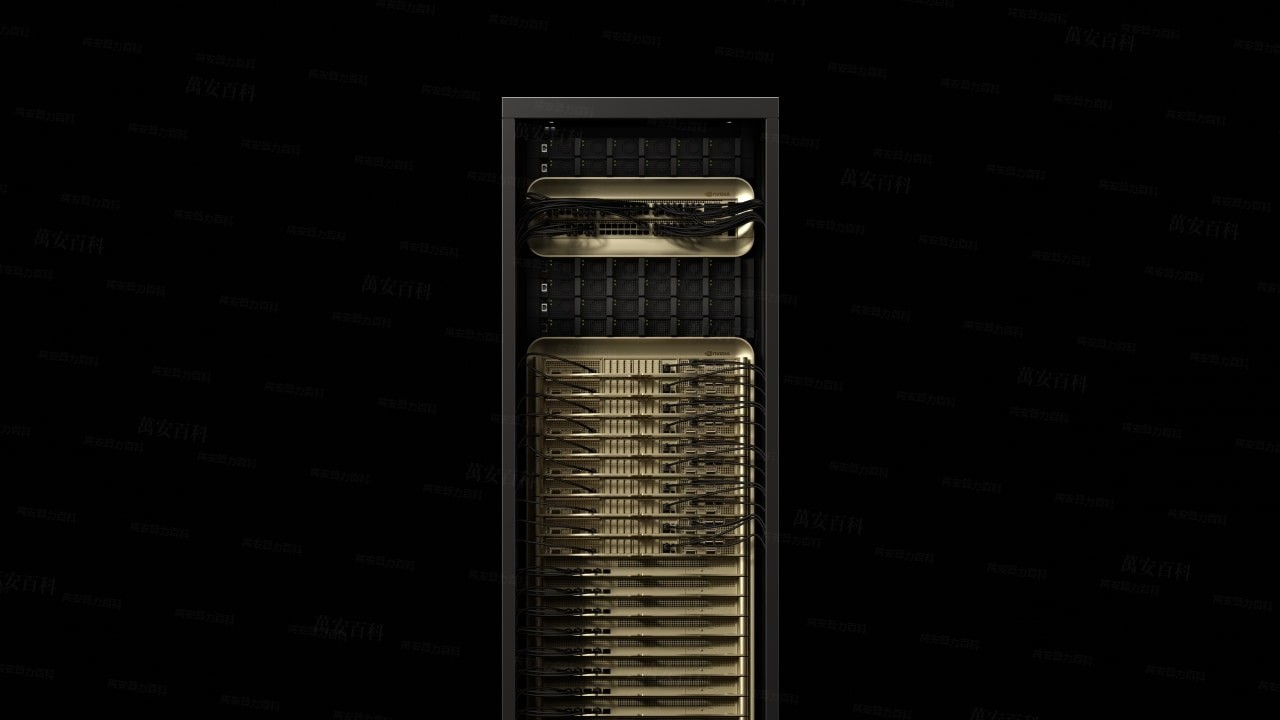


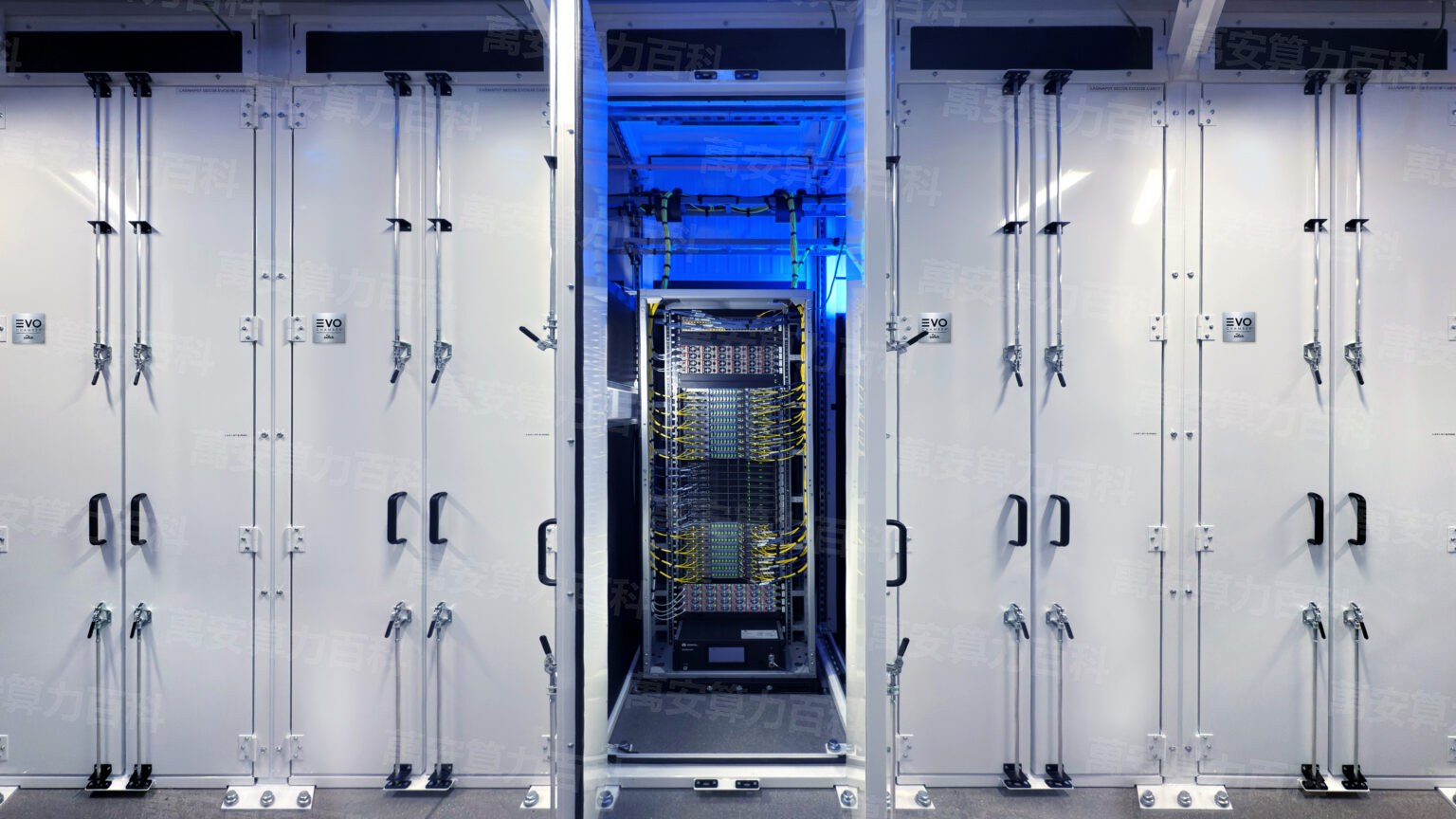
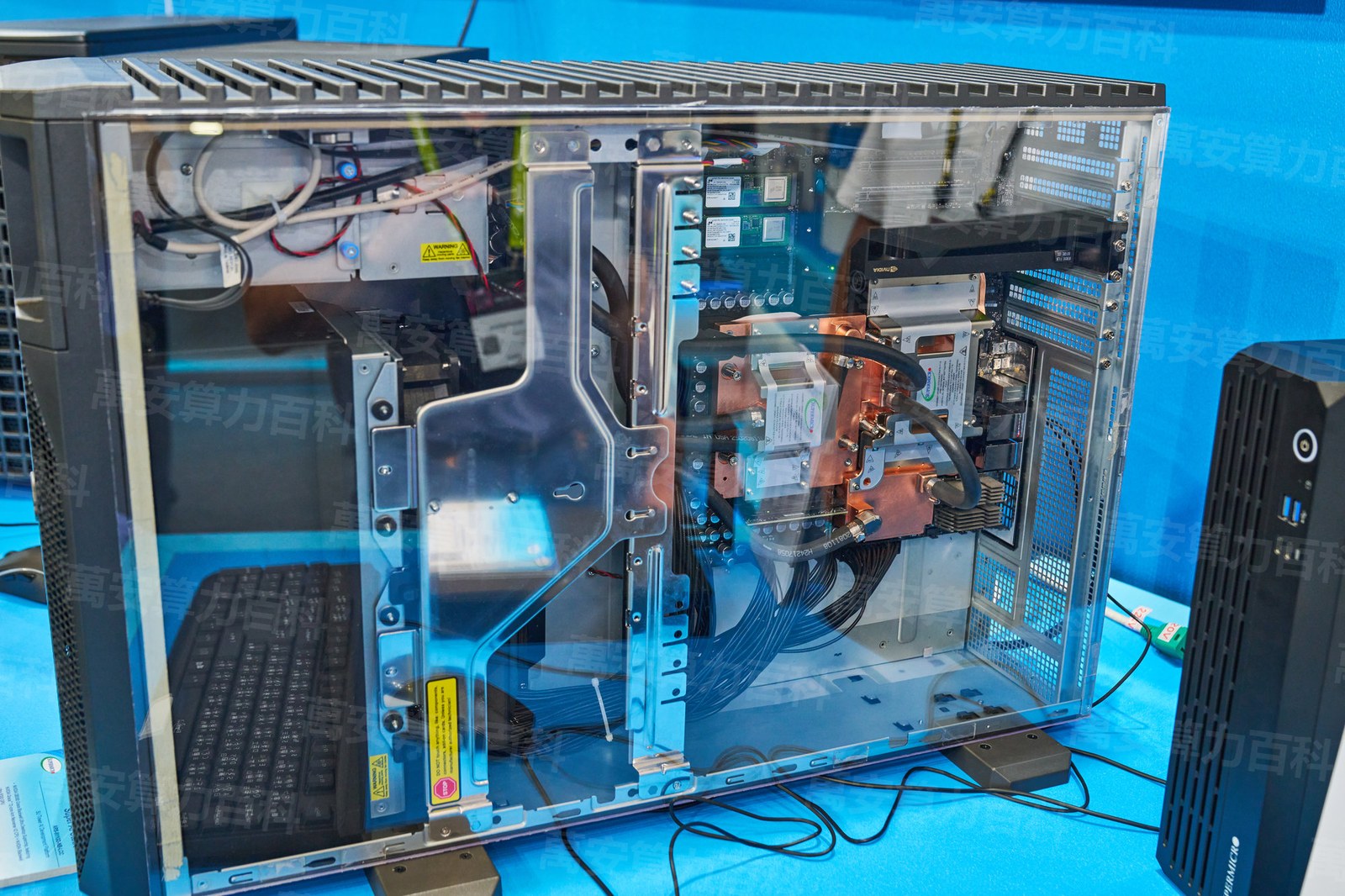
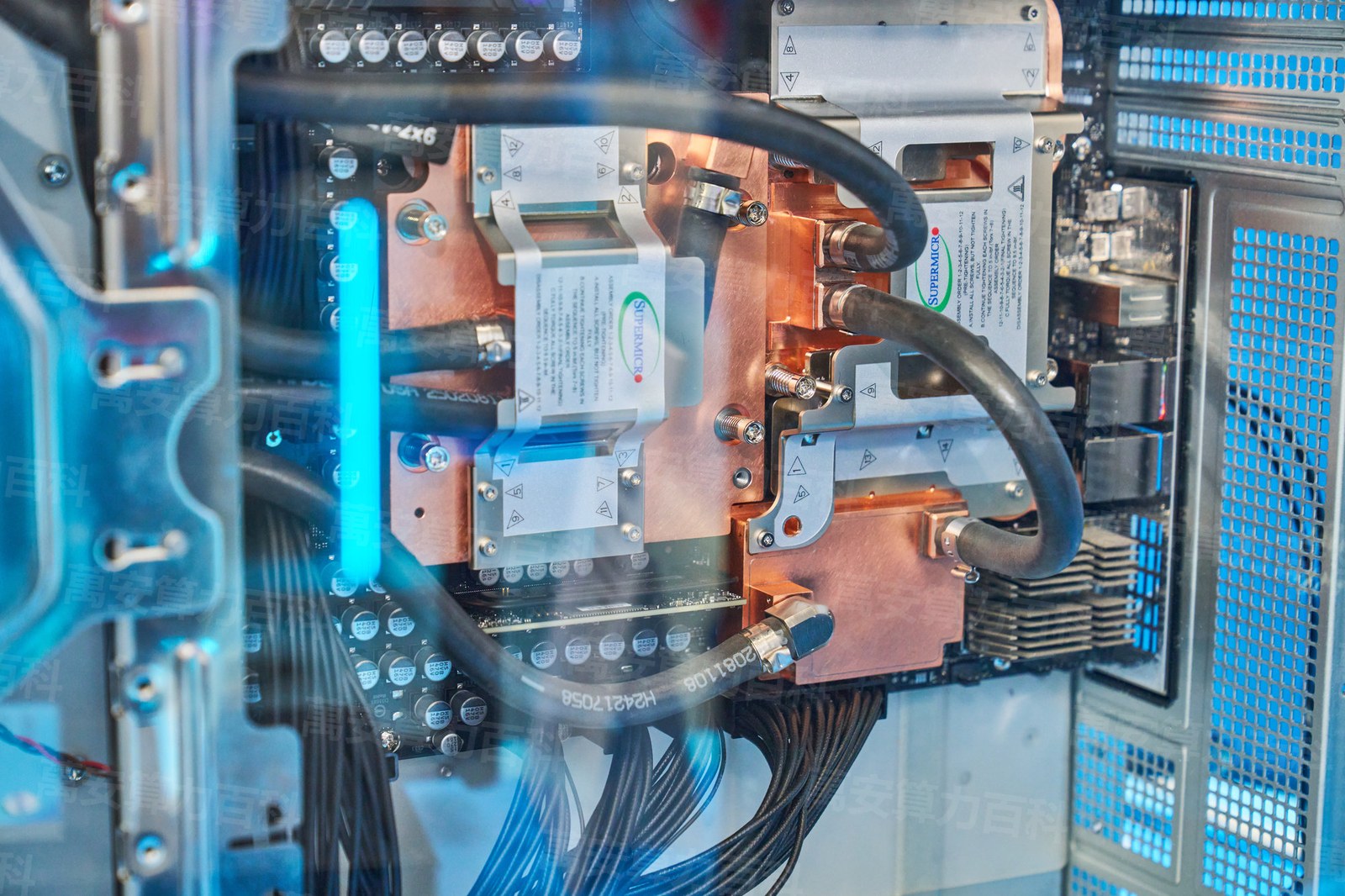
Actual photos are added continuously as inspection batches arrive; official renders are never presented as actual photos, and AI-generated images are never presented as actual photos.
Video Overview VIDEO
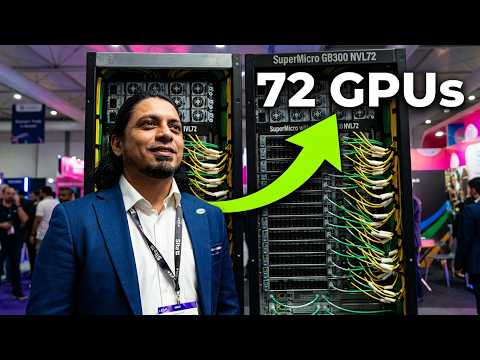
This video offers a rack-level deployment perspective specific to the GB300 NVL72 (rack placement → power → liquid cooling → networking → power-on acceptance); all parameters and benchmarks are anchored to the GB300 NVL72. Narration and scene text are archived at _wiki_work_1006/gen_tts_gb300.py.
Community real hardware · Source: YouTube COMMUNITY HANDS-ON
Playback may not be available in some regions
Software & Ecosystem ECOSYSTEM
| Item | Requirements / Status |
|---|---|
| CUDA / drivers | Same generation and same stack as the B300: the Blackwell-generation support line (fully supported from CUDA 12.8 onward)—see the B300 entry and NVIDIA official documentation for details |
| Collective Communication | NCCL is natively optimized for NVLink5 / NVSwitch full interconnect—rack-level acceptance is based on a full-rack nccl-tests run (see 'How to Inspect') |
| Cluster Management | NVIDIA Base Command / DGX SuperPOD reference designs; third-party Slurm / Kubernetes ecosystems are broadly compatible (publicly documented) |
| Inference engines | vLLM / SGLang / TensorRT-LLM all support Blackwell Ultra (the FP4 path is a new generation feature; refer to each engine's release notes) |
| Networking | Quantum-X800 InfiniBand / Spectrum-X Ethernet 800G optical interconnect (multi-rack scaling) |
| Ops & Monitoring | DCGM / tray-level out-of-band management (SN2201 out-of-band switch)—RAS event counts are a hard metric for rack acceptance |
The software stack evolves over time; defer to NVIDIA official releases. For ecosystem maturity assessments, see the B300 entry (shared across the generation).
Purchasing & Inspection PROCUREMENT
Inspection essentials for GB300 NVL72 purchases (three items, rack-level basis):
The five rack-level acceptance benchmarks are in this entry 'How to Inspect' section.
How to Accept (Rack Level) RACK ACCEPTANCE
The five rack-level acceptance benchmarks (a separate system from single-GPU stress tests, with all numeric benchmarks anchored to the actual GB300 NVL72): power-on self-test → liquid cooling calibration → full-system power draw → NCCL full-rack test → RAS event count.
This section covers rack-level acceptance and is not interchangeable with the single-GPU entry's six 'How to Stress Test' benchmarks; the ≥85% ratio line is this library's acceptance basis (estimated), with OEM acceptance specifications taking final precedence.
Shipping & Delivery LOGISTICS
OEM & Variants VENDORS
The same GB300 NVL72 reference architecture — vendors differ in delivery, liquid-cooling support and service. Choose based on the differences first (our listings already cover Supermicro and Dell configurations):
| System Vendor | Representative Form Factor | Differentiators | Best For |
|---|---|---|---|
| Supermicro | SRS-GB300-NVL72 (per our listings) | In-rack 250kW-class CDU, 8× 33kW power shelves, full-rack delivery, in-house end-to-end liquid-cooling support[4] | Spot purchase · one-stop liquid-cooling support |
| Dell | GB300 NVL72 full rack (per our listings; CoreWeave was the first delivered) | Global tier-one service network, experience with large public cloud deliveries[8] | Multinational Deployment · Service First |
| NVIDIA official | DGX GB300 / DGX SuperPOD | One-stop official delivery with full-stack software (31 USD-denominated listings in our database) | Turnkey Training · Vendor Support |
| Lenovo / HPE / Cisco | GB300 NVL72 Full Rack | Enterprise-grade service network (per press-release partner lists [3]) | Enterprise channel procurement |
| Wiwynn / Pegatron / Quanta, etc. | ODM full rack / contract manufacturing | Cloud provider supply-chain backend (one delivery format for CoreWeave and others) | Cloud provider large orders · ODM channel |
AIXX Index · Deployment Four-Way Comparison (rack level) AIXX INDEX
| System Vendor | Ease of Installation | Maintenance Convenience | Performance Density | Expected Lifespan |
|---|---|---|---|---|
| Supermicro | 72 | 80 | 95 | 82 |
| Dell | 78 | 88 | 95 | 85 |
| NVIDIA official | 82 | 85 | 94 | 85 |
| Lenovo / HPE / Cisco | 76 | 86 | 94 | 84 |
| ODM (Wiwynn/Pegatron/Quanta) | 68 | 72 | 95 | 80 |
The AIXX Index is this library's rack-level estimation basis (0–100; scoring based on differences in full-rack delivery form factor, liquid-cooling support, and service network; 'ease of installation' is generally lower than air-cooled 8-GPU systems—an objective attribute of rack-level deployment, not a vendor shortcoming), updated as real-machine verification proceeds, and does not constitute a purchase commitment. Specific models defer to official vendor releases.
Glossary Cards GLOSSARY
NVL72 / Supernode
N = NVLink domain, 72 = number of GPUs in the domain. All 72 GPUs are fully interconnected via NVSwitch into a single NVLink domain, presenting to software as one 'giant accelerator'—that's what 'supernode' means, and it's the fundamental difference between rack-level products and 8-GPU systems.
Compute Tray
The rack's minimum compute unit: each tray holds 4× Blackwell Ultra (1,152GB HBM3e total) + 2× Grace (1TB LPDDR5X total), 18 trays in all. Trays can be swapped individually—tray-level serial numbers and firmware reports are the minimum unit of trust for rack inspection.
NVSwitch Tray
Nine switch trays carry the 72-GPU full interconnect: compute trays connect to the switch trays via blind-mate rear NVLink cable cartridges, forming a non-blocking P2P matrix—the source of the aggregate 130TB/s NVLink5 bandwidth.
CDU and Blind-Mate Liquid Cooling
The CDU (Coolant Distribution Unit) is 250kW-class in-rack, driving the secondary liquid-cooling loop; between the compute trays and the rack manifold are blind-mate connectors—liquid circuits connect as trays slide in. Dual-level leak detection at tray and rack levels is standard.
Grace CPU
NVIDIA's Arm-based CPU (Neoverse V2, 72 cores), 36 per rack and 2 per tray, paired with LPDDR5X memory (17TB total). Grace keeps the GPUs fed: data preprocessing, communication, and scheduling, with GPU↔CPU connectivity via NVLink-C2C.
Export Controls & Compliant Batches
The GB300 is subject to US export controls to China and is not on the approved China-market list (publicly documented as of 2026-10); spot availability flows mainly through overseas and free-trade-zone channels. Batch and customs routing affect warranty and value retention—always check during inspection. This library's statements reflect public reporting only and do not constitute legal advice.
News & Related Events TIMELINE
Limitations & Controversies LIMITS
- Deployment barriers are its other side : full liquid cooling + 132kW-class power (reference architecture up to 142kW at Full Load) + ton-class full-rack load bearing—legacy air-cooled server rooms are largely out of reach, and facility retrofits often take months. For budgets that can't stretch to a facility retrofit, a B300 NVL8 air-cooled system is the more realistic first step (see 'Cooling & Deployment').
- Generational squeeze is now out in the open : In the same September 2026 MLPerf round, the next-gen Vera Rubin NVL72 debuted and beat GB300 by up to 3.7× (Qwen3-VL, per NVIDIA's official blog [6]) — the lead window for a flagship rack is measured in quarters, so factor depreciation timing into the purchase decision.
- Export-controlled for China (neutral statement) : GB300 is not on the approved list for China (public figures as of October 2026); spot availability runs mainly through overseas and free-trade-zone channels, and customs routing and compliance status directly affect warranty and resale value [10]. This database records only publicly reported figures and does not constitute legal advice.
- Price scale and liquidity : Single racks run in the millions of dollars (the previous-gen GB200 NVL72 was publicly reported at roughly $3M per rack [9]); whole-lot asking prices are the norm — the single-rack resale market is extremely immature, residual value depends heavily on data-center conditions and warranty transferability, and resale costs far exceed those of single GPUs.
- Memory capacity discrepancy (18TB vs 20TB) : The official page lists 20TB (288GB × 72 = 20.7TB, consistent with back-of-envelope math); some early channel materials said 18TB — verify quotes and contracts against the official 20TB figure, and accept based on measured tray-level firmware reports (18TB still appears in some config strings in our listings, noted in this entry's methodology notes).
- The flip side of 'one giant GPU' : the NVLink domain is both its source of performance and its risk boundary—a fault within the domain affects the entire rack, and operations require tray-level isolation and rapid tray-swap capability (see the RAS item under 'How to Inspect'), a genuine capability requirement for the ops team.
Market Band MARKET DATA
| Date | Basis | Region | Reference Price Band | Notes |
|---|---|---|---|---|
| 2026-10-29 | Hall Real-Time | US (USD) | $7.23M – 9.18M | 48 listings › (full-rack asking basis) |
| 2026-10 | Channel Reference | Mainland China | ¥110M – ¥130M | Mainland spot channel indication (full-rack asking basis) · Racks in circulation › |
| 2026-10-29 | Hall Real-Time | Middle East (AED) | AED 48.16M – 62.64M | 69 listings (whole-rack asking prices) |
| 2026-10-29 | Hall Real-Time | Europe (EUR) | €9.98M – 12.67M | 60 quotes (full-rack asking price basis) |
| 2026-10-29 | Hall Real-Time | Singapore (SGD) | S$20.69M – 26.01M | 55 listings (whole-rack asking prices) |
| 2026-10-29 | Hall Real-Time | Japan (JPY) | JPY 2,261.01M – 2,868.80M | 49 listings (whole-rack asking prices) |
| 2025-12 | Channel Reference | Global | Previous-gen GB200 NVL72 approx. $3M/rack | Publicly reported figures [9] · no official GB300 list price · Racks in circulation › |
| 2026-10-29 | Policy Status | Mainland China | Not on approved China-market list | The GB300 is subject to US export controls; spot availability flows mainly through overseas and free-trade-zone channels (publicly reported basis, not legal advice) |
Methodology: Mainland spot-channel estimated band ——From 2025-08 launch to the Reference Price start, an estimated band (overseas channel reference basis $3.4M/rack-class ≈ ¥24.5–27M; NVIDIA has no official pricing; band = channel/config variance); from 2026-10 onward, mainland spot-channel intelligence basis ( ¥110M–130M/rack ); overseas channel reference figures (~$3.4M) and mainland spot supply are two parallel markets and are not converted against each other. North America / Europe / Singapore / Japan / Middle East snapshots are accumulated daily (USD 3.444M–4.229M · 25 listings, etc., since 2026-10-08, all in original currencies, unconverted). GB300 is not on the approved list for China, so mainland quotes reflect the overseas and free-trade-zone channel context (publicly reported figures; not legal advice). Price inventory in this database: AIXX Exchange (Zero-commission Matching, no participation in transactions, neither holds nor speculates on transaction prices, hence neutral data). actual price subject to the seller's quote.
Price milestone timeline MILESTONES
FAQ FAQ
The Blackwell Ultra superpod rack announced by NVIDIA at GTC in March 2025: 72 Blackwell Ultra GPUs plus 36 Grace CPUs in a single fully Liquid-cooled rack, fully interconnected via NVLink5 for an aggregate 130TB/s, presented to software as one accelerator. FP4 Tensor Core official spec is 1,440 PFLOPS (dense basis), with total GPU memory of 20TB HBM3e.
Match your facility and scale: the NVL72 needs ~132kW power delivery, CDU liquid cooling and floor-loading upgrades, in exchange for 20TB of memory in a single NVLink domain — the shape of large-scale training and inference factories. The NVL8 offers 288GB per card and 2.3TB per system, deployable in batches in existing server rooms. With a facility-upgrade budget, go NVL72; without, start with the NVL8 (both form factors are in our listings — see the price band).
GB300 falls under US export controls and is not on the China-approved list (as of 2026-10 public basis; the H200 was the one approved for volume China shipments in July 2026); spot availability flows mainly through overseas and free-trade-zone channels. This entry is based on public reporting and is not legal advice — defer to regulator policy and professional compliance counsel before procurement.
NVIDIA's official page lists 20TB HBM3e (288GB/card × 72 = 20.7TB, consistent with back-of-envelope math; Red Hat's certification catalog says the same); early channel materials said 18TB (still seen in some config strings in our listings). Go with the official 20TB figure — verify quotes and contracts against it, and accept based on measured tray-level firmware reports.
No — rack-level acceptance is a different system: power-on self-test (all 18+9 trays reporting in one by one), Liquid-cooling calibration (CDU flow/temperature delta/leak detection with zero alarms), system-level power draw (aligned to Full Load 132–142kW class), full-cluster NCCL testing (72-GPU all_reduce against NVLink5 specs), and RAS event counts (no uncorrected ECC errors or interrupts). Per-tray serial-number verification is the minimum credible unit of rack inspection (see 'How to Accept').
Related Entries SEE ALSO
Model comparison and selection COMPARE
References REFERENCES
- NVIDIA official site — GB300 NVL72 product page (primary spec source, verified 2026-10) https://www.nvidia.com/en-us/data-center/gb300-nvl72/
- NVIDIA — Enterprise Reference Architecture NVL72 AI Factory: system components (tray/power/cooling basis, verified 2026-10) https://docs.nvidia.com/enterprise-reference-architectures/n…
- NVIDIA Newsroom — NVIDIA Blackwell Ultra AI Factory Platform Paves Way for Age of AI Reasoning (2025-03-18 press release: 1.5×/H2 2025/16 partners/CX-8 800G) https://nvidianews.nvidia.com/news/nvidia-blackwell-ultra-ai…
- Supermicro — SRS-GB300-NVL72 official page (132kW / CDU 250kW / dimensions) https://www.supermicro.com/en/products/rack/srs-gb300-nvl72
- Red Hat Certification Catalog — GB300 NVL72 (1.1 ExaFLOPS / 20.7TB HBM3e partner catalog basis) https://catalog.redhat.com/en/hardware/system/detail/307917
- NVIDIA official blog — Vera Rubin NVL72 MLPerf debut, up to 3.7× over GB300 on Qwen3-VL (2026-09-16) https://blogs.nvidia.com
- MLCommons — MLPerf Inference v6.1 results (GB300 NVL72 debut, up to 2.5× on MoE, 2026-09-17) https://mlcommons.org
- CoreWeave — GB300 NVL72 cloud instance GA (2025-08-19 changelog) and Q3 2025 earnings report 'First to deploy' https://docs.coreweave.com
- Forbes — GB200 NVL72 roughly $3M per rack (2025-12-23, previous-gen price anchor) https://www.forbes.com
- CNBC / US — China export controls and 2026-01 BIS new rules (public reporting basis) https://www.cnbc.com
- Pegatron NVIDIA GB300 NVL72 and More at NVIDIA GTC 2025 (compute tray photos) https://www.servethehome.com/pegatron-nvidia-gb300-nvl72-and…
- Supermicro NVIDIA B300 and AI Factory tour (Supermicro GB300 NVL72 rack photos) https://www.servethehome.com/checking-out-the-supermicro-nvi…
- Price band data — AIXX Exchange (quotes in circulation on this platform and understood channel ranges, updated daily) /hall.html