AIXX Pedia › Infrastructure Entries › NVMe All-Flash Storage
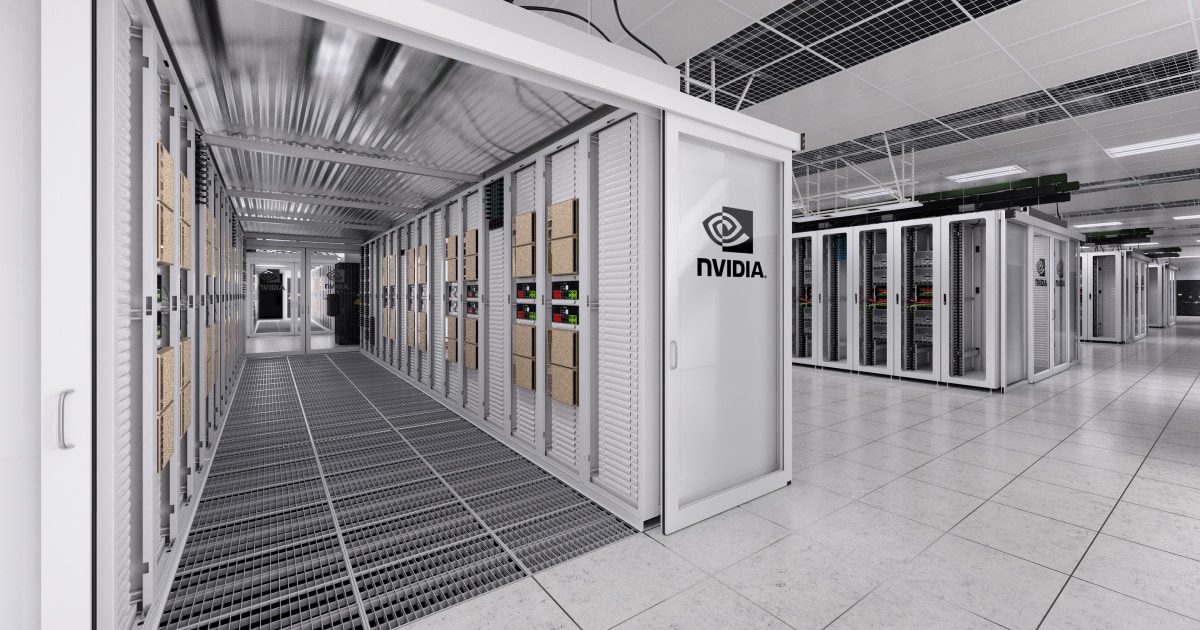
NVMe All-Flash Storage
Overview OVERVIEW
NVMe All-Flash Storage It's the "third pillar" of an AI cluster: alongside compute (GPUs) and networking (NVLink/fabric), the data pipelines for training and inference—checkpoint writes and reads, training dataset throughput, KV cache tiering—all rest on the storage layer. The NVMe protocol (SSDs directly on PCIe, bypassing traditional SAS/SATA controllers) + all-flash arrays + NVMe-oF networking + GPUDirect Storage (Data goes directly from storage to GPU memory, bypassing CPU copies — per NVIDIA official documentation[3]) — a standard building block of modern AI storage.
Why it has become a must-have in AI clusters: checkpoints on thousand-GPU clusters routinely run to tens of TB, and training datasets are measured in hundreds of TB — the throughput of HDDs or hybrid-flash arrays simply can't feed the GPUs, and every second a GPU spends waiting for data is burned GPU money. NVMe-oF extends all-flash performance across the network (RDMA direct path[1]), while GPUDirect Storage takes the CPU out of the data path — these two things determine whether the storage layer is an accelerator or a bottleneck.
This entry is a category selection entry : Covers storage architecture, selection parameters, and procurement acceptance from an AI cluster perspective, not targeting any single product. Storage has no unified market price; actual price subject to the seller's quote.
Use Cases FIT
AIXX Index (0–100): weighted estimate based on scenario fit. 90+ flagship · 75+ Excellent · 60+ usable · below 60 not applicable.
History HISTORY
2011 , NVMe 1.0 specification released: SSDs directly on PCIe, a protocol born for flash replacing the SAS/SATA channel—the protocol foundation of all-flash arrays (industry public record).
2016–2020 , all-flash arrays go mainstream: the NVMe-oF spec extends NVMe to the network (RDMA direct path), all-flash arrays from Dell/NetApp/Pure and other vendors become the new enterprise storage standard, and GPU clusters start building on all-flash as their storage foundation (industry consensus[1]).
2020 , NVIDIA releases GPUDirect Storage : storage data reaches GPU memory directly via RDMA, bypassing the CPU relay (per NVIDIA developer blog and official documentation[2][3]) — the last mile of AI storage is connected, another win for the CUDA ecosystem.
2023–2026 , standard equipment for AI clusters: the checkpoint and data-throughput demands of large-model training push storage to the center of the infrastructure — the three-tier design of 'object lake (cold) + all-flash cache (hot) + GPUDirect passthrough' becomes the reference architecture for AI storage (per industry reference architectures[4]).
Selection Parameters SELECTION GUIDE
| Parameter | What to Look At | Basis |
|---|---|---|
| Throughput (GB/s) | Whether aggregate read/write bandwidth matches the GPU's consumption rate | Back-calculate storage throughput from "data consumed per cluster-hour," with 30% headroom (estimated basis) |
| IOPS and Latency | Small-IO scenarios (checkpoint metadata, KV cache tiering) depend on IOPS and P99 latency | High throughput ≠ low latency; evaluate the two workload types separately |
| NVMe-oF Support | Network extension over RDMA transport (RoCE/IB) | Align with the cluster's fabric route: IB networks get IB-RDMA, Ethernet gets RoCE |
| GPUDirect Storage | Whether the storage array/filesystem is on NVIDIA's GDS compatibility list | the official compatibility list is authoritative (per NVIDIA documentation[3]) — solutions not on the list require additional development for passthrough |
| Parallel Filesystem | Lustre/GPFS-family/vendor-developed parallel FS | Multiple GPU nodes concurrently reading the same dataset—parallel throughput is the key |
| Capacity Tiering | Three tiers: hot (NVMe) / warm (hybrid flash) / cold (object/tape) | All-flash holds only hot data—capacity costs are driven down through tiering |
| Data Protection | Erasure coding/replication, snapshots, off-site disaster recovery | The safety rope for training datasets and checkpoints; set the grade by data value |
Selection criteria are compiled by this library from publicly available architecture documents (as of October 2026)[1][3][4]; defer to vendor product documentation and real-world stress testing.
Three-Tier AI Storage Architecture TIERING
| Tier | Media/Form | What Goes There | Key Metrics |
|---|---|---|---|
| Hot Tier | NVMe all-flash array / distributed NVMe | Active training sets, checkpoints, KV cache tiering | Throughput + GPUDirect passthrough |
| Warm Tier | Hybrid flash / high-capacity NVMe | Recent dataset versions, preprocessing intermediates | Capacity cost-effectiveness |
| Cold Tier | Object storage / tape | Raw data lake, historical archive | Cost per unit of capacity |
The three-tier architecture is this library's compilation of public reference architectures[4]; tiering policies should be tailored to each workload's data lifecycle.
Ecosystem and Vendor Landscape VENDORS
Three types of players in AI storage (compiled by this library; not a procurement recommendation):
| Camp | Representatives | Positioning and Characteristics |
|---|---|---|
| Enterprise All-Flash Arrays | Dell PowerStore/PowerScale, NetApp AFF, Pure FlashArray//FlashBlade, Huawei OceanStor, Inspur AS series | Complete enterprise-grade data protection and operations; AI fit depends on GPUDirect compatibility and parallel throughput (public product line basis) |
| AI-Native Storage | VAST Data, WEKA, VDURA and other next-generation parallel filesystem vendors | Built for GPU clusters: parallel FS + NVMe tiering + deep GDS integration (per reference architectures[4]) |
| Self-Built/Open Source | Lustre, Ceph, JuiceFS and other self-built options | Maximum control for very large clusters; ops headcount is the cost (public ecosystem basis) |
Vendor information is compiled from public product lines; defer to each vendor's official materials. The SSD media side (Samsung/Solidigm/Western Digital enterprise NVMe drives) is another layer of the supply chain, already included when purchasing arrays.
Gallery GALLERY
Photos of storage hardware will be added as inspection batches arrive; AI-generated images are never passed off as real photos.
Deployment and Integration DEPLOYMENT
A three-step checklist for bringing storage online: Fabric alignment (storage network follows the compute fabric's route: IB clusters get IB-RDMA storage networking, Ethernet gets RoCE—mixed routes need gateways, which cut both latency and throughput); GDS enablement (components deployed per NVIDIA's official GDS documentation[3], assuming the array is on the compatibility list); Stress test and grade (data throughput stress tests with real training workloads—paper specs don't count; only stress testing reveals whether GPUs are kept waiting).
Ops tip: monitor storage-layer metrics (throughput/IOPS/P99 latency/capacity watermark) on the same screen as GPU cluster monitoring—"abnormally low GPU utilization" should have storage feeding speed as the first thing you check (this library's ops experience).
Procurement & Acceptance PROCUREMENT
Acceptance essentials for AI storage procurement (three items):
For the full six-point acceptance criteria, see this entry 'How to Inspect' section.
How to Accept ACCEPTANCE TEST
Six-point acceptance criteria (AI storage acceptance framework): unboxing and inventory → baseline throughput → GPUDirect passthrough → concurrent reads → failure drills → long-duration joint testing.
Shipping & Delivery LOGISTICS
Glossary Cards GLOSSARY
NVMe
A storage protocol built for flash: SSDs connect directly to the PCIe bus, high queue depth, low latency—compared with SAS/SATA, it unleashes flash speed. NVMe SSDs are the basic building blocks of all-flash arrays.
NVMe-oF
NVMe over Fabrics: extends the NVMe protocol to the network (RDMA transport, running over IB or RoCE) — servers access remote all-flash arrays as if they were local drives, with minimal performance loss (industry consensus[1]).
GPUDirect Storage(GDS)
NVIDIA's storage passthrough technology: data flows from NVMe/arrays directly to GPU memory via RDMA, bypassing CPU relay copies — a key efficiency technology for training data loading and checkpoint read/write (per official documentation[3]).
Parallel Filesystem
A storage architecture where multiple nodes concurrently access the same file system (Lustre/GPFS family, etc.): stripes data across multiple storage nodes to aggregate throughput—only a parallel FS can handle thousands of GPUs reading the training set simultaneously.
Checkpoint
Save points during training: periodic persistence of model weights plus optimizer state—checkpoints for large models run into tens of TB; slow writes drag down training cadence, and losing one costs an entire run's progress. Checkpoint throughput is the first exam question for AI storage.
KV Cache Tiering
A memory-overflow solution for inference serving: KV cache that doesn't fit in GPU HBM goes to an NVMe tier—trading NVMe bandwidth for memory capacity, a component of long-context and high-batch-concurrency inference architectures.
Limitations & Controversies LIMITS
- Throughput Illusion Vendor-quoted throughput is a lab value under ideal conditions—under real training workloads (mixed small IOs, multi-node concurrency), achieved rates are often cut in half. Real-task stress testing is the only truth serum (per this Pedia's inspection experience).
- GDS Compatibility Divergence : 'supports NVMe-oF' does not mean 'on NVIDIA's GDS compatibility list' — solutions not on the list require in-house development for passthrough, and the hidden cost must be factored in (per official documentation[3]).
- All-Flash Capacity Cost Trap Putting cold data on all-flash is a budget black hole—a three-tier hierarchy (hot/warm/cold) is cost discipline; all-flash serves hot data only (per this Pedia's compilation).
- Residual Data in Used Storage Arrays Data security from a used array's previous life is a legal-grade risk—secure-erase records must be a precondition of the transaction (per this Pedia's inspection experience).
- Vendor Lock-in Parallel file systems are deeply tied to array management stacks, and mid-lifecycle brand switching carries high migration costs—when selecting, treat 'how hard it is to get your data out' as a specification too (per this Pedia's compilation).
Market Notes MARKET NOTE
AI storage is procured mainly on a project basis (wide variation in configuration/capacity/software stack), and used arrays must also clear the data security hurdle—no verifiable unified market snapshot yet, AIXX Pedia honesty principle: no market band; prices are subject to the seller's quote 。
Spot search: AIXX Exchange Hall › (Zero-commission Matching; no involvement in transactions; no knowledge of or speculation on transaction prices — hence data neutrality). This section will switch to a standard market band once enough snapshots accumulate.
Price milestone timeline MILESTONES
FAQ FAQ
Three points of difference: throughput scale (feeding a thousand-GPU cluster is tens of times an ordinary enterprise load), bypass architecture (GPUDirect Storage skips the CPU), and concurrency patterns (multiple GPU nodes reading the same dataset in parallel)—ordinary NAS/hybrid-flash arrays can't keep up on any of these three.
Strongly recommended: data bypasses the CPU straight to GPU memory, cutting both latency and CPU usage for training data loading and checkpoint I/O (per official documentation); solutions without GDS support can still run, but the CPU-mediated throughput ceiling is low and host resources get eaten by data movement.
Large-model checkpoints run into tens of TB and are written frequently: slow writes drag training cadence (GPUs wait on persistence), and interrupted writes cost an entire run's progress—checkpoint throughput and reliability are the dividing line between AI storage and ordinary storage.
Yes, but you must pass three gates: data security (secure-erase records of the previous tenant's data as a transaction precondition), health (full export of NVMe drive write-wear/SMART data), and licensing (whether capacity and feature licenses transfer with the hardware). Storage is where data lives—hold acceptance standards to the highest bar.
Same-route with layering is recommended: IB clusters pair with IB-RDMA storage networks, Ethernet clusters with RoCE—mixed routes require gateway conversion, halving both latency and throughput. At the traffic level, storage and compute networks can be physically/logically isolated to keep checkpoint writes from disrupting training communications.
Related Entries SEE ALSO
Selection Guide and Further Reading COMPARE
References REFERENCES
- Introl — AI-Optimized Storage: NVMe-oF, GPUDirect & Parallel File Systems (2025 architecture overview) https://introl.com/blog/ai-optimized-storage-nvme-gpudirect-…
- NVIDIA Developer Blog — NVIDIA GPUDirect Storage (2020 announcement) https://developer.nvidia.com/blog/gpudirect-storage/
- NVIDIA Official Documentation — GPUDirect Storage Overview Guide (deployment and compatibility reference) https://docs.nvidia.com/gpudirect-storage/overview-guide/ind…
- VDURA — AI Storage Reference Design (all-flash reference architecture) https://www.vdura.com/resources/reference-architecture/ai-st…
- Active Listings — AIXX Exchange (Zero-commission Matching; no market snapshot for AI storage yet, actual price subject to the seller's quote) https://www.aixx.vip/hall.html