AIXX Pedia › Hardware Glossary › Grace CPU
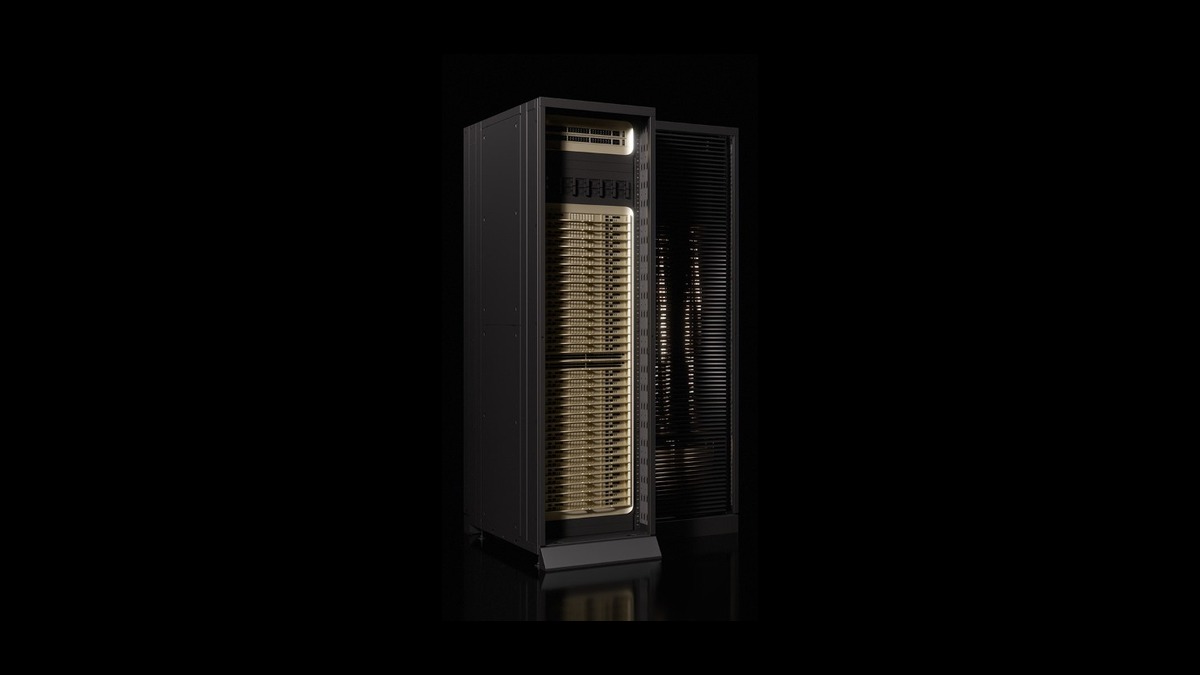
Grace CPU
Overview OVERVIEW
Grace is NVIDIA's Data Center CPU Brands —NVIDIA's first in-house CPU: a 72-core processor built on Arm Neoverse V2 cores, designed for the massive memory throughput demands of AI and HPC (per NVIDIA's official page[1]). It rarely appears on its own: its real role is as Grace Hopper (GH200) and Grace Blackwell (GB200/GB300) superchips —the CPU side, paired with a GPU via the NVLink-C2C chip-to-chip interconnect to form an integrated CPU+GPU superchip.
Its very purpose is to reshape the relationship between CPU and GPU : In a traditional architecture, the CPU and GPU sit on either side of PCIe, with data shuttling back and forth; between Grace and the GPU there's instead NVLink-C2C, a coherent interconnect (GB200 spec: in the 900GB/s class[2])—CPU memory and GPU memory appear as one from a software standpoint, so 'CPU-side chores' like vector databases, data processing, and KV cache management get direct access to GPU-class bandwidth.
In the 2026 spot market, Grace circulates as a component of GB200/GB300 racks (36 units per rack) ; standalone form factors (Grace CPU Superchip sold alone) are rare. This entry carries no price band—actual price subject to the seller's quote.
Use Cases FIT
AIXX Index (0–100): weighted by fit for CPU-GPU collaboration scenarios (software-concept specialization scale).
History HISTORY
April 2021 , Grace debuts at GTC: NVIDIA announces its move into CPUs—a data-center CPU for AI and HPC built on Arm Neoverse cores, named in honor of computer architecture pioneer Grace Hopper (per NVIDIA's official page and GTC announcement[1]).
2022–2023 , the superchip ships: Grace Hopper (GH200, Grace + H100 over NVLink-C2C) is first out the door, and the Linux kernel plus mainstream distros complete Arm ecosystem support—'coherent CPU+GPU memory' goes from paper to product (per the official page[1]).
2024–2025 , GB generation scales up: Grace Blackwell (GB200) and GB300 bring Grace into rack-scale mainstream—GB200 NVL72 carries 36 Graces per rack feeding 72 B200s, with the LPDDR5X memory pool serving as the rack's "second VRAM tier" (per the GB200 entry).
2026 , Spot positioning: Grace circulates with GB-series racks; standalone units are rare. The Arm data center CPU camp (Grace/AWS Graviton/Ampere, etc.) is growing overall, but in the AI superchip race, Grace is so far the only "GPU vendor's in-house CPU." Cross-border trade policies for data center chips are still evolving—rely on regulator policies and professional advice when procuring (per public reporting).
Technical Specifications SPECIFICATIONS
| Item | Specs (NVIDIA Grace CPU Superchip · official figures) |
|---|---|
| Core | 72-core Arm Neoverse V2 (per superchip) |
| Memory | LPDDR5X ECC—efficiency-oriented high-bandwidth memory (capacity per configuration) |
| Interconnect | NVLink-C2C—coherent CPU↔GPU interconnect (GB200 spec: in the 900GB/s class[2]) |
| Superchip form factor | Grace Hopper(GH200:Grace+H100)· Grace Blackwell(GB200:2×B200+1×Grace) |
| Rack role | GB200/GB300 NVL72: 36 Graces per rack (72 cores ×36=2,592 cores/rack) |
| Software ecosystem | Linux (Arm builds of mainstream distros) · native support across NVIDIA's full software stack |
| Launch | Brand launched at GTC 2021-04 · GH200 shipped in 2023 · GB200 announced 2024-03 |
Specifications per NVIDIA's official page (as of October 2026)[1]; specific clock/power/memory capacity details depend on the respective superchip and system configuration. Anything not listed here = unverified; we don't make things up.
Where Grace sits in GB-series racks IN THE RACK
| Tier | Component | Grace's relationship |
|---|---|---|
| Chip level | Grace Blackwell superchip (2 B200 + 1 Grace) | NVLink-C2C coherent interconnect—CPU memory and GPU VRAM unified from the software view |
| Tray level | Compute tray (4 GPUs + 2 Graces/tray) | Grace handles tray-level data processing and orchestration |
| Rack-Scale | GB200/GB300 NVL72 | 36 Graces/rack · up to 17TB LPDDR5X memory pool (rack-level figures) |
Tier figures consistent with the GB200 NVL72 entry; GB300's Grace configuration follows the OEM's documentation.
Family Members FAMILY
The Grace family tiers by superchip combination; Grace is the CPU-side body of the GB series:
Cooling & Deployment COOLING
Grace is not deployed as a standalone server—it is soldered into superchips and compute trays, with cooling handled by the system solution (GB series is fully Liquid-cooled). From a deployment view, Grace is a software stack issue : the Arm architecture means all host software (monitoring agents, security components, in-house toolchains) must be verified for Arm availability—mainstream Linux distros and NVIDIA's full stack are natively supported, but the long tail of enterprise software needs item-by-item review (per this library's compilation).
Grace-side inspection items when accepting used racks: all 36 CPUs present and recognized, NVLink-C2C link health (run in the same batch as NVLink domain acceptance), LPDDR5X memory capacity and configuration matching shipping documents—tray-level repair of Grace faults goes through OEM channels, so confirm the warranty path at procurement.
Use-Case Fit WORKLOAD FIT
| Workload | Grace's performance scenarios | AIXX Index |
|---|---|---|
| Training Data Pipelines | Preprocessing/augmentation/tokenization taps NVLink-C2C bandwidth on the CPU side to feed the GPU | 86 |
| Vector databases / retrieval | Large memory pool + coherent interconnect—a natural fit for the hot-data tier of vector search | 83 |
| Inference KV cache tiering | The large LPDDR5X pool as an overflow layer for GPU VRAM (per the GB200 entry) | 83 |
| Lifting general-purpose x86 applications as-is | Arm ecosystem works but isn't the intended use—follow the "general-purpose replacement" note above | 45 |
Workload tiers are Pedia editorial notes based on public specs (estimates; not a performance commitment).
Gallery GALLERY
Actual photos are added continuously as inspection batches are stocked; AI-generated images are never passed off as real photos.
Software & Ecosystem ECOSYSTEM
| Item | Requirements / Status |
|---|---|
| Operating system | Arm builds of mainstream Linux distros (Ubuntu/RHEL families, etc., per official support) |
| NVIDIA full stack | CUDA/drivers/NCCL, etc., natively support Grace—the software stack ships integrated with GB-series racks |
| Frameworks | Arm wheels available for AI frameworks like PyTorch/TensorFlow; data-side components (DALI, etc.) ship with the NVIDIA stack |
| Containerization | Mature Arm container image ecosystem (multi-arch images are now industry standard) |
| Inventory reminder | Confirm Arm availability of in-house tools/security agents one by one—the main migration friction point (per this library's compilation) |
The Arm data center ecosystem, cultivated for years via products like AWS Graviton, is mature; versions evolve over time—defer to NVIDIA's official releases.
Procurement & Acceptance PROCUREMENT
Three acceptance checkpoints for Grace-related procurement (with GB-series racks):
Acceptance Quick Reference QUICK CHECK
Grace-side four-step quick check (run during GB-series rack acceptance):
Shipping & Delivery LOGISTICS
Glossary Cards GLOSSARY
NVLink-C2C
Chip-to-chip interconnect: the coherent high-speed link between Grace and the GPU (900 GB/s-class per GB200 specs)—unifying CPU memory and GPU VRAM from the software view; this is what fundamentally distinguishes Grace from a "bolt-on CPU."
LPDDR5X
Low-power LPDDR5-class memory: Grace's memory choice—efficiency-oriented and high-bandwidth, serving the "large CPU-side memory pool feeding the GPU" positioning (17TB-class pool per GB200 rack specs).
Superchip
The Grace+GPU packaged combination: Grace Hopper (GH200), Grace Blackwell (GB200 family)—compressing the "CPU+GPU motherboard relationship" into a "chip packaging relationship," completely rebuilding interconnect bandwidth and coherence constraints.
Neoverse V2
Arm's data center core IP: the 72-core Neoverse V2 used in Grace—the same data center Arm lineage as AWS Graviton3/Ampere One, with a shared ecosystem toolchain.
Vera CPU
NVIDIA's next-generation CPU on the public roadmap (revealed alongside the Vera Rubin platform)—Grace's successor; roadmap details defer to NVIDIA's official releases.
Limitations & Controversies LIMITS
- Rare standalone form factor : Grace circulates almost exclusively within GB-series superchips—projects wanting a "Grace server" purchased separately should confirm whether the OEM offers such a solution (per this library's compilation).
- Arm software stack inventory cost : Arm availability of enterprise long-tail software must be confirmed item by item—mainstream distros and the NVIDIA stack are natively supported; friction lies in in-house and legacy software (per this library's compilation).
- x86 ecosystem compatibility boundary : Some x86-only binaries/drivers (e.g., certain HBA card firmware tools) don't run on Arm—verify Arm support when selecting expansion cards for GB-series racks.
- Repair channels depend on the OEM : Grace is soldered into trays, and fault repair goes through OEM tray-level replacement—write warranty paths and spare-parts channels into the contract when buying used racks (per this library's inspection experience).
- Cross-border trade policy variables Note: GB-series superchips are export-control sensitive products (per public reporting) — this entry is for policy-evolution awareness only and does not constitute legal advice.
Market Notes MARKET NOTE
Grace moves only as part of GB-series racks — no standalone market exists. AIXX Pedia honesty principle: no market band; prices are subject to the seller's quote (rack-level pricing follows the GB200/GB300 NVL72 entries).
Spot search: AIXX Exchange Hall › (Zero-commission Matching, no participation in trades — hence neutral data).
Price milestone timeline MILESTONES
FAQ FAQ
Not by positioning: Grace was built as a CPU+GPU superchip, with its value in the NVLink-C2C coherent interconnect and large memory pool — using it as a general-purpose server alone is neither purchasable nor appropriate. General-purpose compute still belongs to x86 and general-purpose Arm servers (Graviton, etc.).
Different architectures in different scenarios allow no direct conversion — Grace's strengths are memory bandwidth and CPU-GPU synergy (NVLink-C2C), so cross-architecture general integer/float throughput comparisons have limited meaning. Choose based on whether your workload is a 'data pipeline feeding GPUs'; if so, the Grace+GPU combo wins big, otherwise don't force it.
Tray-level repair: Grace is soldered onto the compute tray, and failures go through the OEM's tray-replacement channel — when buying a secondhand rack, make sure warranty paths and spare trays are written into the contract; that's a hidden cost of rack-scale equipment.
Mature: PyTorch/TensorFlow ship Arm wheels, NVIDIA's full stack natively supports Grace, and multi-arch container images are industry standard — the friction lies in auditing in-house tools and legacy software for Arm availability; make a checklist before purchasing.
Indirectly, yes: GB-series racks use Grace to replace the CPU slot of the traditional 'x86 server + GPU' setup — but the competition happens in the niche of 'AI cluster CPU side'; in the general data center CPU market, x86 and general-purpose Arm remain mainstream.
Related Entries SEE ALSO
Further Reading EXPLORE
References REFERENCES
- NVIDIA official site — Grace CPU product page (primary spec source, as of 2026-10) https://www.nvidia.com/en-us/data-center/grace-cpu/
- NVIDIA official site — GB200 NVL72 product page (Grace's rack role and the 900GB/s C2C figure) https://www.nvidia.com/en-us/data-center/gb200-nvl72/
- Supermicro — SuperCluster GB200 NVL72 Datasheet (tray composition details) https://www.supermicro.com/datasheet/datasheet_SuperCluster_…
- Listings search — AIXX Exchange (Zero-commission Matching; Grace circulates with GB-series racks, no standalone market) https://www.aixx.vip/hall.html?model=GB200