AIXX Pedia › Model Entry › H200

H200
Overview OVERVIEW
H200 (full name NVIDIA H200, part of the "Hopper" series) is a data center GPU announced by NVIDIA in November 2023 and shipping from June 2024 , also the memory-upgraded version of the H100: compute parity with the H100, per-card memory doubled to 141GB HBM3e , with bandwidth raised to 4.8TB/s[1]。
It is positioned as the mainstream workhorse for "large-memory inference and fine-tuning": in the era of large models, memory capacity determines how big a model you can fit, and the H200 delivers nearly double the memory space within the H100's procurement and operating ecosystem — which is why it remains a volume staple in the global spot market and is known for "holding its value with big memory."
In mainland China, the H200 was approved for China in December 2025 and shipped in volume from July 2026; channel prices have swung sharply with supply cadence (see "Market Band" and "Timeline").
Use Cases FIT
AIXX Index (0–100): estimated by this Pedia via weighted public specifications — memory 40% + interconnect 30% + ecosystem 30%, with weights adjusted by use case. 90+ flagship tier · 75+ Excellent · 60+ usable · below 60 not recommended. The methodology is transparent and verifiable, and does not constitute a performance guarantee.
History HISTORY
November 2023 , NVIDIA announced the H200: a memory-upgraded H100 with HBM3e 141GB and 4.8TB/s, slated for mid-2024 delivery[1]。
June 2024 , units shipped worldwide one after another, quickly becoming the volume workhorse for large-model inference and fine-tuning.
In December 2025 , the H200 was approved for China, with channel module prices around RMB 1.4M per module (per media reports[2]), with initial batches in the thousands of units.
From July 2026 , shipments to China scaled up; H-series prices fell across the board, and the H200 became the most abundantly supplied flagship large-memory model in the mainland spot market.
Technical Specifications SPECIFICATIONS
| Item | Specification |
|---|---|
| GPU Core | NVIDIA Hopper H200(SXM5) |
| Board Memory | 141GB HBM3e |
| Memory Bandwidth | 4.8TB/s per card |
| Compute | Parity with H100 (roughly petaflop-class in FP8, with sparsity) |
| GPU-to-GPU Interconnect | NVLink 4th Generation · 900GB/s |
| Board Power (TBP/TGP) | Up to 700W (configurable) |
| Mainstream System Form Factors | HGX H200 8-card baseboard (Air-cooled / Liquid-cooled) |
| Previous Generation / Competing Product | HGX H100 80GB / B300(288GB,Blackwell Ultra) |
Specifications are subject to NVIDIA's official public documentation[1]; system configurations vary by OEM and production batch.
Generational Comparison · Three Generations at a Glance GENERATIONS
| Item | H100 80GB | H200 | B300 |
|---|---|---|---|
| Board Memory | 80GB HBM3 | 141GB HBM3e | 288GB HBM3e |
| Memory Bandwidth | 3.35TB/s | 4.8TB/s | ~8TB/s |
| Compute Generation | Hopper | Hopper (same compute) | Blackwell Ultra(FP4) |
| GPU-to-GPU Interconnect | NVLink 4 · 900GB/s | NVLink 4 · 900GB/s | NVLink 5 · 1.8TB/s |
| One-line buying advice | Budget ceiling · largest ecosystem | Large memory · volume mainstay | Flagship new purchase · next generation |
Specs subject to NVIDIA's official public documentation; see the B300 entry for its column comparison.
Family Members FAMILY
Complete systems built on the HGX H200 baseboard come from multiple OEMs; commonly seen in the mainland spot market:
Cooling & Deployment COOLING
The H200 mainstream is air-cooled HGX 8-GPU form factor : 700W-class SXM5 heat-sink-tower solutions are mature and deployable in existing data centers — its biggest deployment advantage over the next-generation liquid-cooled flagship. Some OEMs offer liquid-cooled variants, mostly in high-density custom projects.


Model Compatibility MODEL FIT
| Model / Scenario | Memory requirement (FP8 estimate) | H200 Deployment | AIXX Index |
|---|---|---|---|
| DeepSeek R1 full (671B) | ~690GB | 8-card 1.128TB fits a full-size single-node deployment with reasonable headroom | 93 |
| R1-Distill 70B-class | ~70GB | Deployable on a single 141GB card, ample headroom | 95 |
| 72B-class open-source models | ~72GB | Single-card deployment, generous long-context headroom | 95 |
| Video generation models (10–20B class) | Approx. 20–40GB | Easy on one card; suited to batch pipelines | 80 |
Memory estimated as FP8 weights ≈ parameter count × 1 byte; the AIXX Index reflects this library's estimation methodology, updated with measurements.
Gallery GALLERY


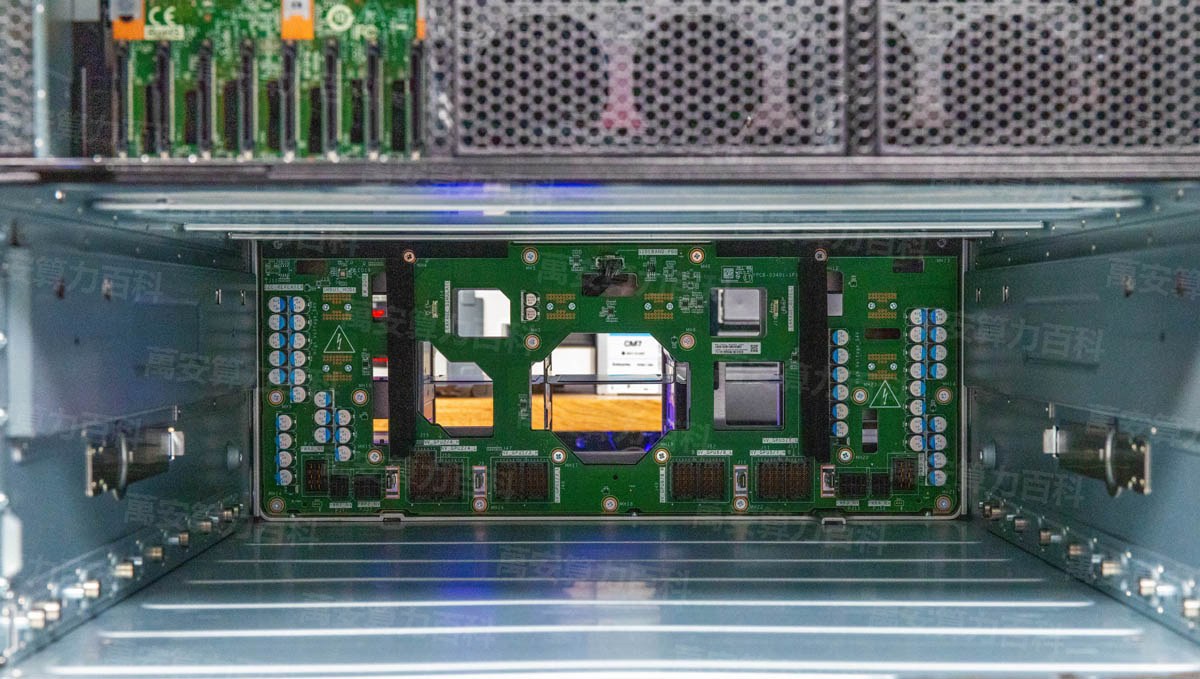
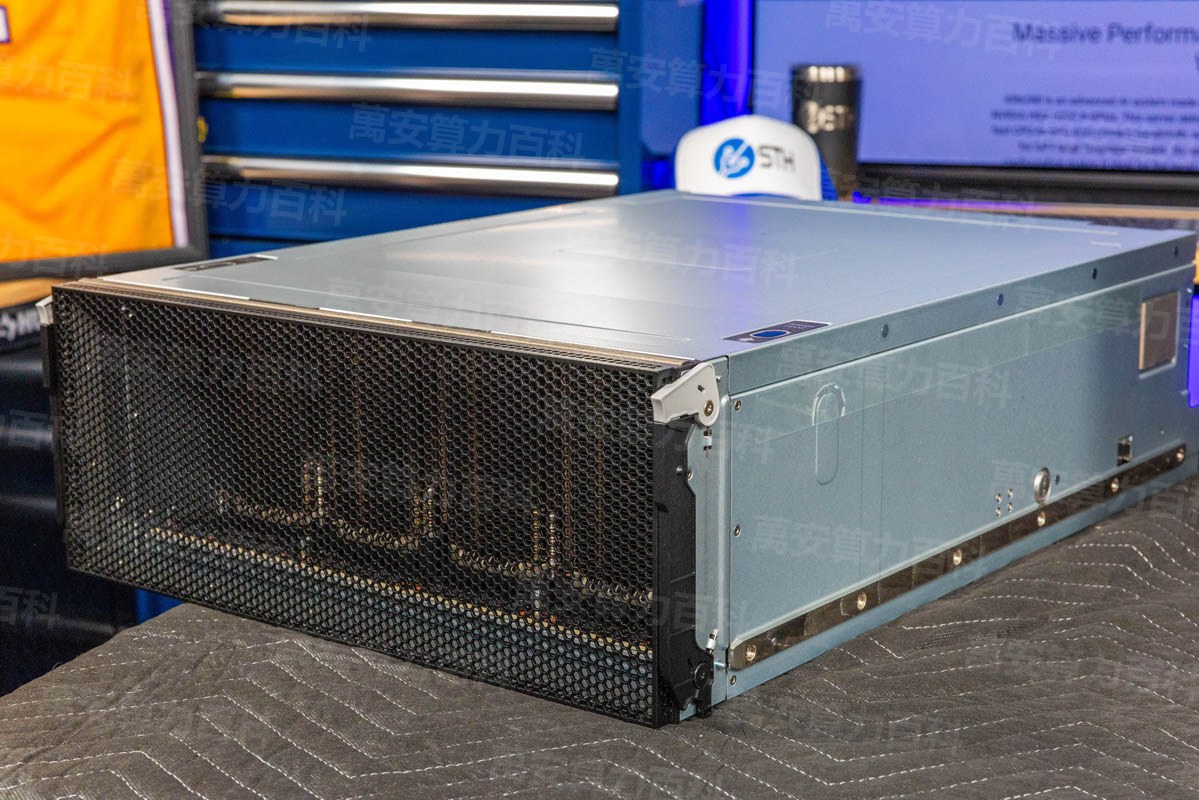
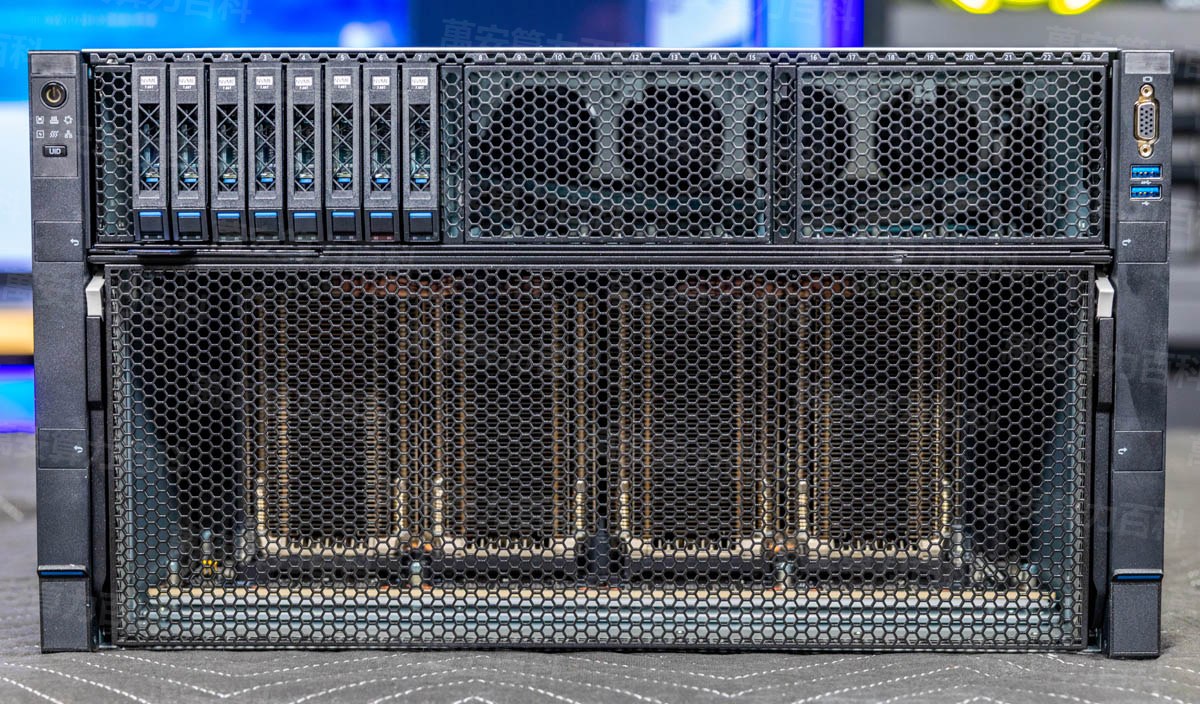
Actual photos are added continuously as inspection batches are stocked; AI-generated images are never passed off as real photos.
Video Overview VIDEO
Community real hardware · Source: YouTube COMMUNITY HANDS-ON
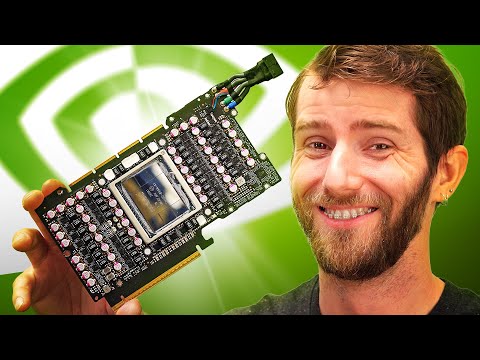
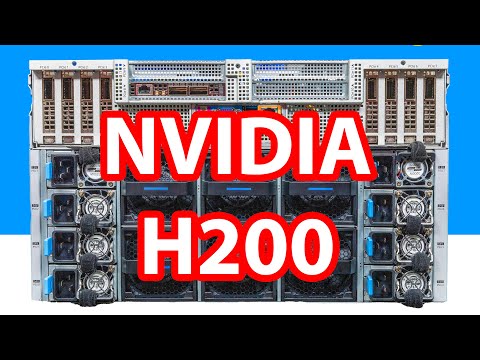
Playback may not be available in some regions
Software & Ecosystem ECOSYSTEM
| Item | Requirements / Status |
|---|---|
| CUDA | 12.4 and above (full Hopper support) |
| Driver | 550 series and above |
| Training frameworks | PyTorch / TensorFlow officially support Hopper |
| Inference engines | vLLM / SGLang / TensorRT-LLM are all adapted |
| Networking | ConnectX-7 400G or an equivalent interconnect solution |
| Operating system | Mainstream Linux distributions (Ubuntu 22.04+ etc.) |
The Hopper ecosystem is the most mature after three years of refinement; software stack versions evolve over time — defer to NVIDIA's official releases.
Purchasing & Inspection PROCUREMENT
Three inspection points when buying an H200:
The full six-item stress-test criteria (values anchored to the H200) are in this entry "How to Stress-Test" section.
How to Stress Test BENCH TEST
Six-item stress-test criteria, all values anchored to the H200: unbox and identify → single-card Burn-in Test (700W air-cooled tower, ≤85℃ with zero ECC errors = Pass) → full-system Full Load → memory bandwidth (4.8TB/s rated, ≥85% = Pass) → Interconnect Bandwidth (nccl-tests ≥750GB/s) → inference throughput (≥80% of public baselines).
nvidia-smigpu-burn 3600 or dcgmi diag -r 3 · 30–60 minutesbandwidthTest(CUDA bundled sample)nccl-tests all_reduce benchmarkvLLM Run a real model under loadMethodology note: The Pass/Excellent thresholds were compiled by this database based on common engineering practice (bandwidth as a share of rated values, temperatures per standard datacenter limits), and will be calibrated gradually as Measured Bandwidth data from Inspection Reports accumulates; this table constitutes no acceptance commitment — specifics are subject to contract terms. The measured items in this database's Inspection Reports are recorded per this table — NOT_EXECUTED means the item was not run; "not tested" is itself important information.
Shipping & Delivery LOGISTICS
OEM & Variants VENDORS
Same HGX H200 baseboard, but each vendor's system differs in form factor, cooling, and service — start your selection with the differences:
| System Vendor | Representative Form Factor | Differentiators | Best For |
|---|---|---|---|
| Supermicro | SYS-821GE-TNHR (8U Air-cooled) | The volume workhorse; widest availability and channel coverage | Spot Purchase · Best Value |
| Dell | PowerEdge series (HGX H200 8) | Global tier-one service network and enterprise-grade support | Multinational Deployment · Service First |
| Gigabyte | HGX H200 8 system | Flexible configurations, strong APAC channel presence | APAC Channel Purchase |
| Aivres | KR6288 (8U Air-cooled) | Fully reviewed by professional media; high transparency | If you want public reviews before deciding |
| AMAX and other integrators | Integrated platforms (e.g., university cluster projects) | Project-based integrated delivery | Bulk projects · Tender scenarios |
AIXX Index · Four-Dimension Deployment Comparison AIXX INDEX
| System Vendor | Ease of Installation | Maintenance Convenience | Performance Density | Expected Lifespan |
|---|---|---|---|---|
| Supermicro | 90 | 85 | 84 | 82 |
| Dell | 90 | 92 | 84 | 85 |
| Gigabyte | 85 | 80 | 86 | 80 |
| Aivres | 86 | 80 | 85 | 81 |
| AMAX and other integrators | 82 | 80 | 84 | 82 |
The AIXX Index is our catalog's estimation methodology (0–100, based on public form factor, cooling solution, and service network differences), updated with hands-on verification, and does not constitute a purchase commitment. Refer to official vendor releases for specific models.
Glossary Cards GLOSSARY
HBM3e Memory
High-bandwidth memory stacked beside the GPU. The H200 offers 141GB HBM3e and 4.8TB/s per card — memory is the core value of this generation.
NVLink Interconnect
Fourth-generation NVLink: 900GB/s direct interconnect between cards, making eight GPUs act as one.
SXM5 Mezzanine Package
GPUs are soldered directly to the baseboard (not plug-in cards); the HGX H200 8-card baseboard is the SXM5 form factor; inspection requires checking the baseboard along with it.
FP8 Precision
An 8-bit floating-point format, the mainstream inference precision; estimate memory footprint as FP8 weights ≈ parameter count × 1 byte.
China-Compliant Batch
The H200 was approved for China in December 2025; batch, customs routing, and compliance status directly affect warranty and resale value — a must-check on inspection.
Limitations & Controversies LIMITS
- Generational Squeeze : outgunned above by the B300 (288GB HBM3e + FP4), squeezed below by a falling H100 — the criticism that "the H200 is just an H100 with more memory" coexists with the defense that "buying an H200 is buying memory"; this library takes no side.
- China Supply Policy Risk : approval, volume shipments, and subsequent quotas all fluctuate with policy cadence, sending channel prices soaring and crashing — the single biggest external risk variable for holding an H200.
- Refurb and Rebranding Risk : H100 units rebranded as H200s have appeared in the spot market (per inspection-agency reports); serial number checks and memory measurements are mandatory procedures.
- Generational Debate : compute parity with the H100 means that if your bottleneck is compute rather than memory, the H200's price-performance edge narrows considerably — confirm your bottleneck is memory before choosing.
Market Band MARKET DATA
| Date | Basis | Region | Reference Price Band | Notes |
|---|---|---|---|---|
| 2026-10-20 | Hall Real-Time | US (USD) | $2.09M – 2.26M | 4 quotes › (batch asking prices) |
| 2026-10-20 | Hall Real-Time | Mainland China | ¥5,850.179M – 7,007.409M | 3 quotes › (batch asking prices) |
| 2025-12 | China channel reference | Mainland China | Approx. ¥1.4M / module | Per media reports[2] · On sale in mainland › |
| 2025-09 | Procurement Case | Mainland China | A batch at ¥2.639M | Xi'an Jiaotong University AMAX H200 platform (public tender award info) |
| 2024-06 | Overseas Anchor Price | North America | From $172,643 / card board | Public channel list price (barebones basis) |
Methodology: All three regions use 8-GPU system pricing, directly comparable —Mainland China: estimated from approved-for-China shipments starting 2025-12 (scarcity premium was high early on, easing after volume ramp in 2026-07; anchored to same-day listings on 2026-10 at 5.85–7M per unit , 3 units); North America: channel system list prices traced back with a gradual climb since launch (anchored to listings on 2026-10 at $2.095–2.268M per unit , 4 units, converted to RMB on the same axis in the chart); Europe: anchored to listed system quotes ( €3.189M per unit , Dell HGX H200). Other regions will come online automatically as listings accumulate in this library. Price data sources for this library: AIXX Exchange (Zero-commission Matching; does not participate in transactions, does not possess or speculate on transaction prices — hence the data's neutrality). The estimated band is for trend reference only; actual price subject to the seller's quote.
Price milestone timeline MILESTONES
FAQ FAQ
Same compute, double the memory: 80GB→141GB HBM3e, bandwidth 3.35→4.8TB/s. In one sentence: the H200 offers nearly double the memory while keeping the H100 ecosystem.
Yes. The full FP8 weights of R1 are roughly 690GB, and an 8-GPU H200 system with 1.128TB total memory can deploy it single-node with reasonable headroom (see "Model Compatibility").
If your bottleneck is memory capacity and budget matters: H200. If you want FP4 compute and next-gen interconnect: B300. They're one generation apart, and the price gap is an order of magnitude—first confirm where your bottleneck lies (see the B300 entry for comparison).
Supply shifts with the rhythm of export policy toward China: approval→volume ramp→quota adjustments, each round directly rewriting channel prices (see "History" and the milestone timeline). This library logs data daily and makes no qualitative judgments.
Yes. H100s rebranded as H200s have appeared on the spot market. Independent serial-number verification plus memory testing are essential steps (see "Purchasing & Inspection").
Related Entries SEE ALSO
Model comparison and selection COMPARE
References REFERENCES
- NVIDIA official site — H200 product page https://www.nvidia.com/en-us/data-center/h200/
- H200 China channel module price around 1.4M yuan per module (2025-12-24)
- Market band data — AIXX Exchange (listings on this platform and channel-informed ranges, updated daily) /hall.html