AIXX Pedia › Networking Equipment Entry › ConnectX-8
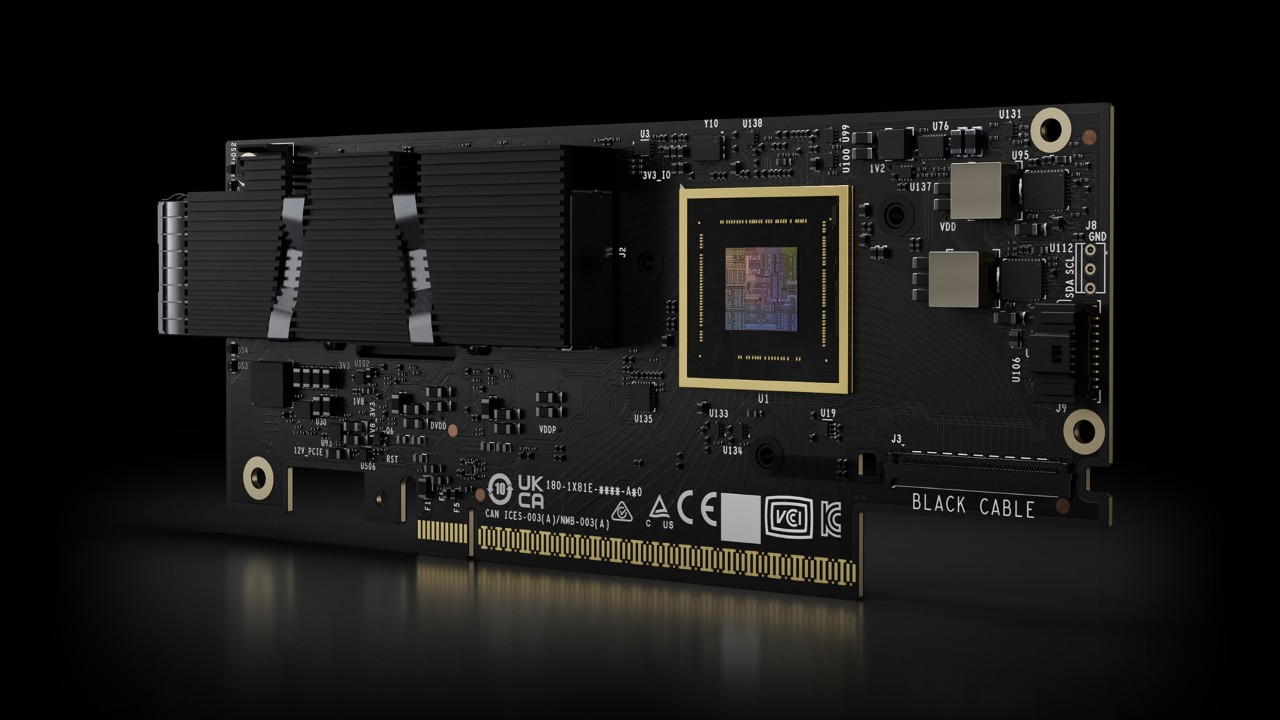
ConnectX-8
Overview OVERVIEW
ConnectX-8 SuperNIC is NVIDIA's 800G-generation network card : announced at GTC in March 2024 alongside the Blackwell platform, per-port bandwidth doubles versus ConnectX-7 to 800Gb/s , and it was among the industry's first PCIe Gen6 adapter cards (backward compatible with Gen5/4 per official statements); port configurations span 4×800G / 8×400G / 16×200G tiers, in both PCIe card and OCP 3.0 form factors.
It is the standard server networking component of the GB300 generation : every GPU in a GB300 NVL72 gets a 1:1 ConnectX-8 800G connection (per official statements), pairing with the two 800G switching platforms — Quantum-X800 (InfiniBand, 144×800G) and Spectrum-X800 (Ethernet) — to weave the scale-out fabric of the AI factory; In-Network Computing acceleration (RDMA/SHARP/GPUDirect offload) carries over CX-7's capabilities, scaled up for 800G.
In the 2026 spot market, ConnectX-8 is in a transition from new launch to spot availability : it flows through with GB300-generation complete systems, while standalone card-level spot stock remains scarce. Procurement should focus on bundled configurations (GB300 system solutions/project surplus); this entry carries no price feed — actual price subject to the seller's quote.
Use Cases FIT
AIXX Index (0–100): a specialized weighting of VRAM 40% + interconnect 30% + ecosystem 30% (network cards weighted by bandwidth + platform + ecosystem).
History HISTORY
March 2024 , GTC announcement: the ConnectX-8 SuperNIC debuted alongside the Blackwell platform and the two 800G switching platforms Quantum-X800/Spectrum-X800 — among the industry's first PCIe Gen6 adapter cards, with 800G per port doubling CX-7 (per GTC statements).
2024–2025 , X800 platform rollout: Quantum-X800 (144×800G IB) and Spectrum-X800 Ethernet switches begin shipping, with CX-8 volume deployment as the access NIC in GB300-generation system solutions (platform figures).
2026 , spot-market positioning: CX-8 primarily circulates within GB300-generation systems and project solutions; standalone card-level spot stock remains scarce, and the previous-generation ConnectX-7 is still the mainstream 400G-era card in circulation. Cross-border circulation policies for high-end networking equipment continue to evolve; procurement should follow regulators' policies and professional advice (per public reporting).
Technical Specifications SPECIFICATIONS
| Item | Specifications (NVIDIA ConnectX-8 · per GTC announcement) |
|---|---|
| Bandwidth | 800Gb/s per port (2× CX-7) |
| Host Interface | PCIe Gen6 (industry first, backward compatible with Gen5/4) |
| Port Configurations | Up to 4×800G / 8×400G / 16×200G variants |
| Acceleration | In-Network Computing inline acceleration: RDMA/collective communications (SHARP)/GPUDirect/data-plane offload |
| Form Factor | PCIe card / OCP 3.0 SNT |
| Paired Platforms | Quantum-X800 (IB) · Spectrum-X800 (Ethernet) |
| Generation Positioning | Successor to ConnectX-7 (400G) · standard networking component of the GB300 generation |
Specifications per NVIDIA GTC announcements and official product pages (as of Oct 2026); power draw and port details per each SKU's datasheet; anything unlisted here = unverified, no fabrication.
X800 Generation · Three-Component Comparison X800 FAMILY
| Role | ConnectX-8 | Quantum-X800 | Spectrum-X800 |
|---|---|---|---|
| Route | Dual-mode access (IB/Ethernet) | InfiniBand switching | Ethernet switching |
| Ports | Up to 4×800G | 144×800G | 512×800G-class (platform figures) |
| Positioning | Server access NIC | IB fabric core | Ethernet fabric core |
| One-line buying advice | GB300-generation standard access | IB-route X800 core | Ethernet-route X800 core |
QM9700/SN5600 (previous-gen 400G) have their own entries; see the QM9700 vs SN5600 comparison page for route selection.
Family Members FAMILY
The ConnectX family is tiered by bandwidth generation; CX-8 is the 800G generation, family members below:
Cooling & Deployment COOLING
ConnectX-8 continues the HHHL card and OCP 3.0 dual form factor, with passive cooling relying on server airflow. The three-point deployment checklist mirrors CX-7 but with tier upgrades: PCIe platform — Gen6 is the prerequisite for saturating multiple 800G ports; Gen5 platforms are backward compatible but bandwidth-limited (verify host platform generation before purchase); Cages and cabling — 800G-generation OSFP cages and modules differ from the 400G tier; budget cabling distances and modules against 800G; Firmware mode — VPI dual-mode (IB/Ethernet) switching logic matches CX-7; verify firmware configuration on delivery.
In GB300 system solutions, CX-8 ships in racks at a 1:1 per-card ratio — when sourcing standalone card-level spot stock, verify provenance (system teardown/channel new) and firmware status to the same CX-7 standard.
Network Fit FABRIC FIT
| Cluster Form | CX-8's Role | AIXX Index |
|---|---|---|
| GB300-generation system clusters | Standard 1:1 per-card access, 800G straight into X800 switching platforms | 93 |
| 800G IB fabric | Paired with Quantum-X800, SHARP/GPUDirect offload scales with 800G | 90 |
| 800G Ethernet (Spectrum-X800) | Ethernet-mode access, the 800G access component of the cloud multi-tenant route | 88 |
| 400G legacy fabric | Backward compatible but capability sits idle — CX-7 is more cost-effective for 400G scenarios | 58 |
Network tiering compiled from public platform figures (estimated).
Gallery GALLERY
ConnectX-8 official images and field photos will be added continuously with each inspection batch; AI-generated images are never passed off as real photos.
Software & Ecosystem ECOSYSTEM
| Item | Requirements / Status |
|---|---|
| Driver | MLNX_OFED (Linux) — same stack as CX-7, toolchain is shared |
| Firmware Tools | MFT — firmware flashing, VPI mode switching (same process as CX-7) |
| Stress-Test Tools | perftest suite (ib_write_bw etc.) — the standard toolset for 800G-tier measured testing |
| Collective Communication | Native recognition by NCCL/rccl; SHARP requires coordination on the switch side |
| Platform Pairing | Quantum-X800 / Spectrum-X800 switching platforms + GB300-generation systems |
The ConnectX ecosystem toolchain works across generations; versions evolve over time — defer to official NVIDIA releases.
Purchasing & Inspection PROCUREMENT
Three verification points when buying ConnectX-8:
The six-point stress-test framework mirrors the CX-7 entry (unboxing identification → single-card bandwidth → latency → bidirectional paired testing → firmware verification → extended Burn-in Test), with figures scaled to CX-8 tiers.
Shipping & Delivery LOGISTICS
Glossary Cards GLOSSARY
SuperNIC
Positioning as a network acceleration card for AI clouds: not just a "faster NIC," but an intelligent network entry point carrying RDMA/collective communications/GPUDirect offload — NVIDIA's term defining CX-8's role in the AI factory.
PCIe Gen6
Sixth-generation PCIe interconnect: per-lane bandwidth doubles again — CX-8 is among the industry's first Gen6 adapter cards, and an 800G multi-port configuration needs a Gen6 host platform to be fully exploited; backward compatible with Gen5/4 but bandwidth-limited.
X800 platform generation
NVIDIA Networking's umbrella term for the 800G generation: Quantum-X800 (IB switching) + Spectrum-X800 (Ethernet switching) + ConnectX-8 (access) — the complete fabric solution paired with the Blackwell Ultra/GB300 generation.
In-Network Computing
In-Network Computing acceleration: data-plane operations such as RDMA, collective communication aggregation (SHARP), and GPUDirect execute inline on the NIC/switch — CX-8 scales this capability to 800G bandwidth.
Limitations & Controversies LIMITS
- Gen6 platform dependency : CX-8's multi-port 800G capability requires a PCIe Gen6 host to be fully exploited — legacy Gen5 servers running CX-8 is a downgrade; verify the platform before purchase (compiled by AIXX Pedia).
- Scarce card-level spot stock : CX-8 primarily circulates with GB300 systems and project solutions; standalone card-level spot channels are not yet mature — factor lead times into urgent single-card purchases (compiled by AIXX Pedia).
- 800G cable and module costs : 800G-generation OSFP modules and cables are a new cost curve — budget wiring on 800G terms, don't reuse the old 400G-era list (AIXX Pedia compiled standard).
- Cross-border trade policy variables : Export control policies for high-end networking equipment continue to evolve (as publicly reported) — AIXX Pedia offers this only as a policy-evolution reminder; actual determinations depend on the competent authority's policies and professional advice, and this is not legal advice.
Market Notes MARKET NOTE
ConnectX-8 mostly moves as part of GB300 systems and project solutions; card-level spot channels are still immature — no verifiable unified market snapshot is available yet, AIXX Pedia honesty principle: no market band; prices are subject to the seller's quote 。
Spot search: AIXX Exchange Hall › (Zero-commission Matching; no involvement in transactions; no knowledge of or speculation on transaction prices — hence data neutrality). This section will switch to a standard market band once enough snapshots accumulate.
Price milestone timeline MILESTONES
FAQ FAQ
Three things: doubled bandwidth (800G vs 400G), a platform-generation jump (PCIe Gen6 debut vs Gen5), and the companion generation (X800 switch platform and GB300 systems vs the QM9700 and H100/H200 generation). The toolchain is the same stack; migration cost lies mainly in cables, modules, and the new platform.
Physically yes (backward compatible), but bandwidth is limited — the full 800G multi-port capability needs a Gen6 platform. For existing Gen5 clusters, CX-7 NICs are the more economical choice; move to CX-8 when the platform upgrades.
CX-8 mostly moves as part of GB300 systems and project solutions; card-level spot channels are still immature. If a channel quotes a standalone card price, verify to GB300 teardown standards (firmware/Part Number/measured 800G tier).
It follows the VPI dual-mode design philosophy — the shipping firmware determines the operating mode. At purchase, match firmware mode to the target fabric (Quantum-X800 or Spectrum-X800), same verification discipline as CX-7.
Related Entries SEE ALSO
Model comparison and selection COMPARE
References REFERENCES
- NVIDIA website — ConnectX-8 product page (announced at GTC 2024, 2026-10) https://www.nvidia.com/en-us/networking/ethernet-adapters/
- NVIDIA website — Quantum-X800 platform page (X800 IB switching platform) https://www.nvidia.com/en-us/networking/infiniband-switching…
- NVIDIA website — Spectrum-X platform page (Ethernet roadmap) https://www.nvidia.com/en-us/networking/spectrumx/
- Spot search — AIXX Exchange (Zero-commission Matching; no market snapshots for CX-8 yet, prices subject to the seller's quote) https://www.aixx.vip/hall.html?model=ConnectX-8