AIXX Pedia › Model Entry › H20

H20
Overview OVERVIEW
H20 (NVIDIA H20) is an export-compliant China-market Variant data center GPU developed by NVIDIA specifically for the Chinese market under U.S. export control policy: Hopper architecture (GH100 derivative), shipped to market in 2024 , alongside other China-market variants such as L20/L2 in the same batch. It is the successor to the A800/H800 variant line after the October 2023 tightening of controls brought those parts under licensing restrictions[2][7]。
Its design logic was an openly declared trade-off: with export controls capping compute metrics, H20 cut Tensor compute to roughly one-tenth of an H100 on a like-for-like basis (per media reports), while preserving 96GB of HBM3 large memory, 4.0TB/s bandwidth, and the same generation's NVLink 900GB/s interconnect — memory and bandwidth actually exceed the H100. This is a card built for inference, not training[1]。
Its fate swung back and forth: the DeepSeek boom of January 2025 triggered a buying spree (8-GPU servers briefly rose to around RMB 1.1 million per unit, per public reporting[6]); in April 2025 the U.S. briefly required licenses and NVIDIA took a charge of roughly $5.5 billion; in July 2025 approval to resume sales was granted; as policy and procurement conditions fluctuated afterwards, H200 was approved for China in December 2025 as the successor, and H20 gradually exited center stage in the supply landscape (composite of public reporting[4][5]). In the 2026 spot market, H20 exists mainly as early Installed-base Circulation.
Use Cases FIT
AIXX Index (0–100): estimated by this Pedia via weighted public specifications — memory 40% + interconnect 30% + ecosystem 30%, with weights adjusted by use case. 90+ flagship tier · 75+ Excellent · 60+ usable · below 60 not recommended. The methodology is transparent and verifiable, and does not constitute a performance guarantee.
History HISTORY
October 17, 2023 : U.S. export controls tightened, bringing the A800/H800 China-market variants under licensing; NVIDIA pivoted to a new round of compliant variants — media reported in December 2023 that it was developing new chips for China (later named H20, with L20/L2 in the same batch)[2][7]。
2024 : H20 shipped to market (that year's shipments were mainly the HBM3 8-Hi version, per TrendForce[3]); complete systems with the HGX H20 8-GPU module were brought to market by Inspur, H3C, and others; NVIDIA never opened an official product page, so specs rely on media and OEM documentation. Early shipments were weak — compute cuts compounded by competition from domestic alternatives (per public reporting).
2025 was a year of dramatic swings: in January–February the DeepSeek boom triggered a buying spree, with 8-GPU servers rising from about RMB 1 million to about RMB 1.1 million per unit and major players ordering inference capacity in bulk (per STCN/Cailian Press reporting[6]); in April the U.S. required licenses for exports to China, and NVIDIA took a charge of about $5.5 billion (of which about $2.5 billion was undeliverable H20[3]); on July 15 approval to resume sales was granted (later media reports noted revenue-sharing arrangements); from August the procurement environment turned cautious, with rumors of production wind-down and coverage of successor chips appearing in the press[4]。
Late 2025 to present : in December H200 was approved for China as the successor (HBM3E memory still restricted, per mydrivers reporting[5]); in 2026 media reported NVIDIA's China AI chip sales had effectively stalled while domestic vendors' share rose (CNBC 2026-02, LA Times 2026-06[4][8]). H20's spot-market role has shifted to Installed-base Circulation: systems bought in the early rush are still serving in Chinese data centers and being resold. All statements in this entry are based on public reporting and do not constitute legal advice.
Technical Specifications SPECIFICATIONS
Scope note: NVIDIA has no official H20 product page (the China-market Variant is not in its global product line), so the table below reflects media and Server OEM / Integrator disclosed figures ; where fields differ across sources, conservative values are used; rely on on-arrival firmware reports and measured data.
| Item | Specifications (H20 · media-disclosed figures) |
|---|---|
| GPU Core | NVIDIA Hopper (GH100 export-compliant China-market Variant derivative) |
| Board Memory | 96GB HBM3 (upgraded version ~148GB HBM3e · per reporting) |
| Memory Bandwidth | 4.0TB/s per card (above H100's 3.35TB/s) |
| FP16 / BF16 Tensor Core | About 148 TFLOPS (dense; ~296 sparse) |
| FP8 Tensor Core | About 296 TFLOPS (media figures) |
| FP32 | About 44 TFLOPS (media figures) |
| GPU-to-GPU Interconnect | NVLink 4th gen · 900GB/s (per HGX H20 8-GPU module figures) |
| Host interconnect | PCIe Gen5 x16 |
| Board Power (TBP/TGP) | About 400W TDP (mainstream media figures; some channel pages list 350W) |
| CUDA core count | About 41% fewer than H100 (media figures) |
| Mainstream System Form Factors | HGX H20 8-GPU baseboard systems (Inspur / H3C / Supermicro etc.) · PCIe single card |
| Drivers / CUDA | 535-series drivers and up (H3C official documentation, on-machine detection record: NVIDIA-SMI 535.161.08 / CUDA 12.2) |
| Previous Generation / Competing Product | A800 / H800 (now under controls) / H100, H200 |
Specs cross-checked against public media sources[1]; Tensor compute figures should be verified with on-arrival firmware reports and measurements — the absence of an official page backing factory data is an H20-specific selection risk (see "Limitations & Controversies").
Generational comparison · how the three same-generation cards differ GENERATIONS
| Item | H100 80GB | H20 96GB | H200 141GB |
|---|---|---|---|
| Board Memory | 80GB HBM3 | 96GB HBM3 | 141GB HBM3e |
| Memory Bandwidth | 3.35TB/s | 4.0TB/s | 4.8TB/s |
| FP16/BF16 Tensor (sparse) | 1,979 TFLOPS | About 296 TFLOPS (media figures) | 1,979 TFLOPS |
| FP8 Tensor (sparse) | 3,958 TFLOPS | About 296 TFLOPS (media figures) | 3,958 TFLOPS |
| GPU-to-GPU Interconnect | NVLink 4 · 900GB/s | NVLink 4 · 900GB/s | NVLink 4 · 900GB/s |
| Board Power (TBP/TGP) | Up to 700W | About 400W | Up to 700W |
| China channel | Not approved for open sale | Export-compliant China-market Variant · shifting policy (neutral figures) | Approved for China 2025-12 |
| One-line buying advice | Full compute · largest ecosystem | Compute traded for access · large-memory inference | Doubled memory · volume workhorse |
H100/H200 figures are from official pages, H20 from media-disclosed figures; China channel status is per public reporting and evolves with policy, not legal advice.
Family Members FAMILY
The H20 family splits into four branches by package and memory version; the spot market centers on HGX 8-GPU systems and PCIe single cards:
Cooling & Deployment COOLING
Within the Hopper family, H20 is the easiest generation to deploy : Board Power (TBP/TGP) of about 400W (media figures) is only 60% of H100/H200 (700W class); the HGX 8-GPU system is a mature Air-cooled tower design, and the PCIe single card is plug-and-play in a dual-slot air-cooled configuration — installed server rooms can rack it without liquid-cooling retrofits, one reason it was chosen by LLM all-in-one appliance lines in early 2025 (per public reporting).
Model Compatibility MODEL FIT
| Model / Scenario | Memory requirement (FP8 estimate) | H20 deployment (8 GPUs, 768GB) | AIXX Index |
|---|---|---|---|
| DeepSeek R1 full (671B) | ~690GB | Eight cards fit it — 96GB×8=768GB, one of the mainstream configurations for DeepSeek full-scale inference appliances in early 2025 (per public reporting); headroom is tight, so KV cache needs careful budgeting | 78 |
| R1-Distill 70B-class | ~70GB | Single-card 96GB has ample headroom, more comfortable than H100 (80GB borderline) | 88 |
| 72B-class open-source models | ~72GB | Deployable on a single card, but long context requires KV cache headroom | 85 |
| 7B-14B class (incl. small video-generation models) | ~8-30GB | Easy on one card; mass production lines scale concurrency with multiple cards | 90 |
Memory estimated from FP8 weights ≈ parameter count × 1 byte (estimation basis, excluding KV cache and activation headroom); "fits" refers to memory capacity only — generation speed is affected by compute cuts (Tensor compute about one-tenth of H100, media figures) — verify throughput by measurement. The AIXX Index reflects this entry's estimation methodology.
Gallery GALLERY
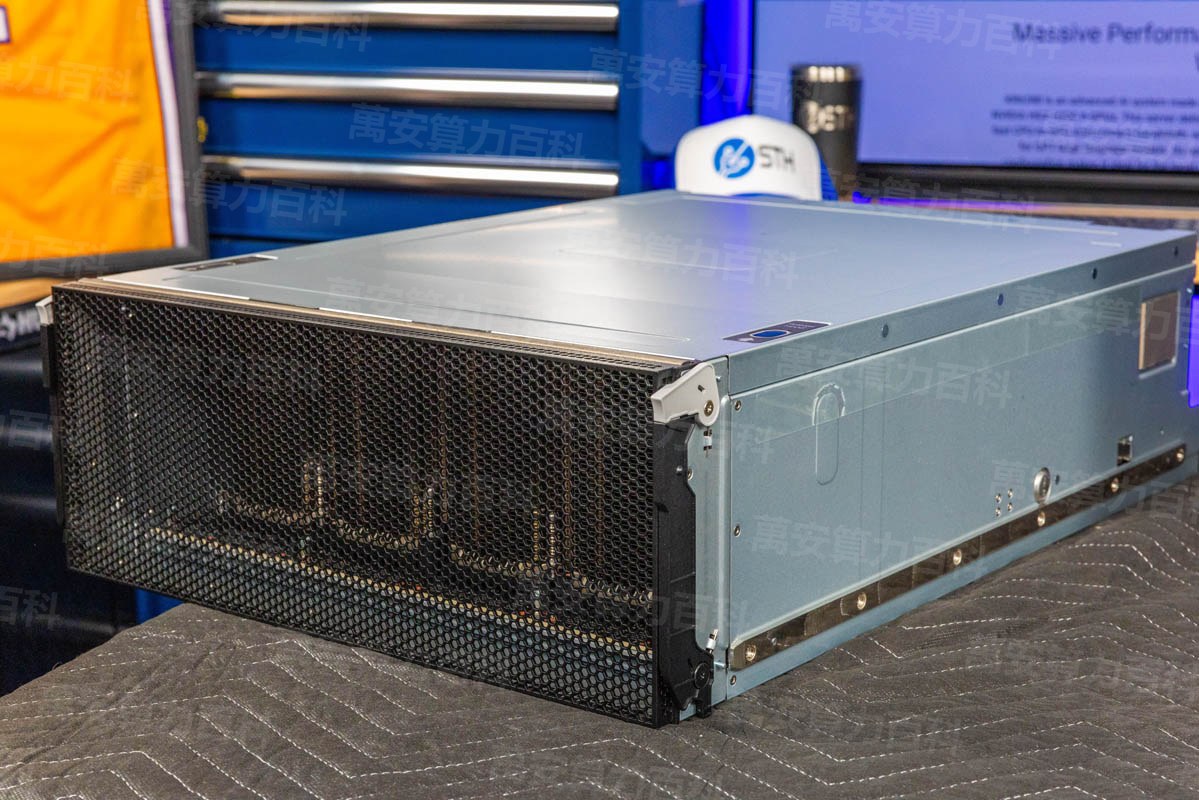
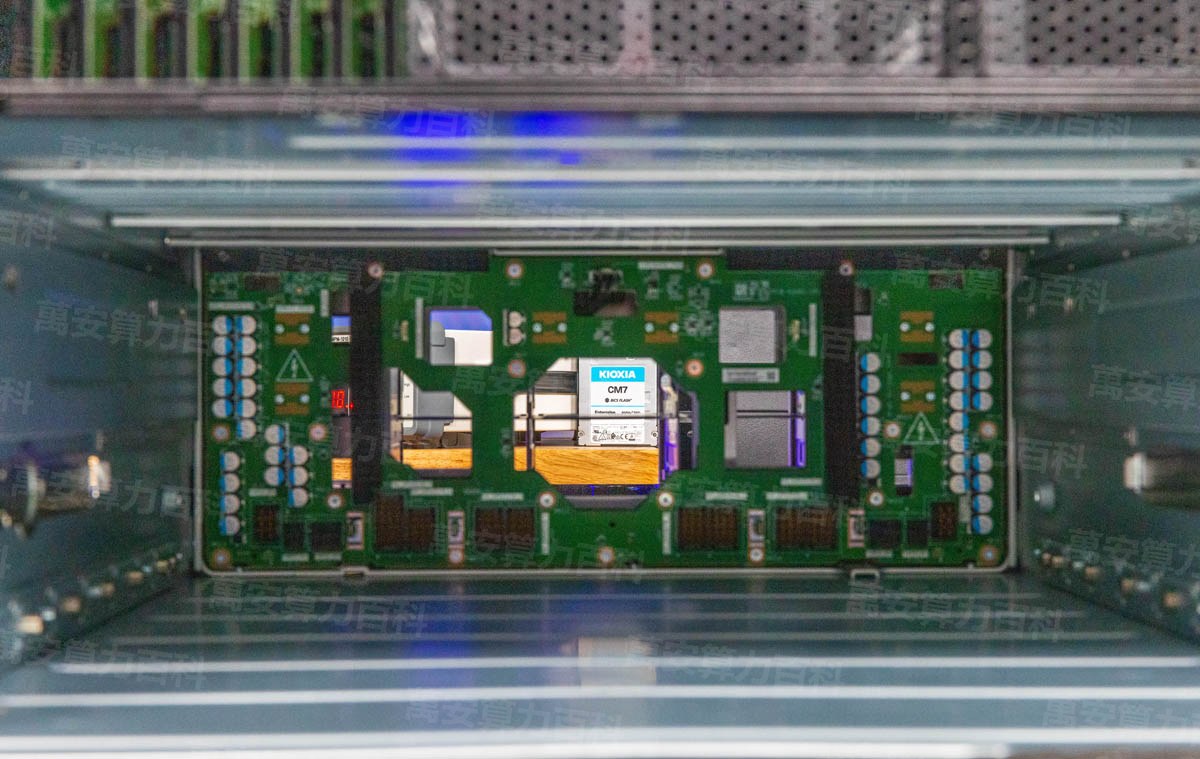
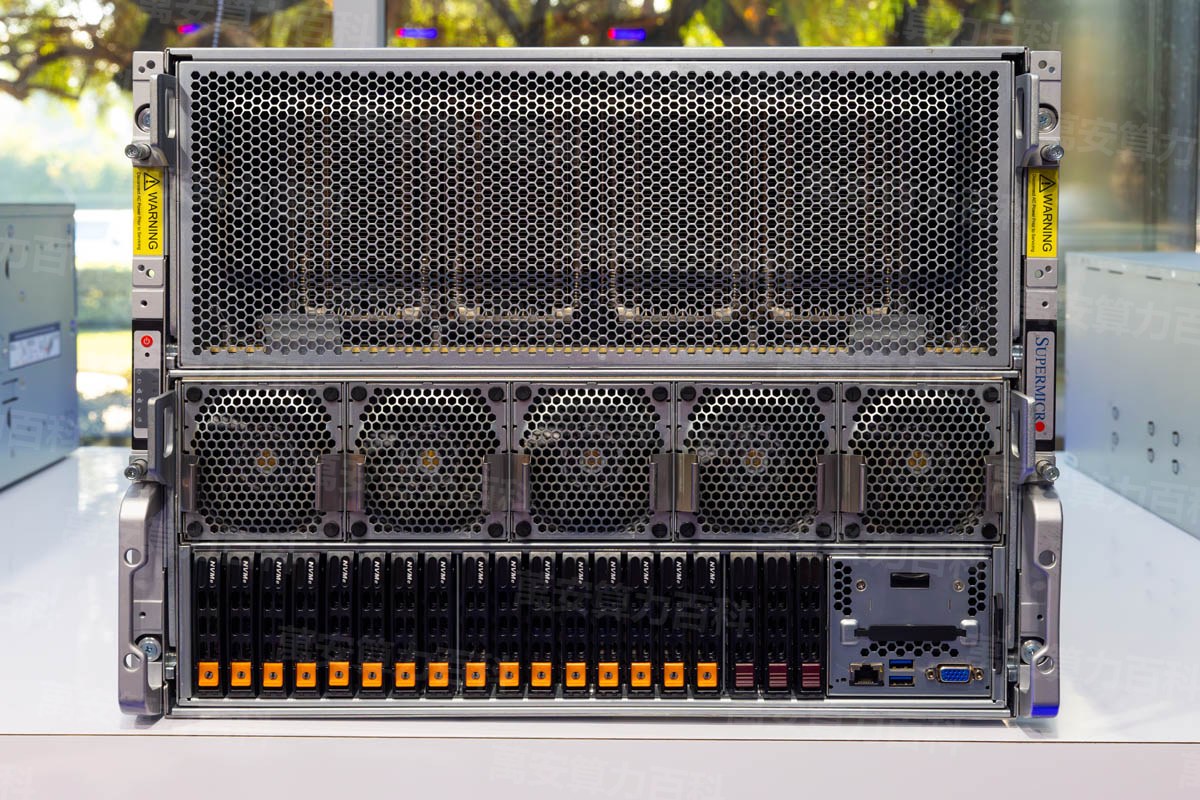
Note: H20 is a China-market Variant model; NVIDIA has no official product page and overseas authoritative hardware media have no hands-on reviews, so this entry currently uses Server OEM / Integrator images; actual inspection photos will be added continuously as this library's verification batches come in (this library's verification photos are the highest-priority image source). AI-generated images are never passed off as actual photos; H100/H200 and H20 all share the Hopper-family appearance, so photos cannot serve as identification evidence (see "Procurement & Verification").
Video Overview VIDEO
Community hands-on · source Bilibili COMMUNITY
Community hands-on content is from Bilibili creators (click to load the official Bilibili player; watchable directly on-site); copyright belongs to the original uploaders. This video is an H20-specific case (all figures anchored to H20 actuals: 96GB / 4.0TB/s / 400W / HGX NVLink 900GB/s · single-card PCIe figures labeled as-is); narration and on-screen text archives are in repo _wiki_work_1006/gen_tts_benchh20.py.
Community real hardware · Source: YouTube COMMUNITY HANDS-ON

Playback may not be available in some regions
Software & Ecosystem ECOSYSTEM
| Item | Requirements / Status |
|---|---|
| CUDA / drivers | 535-series drivers and up (H3C official deployment documentation, on-machine record: NVIDIA-SMI 535.161.08 / CUDA 12.2 detects H20) |
| Training frameworks | PyTorch / TensorFlow officially support Hopper; H20 is compute-limited, so training is mainly small-scale fine-tuning |
| Inference engines | vLLM / SGLang / TensorRT-LLM all natively supported; large memory + high bandwidth is the foundation of its inference throughput |
| Networking | ConnectX-7 400G or equivalent interconnect (per Server OEM / Integrator standard configuration) |
| Operating system | Mainstream Linux distributions (Ubuntu 22.04+ etc.) |
H20 belongs to the Hopper ecosystem alongside H100/H200 and shares the software stack entirely — there is no "ecosystem shrink," only a "compute shrink." Software stack versions evolve over time; refer to NVIDIA official releases.
Purchasing & Inspection PROCUREMENT
Verification points for H20 procurement (three items):
Full six-item Burn-in Testing verdicts (values anchored to H20 actuals) are in this entry "How to Stress-Test" section.
How to Stress Test BENCH TEST
Six-item Burn-in Testing methodology, all verdict values anchored to H20 actuals: unboxing identification → single-card Burn-in Test (400W-class air-cooled tower, ≤85℃ with zero ECC errors = Pass) → full-system Full Load → memory bandwidth (rated 4.0TB/s, ≥85% = Pass) → interconnect (HGX unit nccl-tests ≥750GB/s / PCIe single card verify Gen5 x16 full link) → inference throughput (≥80% of public benchmarks).
nvidia-smigpu-burn 3600 or dcgmi diag -r 3 · 30–60 minutesbandwidthTest(CUDA bundled sample)nccl-tests all_reduce benchmarkvLLM Run a real model under loadMethodology note: The Pass/Excellent thresholds were compiled by this database based on common engineering practice (bandwidth as a share of rated values, temperatures per standard datacenter limits), and will be calibrated gradually as Measured Bandwidth data from Inspection Reports accumulates; this table constitutes no acceptance commitment — specifics are subject to contract terms. The measured items in this database's Inspection Reports are recorded per this table — NOT_EXECUTED means the item was not run; "not tested" is itself important information.
Shipping & Delivery LOGISTICS
OEM & Variants VENDORS
Same HGX H20 baseboard — what differentiates each OEM's system is form factor, cooling, and service. Compare the differences before choosing:
| System Vendor | Representative Form Factor | Differentiators | Best For |
|---|---|---|---|
| Inspur | YuanNao NF5688G7 and similar (HGX Hopper 8-GPU module) | Leading share in domestic AI servers, mature all-in-one appliance production[9] | Domestic deployment · appliance production |
| H3C | UniServer series (HGX H20 8-GPU) | Complete official deployment documentation (public H20 live-device identification records), deep service network[10] | Enterprise customers · documentation and service |
| Supermicro | HGX H20 8-GPU systems (China channel) | Volume OEM with a global supply chain background (per public reporting) | Value-focused · bulk purchasing |
| PCIe single-GPU integrators | 4U/2U tower/rack with 8×PCIe H20 | No NVLink full interconnect, lower cost, suited mainly for inference workloads | Inference pipelines · budget first |
AIXX Index · Four-Dimension Deployment Comparison AIXX INDEX
| System Vendor | Ease of Installation | Maintenance Convenience | Performance Density | Expected Lifespan |
|---|---|---|---|---|
| Inspur | 88 | 86 | 82 | 80 |
| H3C | 86 | 88 | 81 | 82 |
| Supermicro | 84 | 80 | 84 | 80 |
| PCIe single-GPU integrators | 90 | 82 | 68 | 78 |
The AIXX Index is our catalog's estimation methodology (0–100, based on public form factor, cooling solution, and service network differences), updated with hands-on verification, and does not constitute a purchase commitment. Refer to official vendor releases for specific models.
Glossary Cards GLOSSARY
China-market Variant
A model engineered under U.S. export control policy, with performance reduced below licensing thresholds to enter the Chinese mainland market legally. The H20 is the Hopper generation's China-market line (following the A800/H800). The trade-off logic: keep memory, bandwidth, and interconnect; cut Tensor compute. All statements in this database reflect public reporting and do not constitute legal advice.
96GB HBM3 · 4.0TB/s
The H20's core strength: per-card memory and bandwidth both exceed the H100 (80GB / 3.35TB/s) — export controls target compute metrics, not memory capacity. A rare case of a "compliance variant that is actually stronger in one respect."
NVLink 4 · 900GB/s
Fourth-generation NVLink; the HGX H20 8-GPU module is same-generation, same-speed as the H100/H200. PCIe single-card variants have no NVLink — clarify the form factor first when planning multi-GPU networking.
HGX H20 8-GPU module
Eight H20 GPUs on a baseboard, fully interconnected via NVSwitch, with 768GB of total memory — DeepSeek R1 at full FP8 precision (~690GB) fits on a single system. This is exactly why it was snapped up in early 2025 (estimated figures + public reporting).
Licensing / approval reinstated
In April 2025 the U.S. required licenses for H20 exports to China (NVIDIA took an ~$5.5 billion charge); on July 15, 2025 sales were approved to resume, after which supply and procurement conditions fluctuated with policy. Batch and license status affect warranty and resale value — always check on inspection. Not legal advice.
Limitations & Controversies LIMITS
- Biggest weakness is the compute cut (stated plainly) : FP16/FP8 Tensor compute is roughly one-tenth of the H100/H200 on comparable metrics (as disclosed by media[1]) — this is the trade for compliant access to the mainland market: fine for inference, entirely unsuitable for training and compute-dense workloads. Buying it as a training card is the biggest selection mistake.
- No official spec page to back it up : NVIDIA has no official H20 product page, and circulating specs are inconsistent (INT8/sparse figures vary; a 300GB/s NVLink figure is a common error) — every figure in this entry is tagged with its disclosure source. Verification should rely on firmware reports and real-world benchmarks.
- Uncertain product lifecycle : Since August 2025, reports of winding down production have alternated with news of successor chips (B30A, etc.), and successor approval remains unresolved (public reporting[4]) — long-term spare parts, driver support, and resale value expectations carry uncertainty. This database makes no definitive judgment.
- Fluctuating mainland procurement environment : Reports of regulatory caution and security review since August 2025, and H200 approval to succeed in December 2025 — legitimate mainland procurement paths for the H20 have shifted with policy (neutral wording, public reporting, not legal advice).
- Variant-specification pitfalls : The original 96GB HBM3 version and the ~148GB HBM3e upgraded version (per reporting) are often conflated; price gaps between HGX systems and PCIe single cards are large — always confirm version and form factor before quoting on "H20 servers."
- High second-hand price volatility : During the January 2025 buying frenzy, prices rose ~¥100,000 per system in a single month, and reports of supply cuts in April 2025 drove short-term spikes (public reporting) — prices swing sharply on policy news. Quotes are subject to real-time sellers; see the "market band."
Market Band MARKET DATA
| Date | Basis | Region | Reference Price Band | Notes |
|---|---|---|---|---|
| 2025-02 | Channel reports | Mainland China | 8-GPU system ~¥1.1M/unit (up over ¥100K from before the New Year) | Cailian Press reporting[6] |
| 2025-02 | Channel reports | Mainland China | Single-card price ~¥110K each | Cailian Press reporting[6] |
| 2025-07 | Supply-demand outlook | Mainland China | Sales resumption approved; expected to rise to 6% of 2025 HBM consumption share | TrendForce[3] |
| 2026-10-20 | This database marketplace | — | No H20 units currently listed | Verified in this database (family-level listings checked against exact model numbers); market snapshots accumulated daily since 2026-10-20, auto-populated when stock is available |
Chart scope: no H20 units are currently listed in this database, and external anchor prices are only sporadic points — no estimated band will be drawn (plotting a curve from scattered points would be fabricating data; we don't publish what hasn't been verified). The price trend chart will go live automatically as daily market snapshots accumulate (same approach as the H100/H200 entries).
Price milestone timeline MILESTONES
FAQ FAQ
Look at the bottleneck. For inference and large-memory workloads (70B-class on one card, R1 full precision on eight), the H20's 96GB/4.0TB/s actually exceeds the H100's 80GB/3.35TB/s — plus it was the compliant model available in mainland China, and its 400W TDP makes deployment easy. For training, fine-tuning speedups, and compute-dense workloads, the H20's Tensor compute is roughly one-tenth of the H100 on comparable metrics (media reporting) — go straight to the H100/H200. In one line: the H20 sells memory and market access; the H100/H200 sell compute.
The H20 is a China-market compliant model under U.S. export control policy: launched in 2024, made license-restricted in April 2025, approved to resume in July 2025, with supply and procurement conditions fluctuating with policy since (public reporting). Current spot supply is mostly early installed-base circulation; new-unit supply has stalled. This is not legal advice — procurement compliance should be confirmed against authorities' policy and professional counsel.
Export controls target compute metrics, not memory — the H20 kept 96GB HBM3 and 4.0TB/s bandwidth (above the H100's 80GB / 3.35TB/s), while Tensor compute was cut. So it's a card built for inference: large-model inference is memory- and bandwidth-hungry, not peak-compute hungry.
The 2024 mainstream shipment was the original 96GB HBM3 version; the ~148GB HBM3e upgraded version appears in later reporting (some reports cite 141–148GB). The two look identical externally — verify with nvidia-smi memory readings and firmware reports, and always state the version explicitly in purchase contracts.
Yes: eight HGX H20 GPUs total 768GB (96GB×8), which fits the full FP8 weights of ~690GB (estimated figures) — precisely why DeepSeek inference appliances widely adopted the H20 in early 2025 (public reporting). But note that "fits" doesn't mean "fast": generation throughput is affected by the compute cuts — benchmark before relying on it.
Related Entries SEE ALSO
Model comparison and selection COMPARE
References REFERENCES
- MIT Technology Review China — NVIDIA resumes H20 sales in China (96GB HBM3 / 4.0TB/s / FP8 296 TFLOPS / FP16 148 TFLOPS / 41% fewer cores than H100) https://www.mittrchina.com/news/detail/15016
- Press — report on NVIDIA developing compliant chips for China (2023-12, as relayed) https://www.reuters.com/technology/
- TrendForce — H20 Export Approval Reignites Demand Momentum (2024 HBM3 8-Hi batches / HBM3e upgrade plan / ~$2.5B in April 2025 unshippable / export resumed 2025-07-15) https://www.trendforce.com/presscenter/news/20250716-12644.h…
- CNBC — Nvidia still hasn't sold its U.S.-approved China AI chips(2026-02-26) https://www.cnbc.com/2026/02/26/nvidia-china-chip-sales-expo…
- MyDrivers/Sina Finance — H200 can be sold but HBM3E remains restricted (2025-12-11, corroborating the H20-to-H200 handoff) https://finance.sina.com.cn/tech/discovery/2025-12-12/doc-in…
- Cailian Press — Up ¥100K from before the New Year! H20 has become "big tech's favorite" (2025-02, 8-GPU systems ~¥1.1M/unit, single card ~¥110K) https://www.cls.cn/detail/1956679
- CRS R48642: U.S. Export Controls and China: Advanced Semiconductors (authoritative Export Control Timeline reference) https://www.congress.gov/crs-product/R48642
- Los Angeles Times — Nvidia's AI chip sales in China stall as local chipmakers like Huawei take lead(2026-06-29) https://www.latimes.com/business/story/2026-06-29/
- Inspur — YuanNao NF5688G7 AI server product page (HGX-Hopper-8GPU module; source of this entry's system photo) https://www.ieisystem.com/product/ai/15080.html
- H3C — H20 deployment documentation (NVIDIA-SMI 535.161.08 / CUDA 12.2 live-device identification record) https://www.h3c.com
- Tom's Hardware — Nvidia responds to reports that its H20 GPU for China is ending production (B30A pending approval reporting) https://www.tomshardware.com/tech-industry/artificial-intell…
- Nvidia working on new AI chip for China that outperforms H20(2025-08-19) https://www.reuters.com/technology/nvidia-working-new-ai-chi…
- GPU Database — NVIDIA H20 (9984 CUDA / 60MB L2 / 400W figures) https://www.techpowerup.com/gpu-specs/nvidia-h20.c4184.html
- Market-band data — AIXX Exchange (platform listings and channel-informed ranges, updated daily; H20 currently 0 units listed, recorded as-is) https://www.aixx.vip/hall.html