Spec Card SPEC CARD
NVIDIA L40S
Ada-generation 48GB single-card all-rounder for inference/rendering/Omniverse, FP8 sparse performance at 1,466 TF plus AV1 encode/decode — currently one of the highest-volume large-VRAM Ada cards circulating in domestic spot inventory
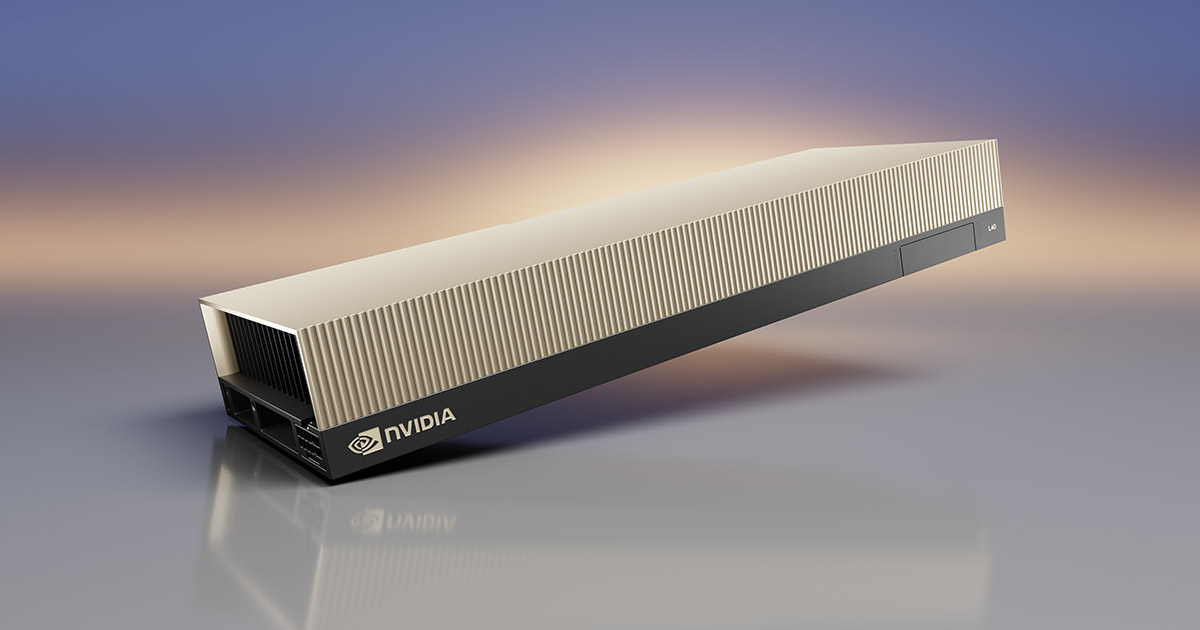
NVIDIA official product image
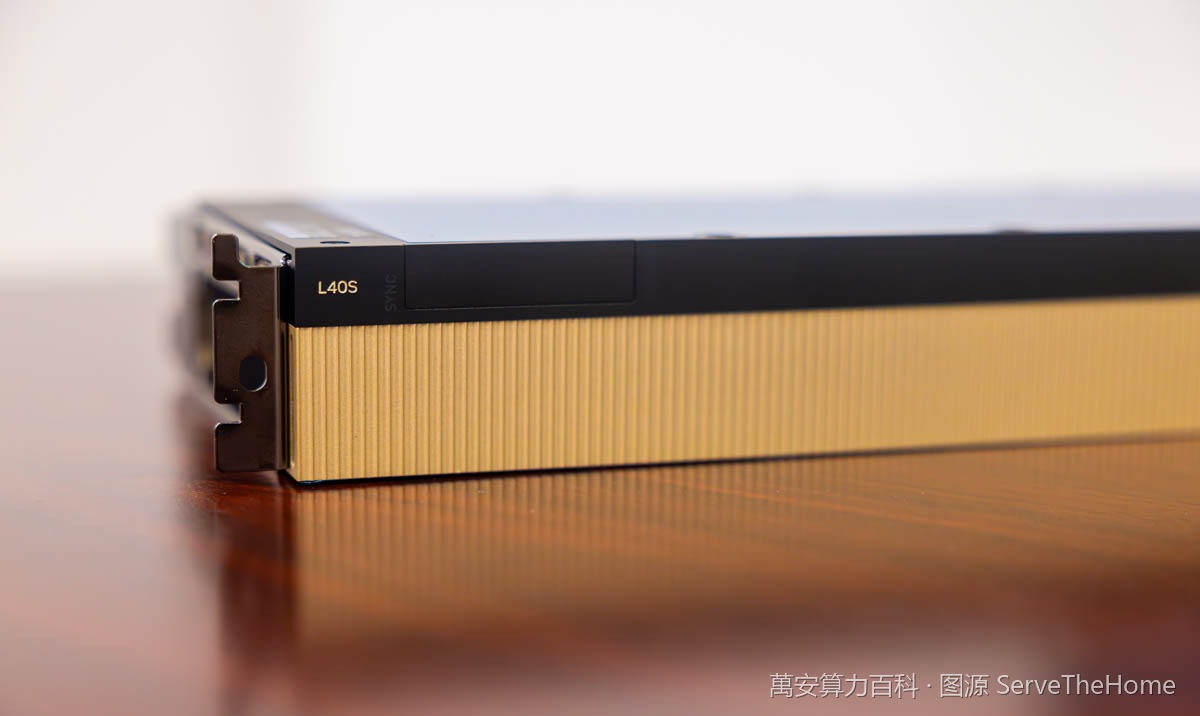
Actual photo
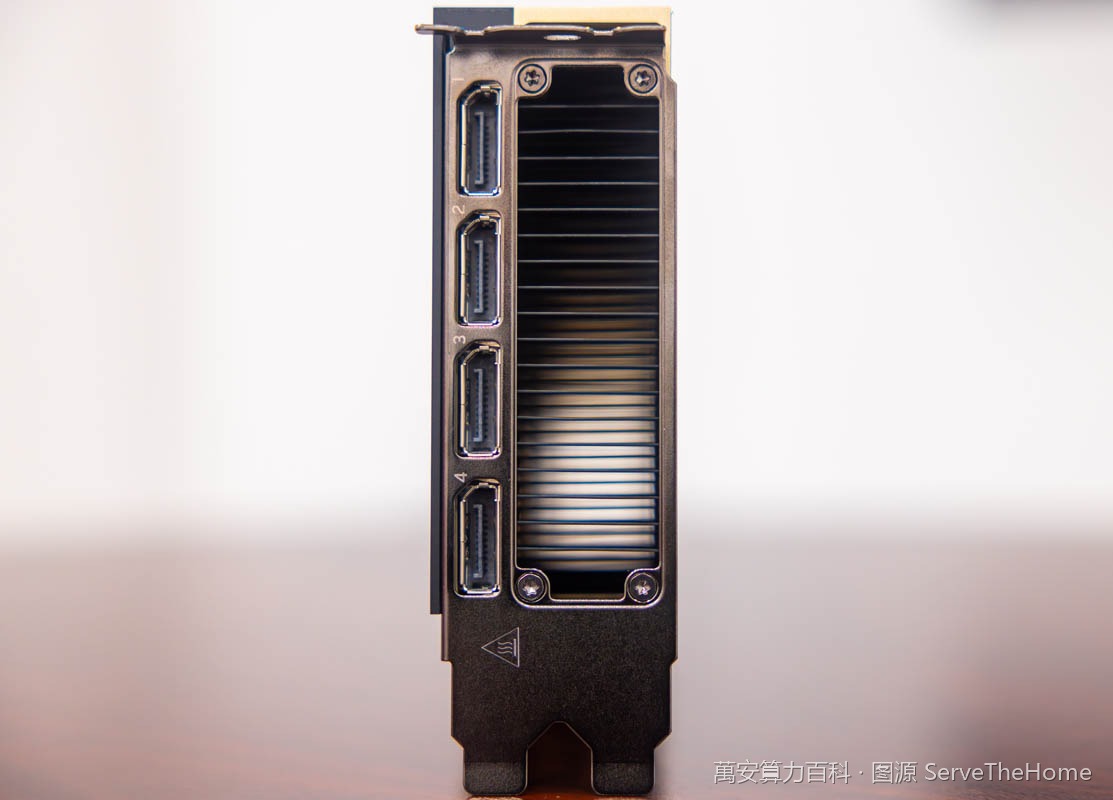
Actual photo
Overview
The NVIDIA L40S is a dual-slot PCIe data center GPU based on the Ada Lovelace architecture, equipped with 48GB GDDR6 memory (with ECC) and 864GB/s memory bandwidth, providing 64GB/s bidirectional interconnect via PCIe Gen4 x16. It features 18,176 CUDA cores, 142 third-generation RT Cores, and 568 fourth-generation Tensor Cores, with FP8 Tensor Core performance reaching 1,466 TFLOPS (sparse), plus three NVENC/NVDEC encode/decode units supporting AV1. With its combination of large VRAM, high compute, and video processing capability, the L40S is widely used for large-model inference, image generation, ray-traced rendering, and digital twin workloads such as Omniverse — and it ranks among the higher-volume large-VRAM Ada cards in domestic spot supply.
Core Specs
| Architecture | NVIDIA Ada Lovelace architecture |
| Memory | 48 GB GDDR6 with ECC |
| Memory Bandwidth | 864 GB/s |
| FP32 Performance | 91.6 teraFLOPS |
| FP16 Performance | 733 teraFLOPS* |
| FP8 compute | 1,466 teraFLOPS* |
| Power (TDP) | 350 W |
| Interconnect | PCIe Gen4 x16 |
| Form Factor | 4.4" (H) x 10.5" (L), dual slot |
| Codecs | 3x (includes AV1 encode and decode) |
Specs verified against official documentation (
official benchmarks , updated 2026-10-09) · actual price subject to the seller's quote
Use Cases
- Single-card or small-cluster inference deployment of LLMs and multimodal models — 48GB of VRAM accommodates larger parameter counts and longer contexts
- High-performance inference services with FP8/INT8 Quantization, leveraging 1,466 TFLOPS (sparse) of Tensor Core compute to boost throughput
- Offline and real-time ray-traced rendering, visualization, and content creation powered by 142 third-generation RT Cores
- Omniverse and digital twin applications, plus batch video transcoding and streaming workloads using the three NVENC/NVDEC units (AV1 included)
Same-Family Models
| Model | Memory | Power |
|---|
| NVIDIA T4 Compare | 16GB GDDR6 with ECC (enabled by default) | 70W (total board power, default) |
| NVIDIA A100 Compare | Dual versions: 40GB HBM2 / 80GB HBM2e (80GB added at SC20 on 2020-11-16), with ECC | SXM4 400W (same for 40GB/80GB); PCIe version 250W for 40GB / 300W for 80GB |
| NVIDIA H20 Compare | 96GB HBM3 (consistent across Flopper, VipraTech, and Tencent News sources) | 400W TDP (three sources: Flopper, VipraTech spec sheet, and Tencent News' "400W thermal design power"; VipraTech's body text also cites 350W, a conflicting figure that has been discarded) |
| NVIDIA GB300 Compare | 288GB HBM3e (per GPU package; 576GB for the superchip; HGX board-level 2.1TB / rack-level 20TB coexist) | TGP up to 1400W |
| NVIDIA A30 Compare | 24 GB HBM2 | 165 W |
| NVIDIA GeForce RTX 4090 Compare | 24GB GDDR6X | 450W TGP (315W average gaming, 850W recommended system power) |
Video Overview VIDEO
Procurement & Inspection Notes
- Mind the power budget: the L40S draws up to 350W per card through a 16-pin power connector. Servers need redundant PSU capacity and appropriate cabling, and rack power density should be planned accordingly.
- Check cooling and chassis fit: this is a passively cooled, dual-slot full-height card measuring roughly 4.4 inches tall and 10.5 inches long. It must be installed in a server with adequate airflow and will not work directly in ordinary desktop cases.
- Interconnect and deployment topology: the L40S supports only PCIe Gen4 x16 (64GB/s bidirectional) — no NVLink and no MIG partitioning. Multi-card communication goes over PCIe and host-side networking, so procurement should factor in your workload's inter-GPU bandwidth needs. Also consider the significance of Secure Boot and NEBS Level 3 certification for your deployment environment.
FAQ
How much VRAM does the NVIDIA L40S have? Is it enough for large-model inference?
The L40S comes with 48GB of GDDR6 memory with ECC support and 864GB/s bandwidth. For inference, 48GB can hold fairly large models, or you can extend effective capacity further through Quantization — sufficient for most single-card inference deployments.
Does the L40S support NVLink and MIG? What about multi-card training?
The L40S does not support NVLink interconnect or Multi-Instance GPU (MIG) partitioning. Inter-card communication is limited to PCIe Gen4 x16 (64GB/s bidirectional), making it better suited to inference and rendering. If your workload is sensitive to inter-GPU bandwidth (e.g., large-scale multi-card training), you'll need additional network design evaluation.
How good is the L40S at video encode/decode? Can it handle AV1?
Yes. The L40S integrates 3 NVENC encoders and 3 NVDEC decoders, including hardware support for AV1 encoding and decoding — well suited to video transcoding, streaming workloads, and graphics/video generation combined with rendering or Omniverse.