AIXX Pedia › Model Entry › L40S
L40S
Overview OVERVIEW
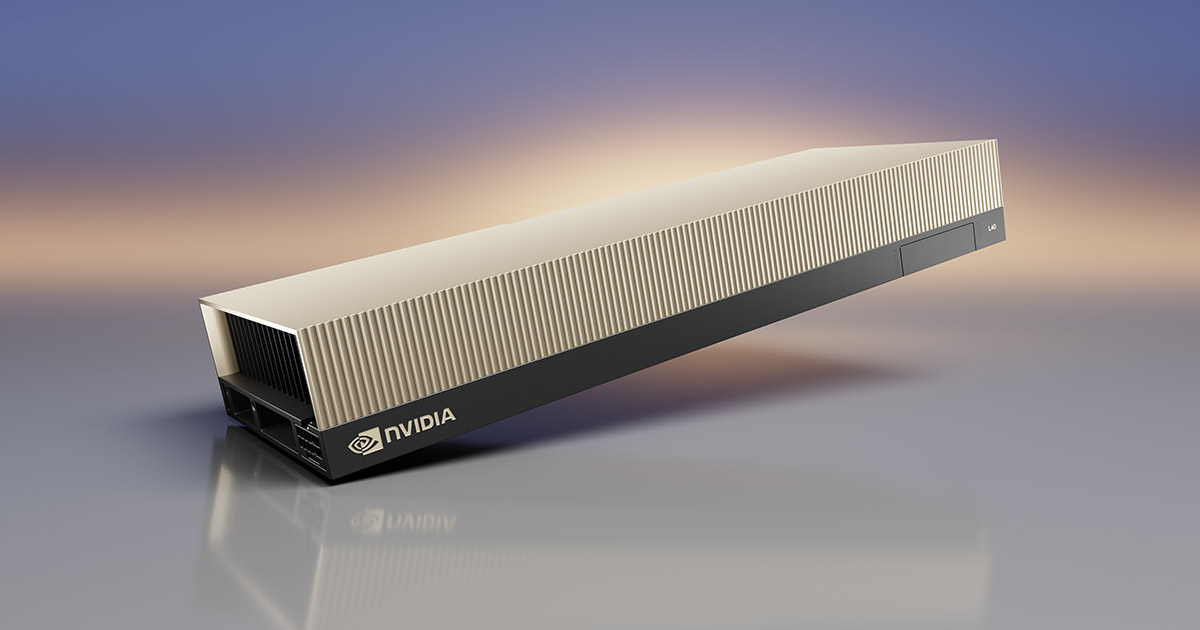
L40S is built on the NVIDIA Ada Lovelace architecture as a dual-slot PCIe data center GPU : 48GB GDDR6 ECC, FP8 Tensor Core 1,466 TFLOPS (sparse), FP32 91.6 TFLOPS, in a 350W dual-slot passive form factor. NVIDIA positions it as a "dual-purpose card for both rendering and inference" :graphics (3×NVENC/3×NVDEC with AV1, 212 TFLOPS RT Core) and AI inference (FP8/INT8) all in one machine (per NVIDIA official specs[1]).
Its popularity in the China spot market is easy to explain: 48GB large VRAM + PCIe plug-and-play + no NVLink resources consumed —no HGX baseboard, no custom server needed; just plug it into an ordinary 2U server and it runs 70B-class quantized inference and SD/video generation pipelines. It was one of the highest-volume data center cards on the inference side from 2024 to 2026 (per this library's inspection experience), and one of the best solutions for hybrid "AI inference + render farm + video transcoding" workloads.
Three things before buying an L40S: Price gap check vs. L40/L40S (2 TFLOPS FP32 difference and 50W TDP difference — the price gap should match), 16-pin power adapter cable (older PSUs need a compliant adapter), Secure Boot and NEBS certification status (a hard requirement for enterprise compliance scenarios, per official specs[1]). This entry carries no market strip—actual price subject to the seller's quote.
Use Cases FIT
AIXX Index (0–100): weighted estimate by this library based on public specs — VRAM 40% + interconnect 30% + ecosystem 30%, weights adjusted by use case.
History HISTORY
In 2023 , the L40S launches: an upgraded take on the Ada Lovelace-based L40—91.6 TFLOPS FP32 (vs. 90.5 on the L40), the same 48GB GDDR6 and 3×NVENC/3×NVDEC, positioned squarely as a dual-role part for "generative AI inference + graphics" (per NVIDIA official specs and product-line info[1][2]).
2024 , peak inference volume: generative AI inference demand exploded, and L40S became a volume leader on the inference side with its "48GB + PCIe plug-and-play" combination — video generation pipelines (SD/KeLing-type), large-model quantized inference, and transcoding farms advancing in parallel (per this library's compilation).
2025-2026 , spot-market mainstay status continues: the newer RTX 6000 Ada (workstation line) and L40 (original) circulate in parallel; L40S maintains its inference-side sweet spot for price-performance thanks to FP8 and NEBS certification. The subsequent Ada successor line evolves with NVIDIA's public roadmap. Cross-border circulation policies are still evolving; at procurement, defer to competent authority policies and professional advice (public reporting basis).
Technical Specifications SPECIFICATIONS
| Item | Specs (NVIDIA L40S · official) |
|---|---|
| GPU architecture | NVIDIA Ada Lovelace |
| Board Memory | 48GB GDDR6 with ECC |
| Memory Bandwidth | 864GB/s |
| CUDA / Tensor / RT Cores | 18,176 CUDA · 568 fourth-gen Tensor Cores · 142 third-gen RT Cores (RT performance 212 TFLOPS) |
| FP32 | 91.6 TFLOPS |
| TF32 Tensor | 183 TFLOPS (366 sparse) |
| BF16 / FP16 Tensor | 362.05 TFLOPS (733 sparse) |
| FP8 / INT8 Tensor | 733 TFLOPS (1,466 sparse) |
| Codecs | 3× NVENC | 3× NVDEC (with AV1 encode/decode) |
| Host Interface | PCIe Gen4 x16 (64GB/s bidirectional) |
| Power / Supply | 350W · 1× 16-pin |
| Form Factor | 4.4"(H) × 10.5"(L) dual-slot · passive cooling |
| Display output | 4× DisplayPort 1.4a |
| Security / Certification | Secure Boot with Root of Trust · NEBS Ready Level 3 |
| MIG / NVLink | No MIG support · no NVLink support (standalone PCIe card positioning) |
Specs based on NVIDIA official snapshot (2026-10 baseline[1],verified item-by-item against the spec quick reference);「Sparse」denotes the official asterisk-marked figure; dense halved.
L40 family comparison L40 FAMILY
| Item | L40 | L40S (this entry) | L40S vs L40 in one line |
|---|---|---|---|
| FP32 | 90.5 TFLOPS | 91.6 TFLOPS | FP32 one tier apart, 50W apart in power — the price gap should match. For inference, choose L40S; for pure rendering on a budget, look at the L40 |
| Power | 300W | 350W | |
| Memory | 48GB GDDR6 ECC | 48GB GDDR6 ECC |
The L40 comparison uses the same official snapshot as this library's Spec Card; L40S's FP8/INT8 gains come from higher clocks and enhanced power delivery (same architecture).
Family Members FAMILY
Ada Lovelace data center cards are tiered by positioning; L40S sits in the inference/graphics dual-purpose tier:
Cooling & Deployment COOLING
The L40S is a dual-slot passive card measuring 4.4 inches tall × 10.5 inches long (350W, 1× 16-pin power) — passive cooling depends on forced server airflow; adding it to a tower workstation requires a blower fan solution. Three deployment checkpoints: Power (16-pin connector; older PSUs need compliant adapter cables; verify cable specs for 350W Full Load), Direct PCIe Gen4 slot connection (x16 direct to CPU, avoid switches that eat bandwidth), airflow (dual-slot passive cards are sensitive to chassis airflow; control intake temperature at 350W Full Load).
Multi-card deployment: 2U servers commonly run 2–4 cards; the airflow pressure of 1.4kW at 4-card Full Load needs careful calculation — no NVLink means multiple L40S cards form "parallel compute" rather than an "interconnected domain," fine for inference and rendering, unsuitable for training.
Model Compatibility MODEL FIT
| Model / Scenario | Memory requirements (FP16 estimates) | L40S deployment guide | AIXX Index |
|---|---|---|---|
| 70B-class quantized inference | INT4/FP8 roughly 35–40GB | Runs at the limit on a single 48GB card (tight KV cache); comfortable headroom with two cards | 84 |
| SD / video generation pipeline | FP16 8-24GB | Multiple concurrent streams per card; FP8 keeps pipelines smooth | 88 |
| Video transcoding farm | — (codec workload) | 3×NVENC/3×NVDEC with AV1; an industry benchmark for transcoding density | 90 |
| Large model training | — | No NVLink/no MIG — unsuitable for training (see A100/H100 entries) | 45 |
VRAM estimated as FP16 weights ≈ parameter count × 2 bytes (derived estimate, excluding KV cache); precision strategies for quantized deployment depend on the framework.
Gallery GALLERY
Software & Ecosystem ECOSYSTEM
| Item | Requirements / Status |
|---|---|
| CUDA | Ada architecture (compute capability 8.9) — fully supported since CUDA 11.8, with full coverage in the current 12.x branch |
| Frameworks | Full support across PyTorch / TensorFlow / vLLM (mature inference-side ecosystem) |
| Graphics stack | Full Omniverse / DCC support — 4× DP 1.4a direct display output (rare for a data center card) |
| Virtualization | vGPU support (per RTX vWS/vPC licensing) — mature VDI and cloud workstation solutions |
| Driver | NVIDIA data center driver line (shared with the A/H series) |
The Ada ecosystem shares the CUDA mainline with Ampere; vGPU license types are procured per use case (official). Software versions evolve over time; refer to NVIDIA's official releases.
Purchasing & Inspection PROCUREMENT
Three inspection points when buying an L40S:
For the full six-test verdict framework see this entry "How to Stress-Test" section.
How to Stress Test BENCH TEST
Six-item test protocol, all values anchored to actual L40S results: unboxing identification → single-card Burn-in Test (350W) → FP8/INT8 compute → codec concurrency → graphics rendering → long-duration stability Burn-in Test.
Shipping & Delivery LOGISTICS
Glossary Cards GLOSSARY
Dual-purpose card (rendering + AI)
L40S's product positioning: RT Core graphics capability plus FP8 AI inference on one card — render farm by day, inference by night; one machine, two uses (official positioning).
AV1 codec
Next-generation video coding standard (industry estimate: ~30–50% bitrate savings over H.264 at equal quality): L40S's 3×NVENC/3×NVDEC both include AV1 — a bandwidth cost saver for streaming and cloud gaming.
NEBS Level 3
Telecom-grade equipment certification (Network Equipment-Building System): shock resistance, cooling, and reliability meeting telecom equipment room standards — L40S's NEBS Ready certification qualifies it for carrier-grade facilities (official specs).
Secure Boot with Root of Trust
Hardware root of trust secure boot: firmware signature verification against tampering — a security baseline for enterprise compliance and government procurement (official specs); include secure boot status in inspection.
16-pin power
Next-generation PCIe power connector (CEM5 spec family): 350W+ from a single connector — older PSUs need compliant adapter cables, and cable quality is a hidden variable in L40S stability.
Limitations & Controversies LIMITS
- No NVLink, No MIG : multi-GPU setups run as parallel compute rather than an interconnect domain, with no multi-tenant partitioning—not suited to training, and weaker than the A/H series for multi-tenant pooling (per official specs[1]), so don't misapply it in your selection.
- The PCIe Gen4 bandwidth ceiling : Gen4 x16 offers 64GB/s bidirectional — data-throughput-heavy inference workloads (large KV cache movement) are constrained by host bandwidth; only Gen5 platforms unlock it (per this library's compilation).
- Adapter cables are a hidden failure source : 16-pin adapter cable quality for older PSUs varies widely; heating under Full Load and loosening are common return causes (per this library's inspection experience) — original cables and compliant adapters are the baseline.
- Memory generation gap : GDDR6 at 864GB/s vs. the multi-TB/s HBM3e bandwidth of the H series — a clear gap for large-model training and very large KV cache workloads; L40S's sweet spot is inference and graphics, not training.
- Cross-border trade policy variables : Ada architecture data center cards fall within the scope of export control lists (per public reporting) — consult professional advice for cross-border procurement compliance; this library does not constitute legal advice.
Market Notes MARKET NOTE
L40S spot supply runs in parallel as factory-new units and server pull-outs, with price differences driven by condition and channel — no verifiable unified market snapshot yet; AIXX Pedia honesty principle: no market band; prices are subject to the seller's quote 。
Spot search: AIXX Exchange Hall › (zero-commission matching, no participation in transactions, hence neutral data). This section will switch to the standard market band once sufficient market snapshots accumulate.
Price milestone timeline MILESTONES
FAQ FAQ
For inference and AI, choose L40S: FP8/INT8 compute doubles (733/1,466 vs. L40's 362/733 sparse), 350W vs. 300W — the inference throughput gap exceeds the price gap; for pure rendering on a budget, look at the L40.
After quantization, yes: INT4/FP8 at roughly 35-40GB sits right at the edge of 48GB VRAM (with tight KV cache management) and runs fine; dual cards give comfortable headroom; the FP16 original at 140GB won't fit — quantized deployment is the mainstream approach for the L40S.
Not recommended: no NVLink (no interconnect across multiple cards) and no MIG (no partitioning) — training lacks both interconnect and partitioning capability. The L40S is positioned for inference, transcoding, and graphics. For training, see the A100/H100/B300 entries.
Three checks: use nvidia-smi to spot L40 fakes (FP32 91.6 vs 90.5, 350W vs 300W), inspect the 16-pin power connector and adapter cable condition (a common RMA cause), and benchmark NVENC/AV1 encode/decode (the core selling point for transcoding workloads). Also visually check the gold fingers and heatsink for originality.
You'll need to add a blower fan: the L40S is a dual-slot passive card (no fan), and tower workstation airflow can't handle 350W passive cooling — an active-cooling adapter bracket or a rack server is the right approach. Also verify the 16-pin power connector and a Gen4 x16 slot.
Related Entries SEE ALSO
Model comparison and selection COMPARE
References REFERENCES
- NVIDIA Official — L40S Spec Snapshot (verified item-by-item against the Spec Card, as of 2026-10) https://www.nvidia.com/en-us/data-center/l40s/
- NVIDIA Official Website — L40 Product Page (family comparison reference) https://www.nvidia.com/en-us/data-center/l40/
- Listing Search — AIXX Exchange (Zero-commission Matching; no market snapshot for the L40S yet, actual price subject to the seller's quote) https://www.aixx.vip/hall.html?model=L40S