SECTIONS
EDITIONS
NETWORK
Spec Card SPEC CARD
NVIDIA L4
Mainstream low-power inference card with strong domestic spot availability; a representative long-tail SKU
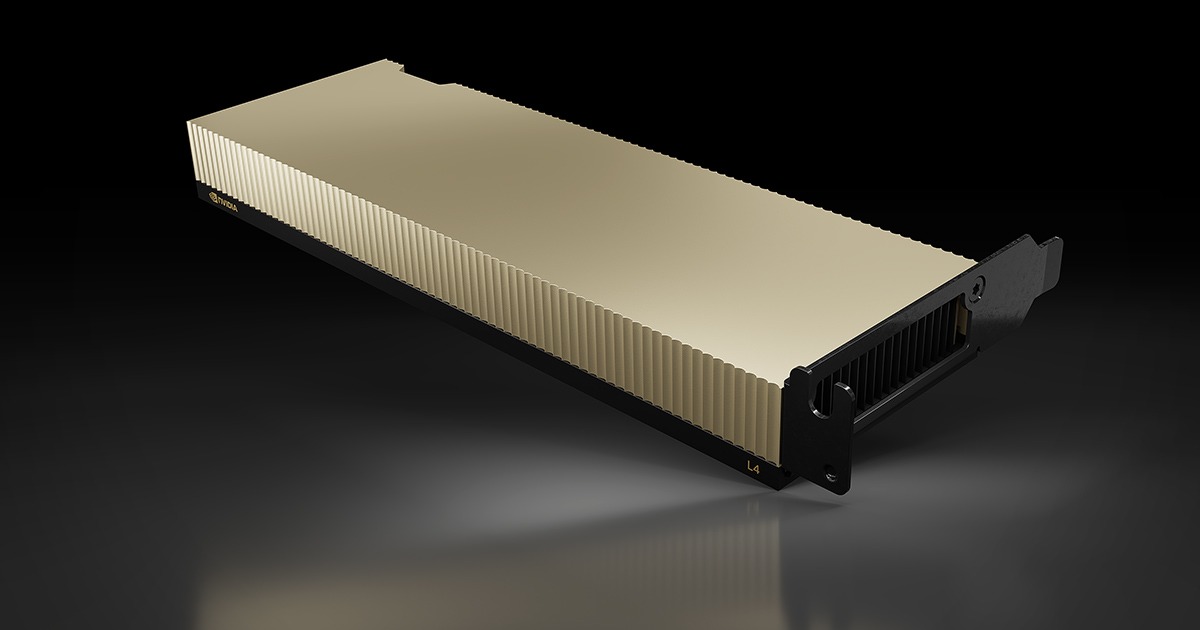
NVIDIA official product image
Actual photo
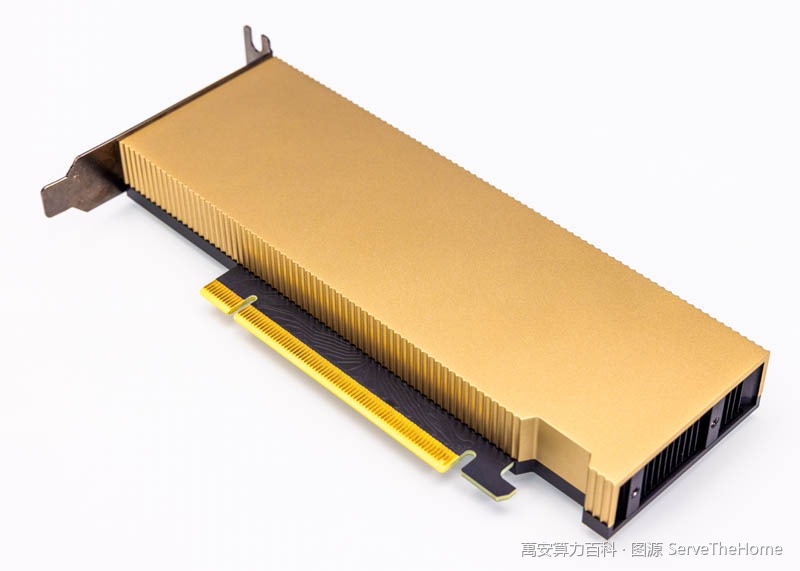
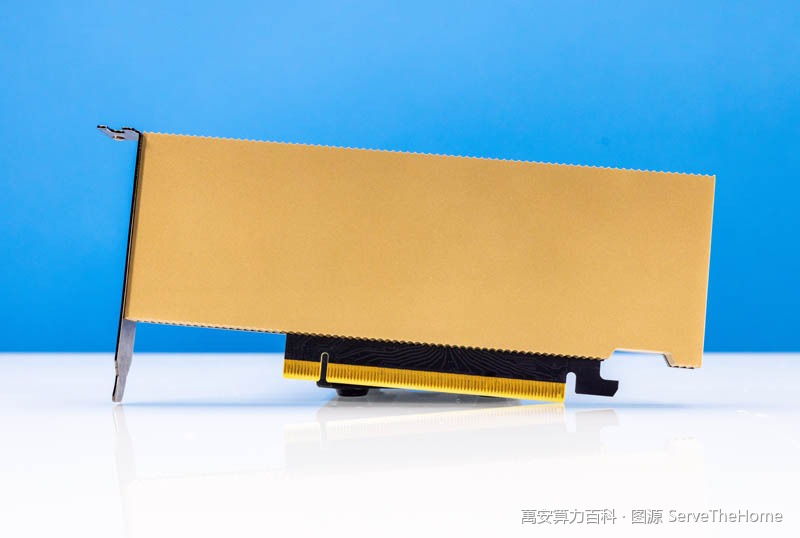
Actual photo
Overview
The NVIDIA L4 is a low-power data center GPU designed for inference, built on the AD104 die in a single-slot low-profile PCIe form factor. It comes with 24GB of memory at 300GB/s bandwidth, delivers 30.3 teraFLOPS of FP32 performance, and reaches up to 485 teraFLOPS with FP8 Tensor Cores. With a TDP of just 72W, it can be deployed at scale in standard server environments and is commonly used for power-efficiency-sensitive workloads such as large language model inference and image/video processing.
Core Specs
| Memory | 24 GB GDDR6 |
| Memory Bandwidth | 300 GB/s |
| FP32 Performance | 30.3 teraFLOPS |
| FP8 compute | 485 teraFLOPS |
| Power (TDP) | 72 W |
| Interconnect | PCIe Gen4 x16 |
| Form Factor | 1-slot low-profile |
| Codecs | NVENC 2 | NVDEC 4 | JPEG 4 |
Specs verified against official documentation ( official benchmarks , updated 2026-10-09) · actual price subject to the seller's quote
Use Cases
- Large language model inference services: the 24GB of memory supports multi-instance deployment of mid-sized models, with FP8/INT8 Tensor Cores delivering high Quantization inference throughput
- Video transcoding and image processing: built-in 2x NVENC, 4x NVDEC, and 4 JPEG decoders make it well suited to VOD, live-stream transcoding, and batch image processing
- Low-power, high-density deployment: 72W TDP and the single-slot low-profile form factor fit into general-purpose server chassis with constrained power and cooling, increasing GPU density per node
- Recommended for online systems and inference APIs: PCIe Gen4 x16 (64GB/s) covers the data exchange needs of single-node inference, making it a good fit for online service backends
Same-Family Models
| Model | Memory | Power |
|---|---|---|
| NVIDIA T4 Compare | 16GB GDDR6 with ECC (enabled by default) | 70W (total board power, default) |
| NVIDIA A100 Compare | Dual versions: 40GB HBM2 / 80GB HBM2e (80GB added at SC20 on 2020-11-16), with ECC | SXM4 400W (same for 40GB/80GB); PCIe version 250W for 40GB / 300W for 80GB |
| NVIDIA H20 Compare | 96GB HBM3 (consistent across Flopper, VipraTech, and Tencent News sources) | 400W TDP (three sources: Flopper, VipraTech spec sheet, and Tencent News' "400W thermal design power"; VipraTech's body text also cites 350W, a conflicting figure that has been discarded) |
| NVIDIA GB300 Compare | 288GB HBM3e (per GPU package; 576GB for the superchip; HGX board-level 2.1TB / rack-level 20TB coexist) | TGP up to 1400W |
| NVIDIA A30 Compare | 24 GB HBM2 | 165 W |
| NVIDIA GeForce RTX 4090 Compare | 24GB GDDR6X | 450W TGP (315W average gaming, 850W recommended system power) |
Video Overview VIDEO
Procurement & Inspection Notes
- The L4 is a single-slot low-profile PCIe card with a 72W TDP, so it typically requires no dedicated cooling module or power retrofit. You should still verify chassis compatibility with low-profile cards and check the physical PCIe slot layout and airflow design.
- The card uses PCIe Gen4 x16 rather than NVLink and offers no high-bandwidth multi-GPU interconnect, so confirm whether your workload depends on multi-GPU training before purchasing; the impact is limited for inference-focused use.
- Note that its memory bandwidth of 300GB/s is below that of same-generation high-end data center cards. When deploying bandwidth-sensitive large models, evaluate per-card throughput against model size and concurrency rather than extrapolating real inference performance linearly from FP32 figures.
FAQ
How large a model can the NVIDIA L4 run for inference?
The L4's 24GB of memory can fully hold most models in the billions-of-parameters range, or larger models via Quantization (e.g., FP8/INT8). For very large models, tensor parallelism across multiple cards is usually required, but the L4's PCIe Gen4 x16 interconnect (64GB/s) offers less communication bandwidth than NVLink-based setups, so real inference latency should be evaluated.
Is 72W enough performance-wise?
A 72W TDP signals that this is an efficiency-first inference card, not a training card. Its FP8 Tensor Core throughput reaches 485 teraFLOPS (485 TOPS for INT8), and the low power draw enables high-density deployment in general-purpose servers. It's well suited to inference and video workloads, but not to large-scale training.
Can the L4 fit in a standard 1U/2U server?
Yes. The L4 uses a 1-slot low-profile design, drawing power and communicating over the PCIe interface with no external power cable, so chassis compatibility requirements are minimal. The main considerations are the slot's airflow and whether the motherboard provides a PCIe Gen4 x16 slot to saturate the 64GB/s interface bandwidth.
Data updated 2026-10-09 · Go to In-depth Entry Editorial Policy workflow
Editorial Constitution Summary
Every claim sourcedDrawbacks always stated · corrections publicly loggedNo paid entries acceptedZero traffic-funneling or sales elements within entriesMarket data attached only as data modulesMarket data source: AIXX Exchange · © 2026 AIXX Pedia · An AIXX Product