Spec Card SPEC CARD
AMD Instinct MI210
64GB HBM2e + 1.6TB/s bandwidth + 45.3 TF FP64 matrix performance, plug-and-play standard PCIe card, a cost-effective alternative to the MI250X, with few rivals on the used market for double-precision HPC workloads
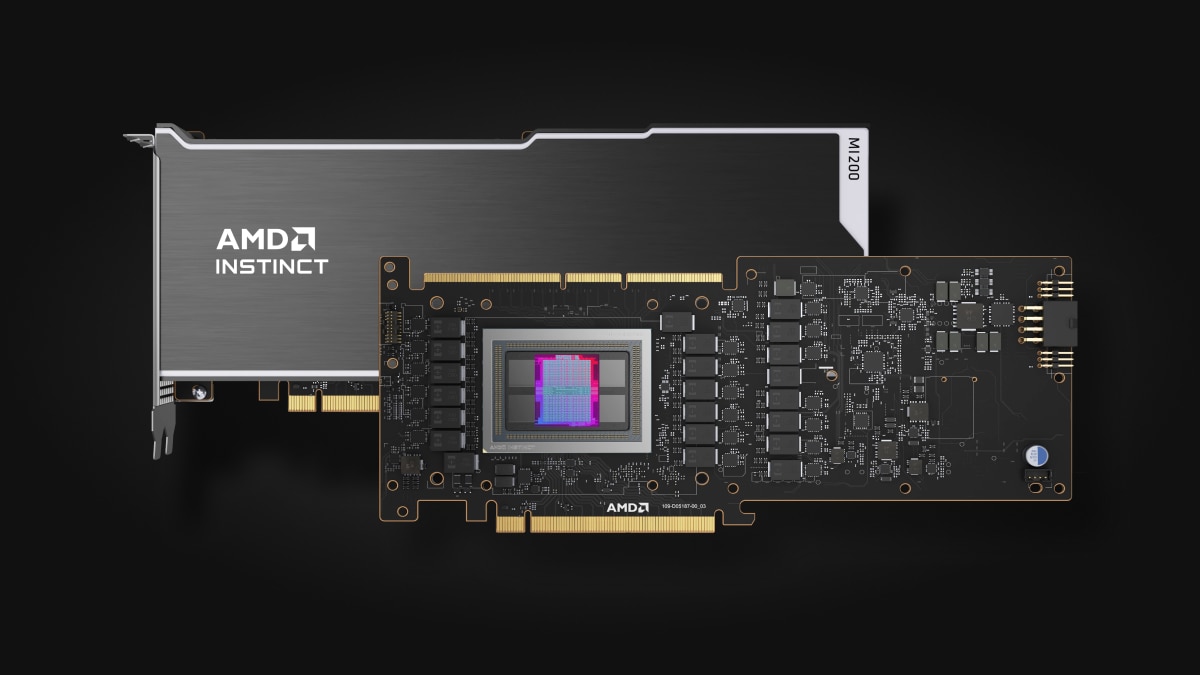
AMD official product image
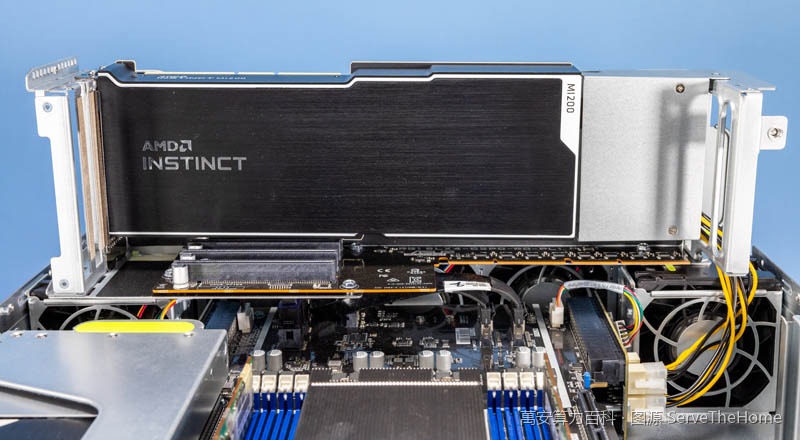
Actual photo
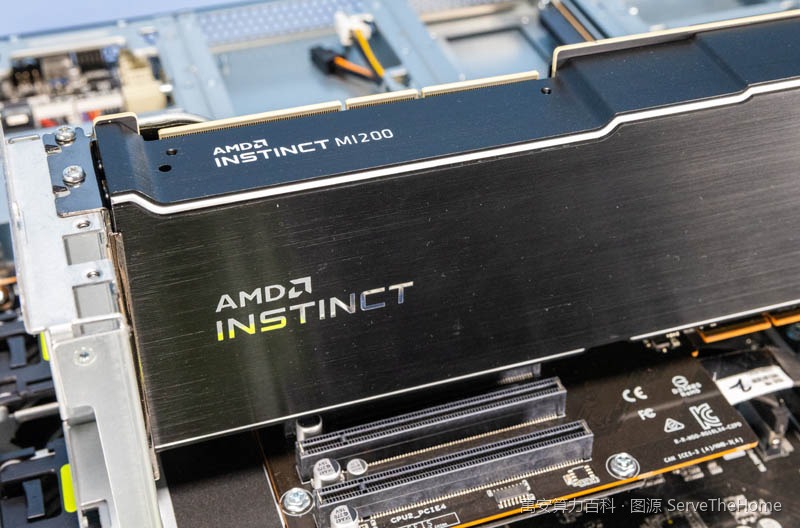
Actual photo
Overview
The AMD Instinct MI210 is a server-oriented data center accelerator from the Instinct MI200 series. Built on the CDNA2 architecture, it features 104 compute units and 6,656 stream processors, with a peak engine clock of 1700 MHz. It is equipped with 64GB of HBM2e memory, delivering a peak bandwidth of 1.6TB/s through a 4096-bit memory interface, with full-chip ECC support. Its FP64 matrix peak performance reaches 45.3 TFLOPs, with FP32 matrix performance identical at 45.3 TFLOPs. The card comes in a standard PCIe 4.0 x16 slot form factor with passive cooling, allowing deployment in general-purpose servers without an OAM module. It is commonly used for high-performance computing, scientific computing, and large-scale data processing workloads.
Core Specs
| Architecture | CDNA2 |
| Memory | 64 GB |
| Memory Type | HBM2e |
| Memory Bus Width | 4096-bit |
| Memory Bandwidth | 1.6 TB/s |
| FP32 Performance | 22.6 TFLOPs |
| FP64 Performance | 22.6 TFLOPs |
| FP16 Performance | 181 TFLOPs |
| INT8 Performance | 181 TOPs |
| Interconnect | PCIe® 4.0 x16 |
| Infinity Fabric™ Links | 3 |
| Infinity Fabric Bandwidth | 100 GB/s |
| Stream Processors | 6,656 |
| Form Factor | Double Slot |
| Memory ECC | Yes (Full-Chip) |
| Cooling | Passive |
| Launch Date | 3/22/22 |
Specs verified against official documentation (
official benchmarks , updated 2026-10-09) · actual price subject to the seller's quote
Use Cases
- Scientific computing and engineering simulation workloads that rely on high double-precision performance, such as computational fluid dynamics and molecular dynamics
- Meteorology, earth science, and life science computing that needs large memory capacity to accommodate large datasets or models
- Memory-bandwidth-sensitive, memory-intensive HPC applications that can fully exploit the 1.6TB/s throughput
- Organizations with general-purpose servers looking to add an accelerator via a standard PCIe slot directly, avoiding chassis and cooling system modifications
Same-Family Models
Video Overview VIDEO
Procurement & Inspection Notes
- This card uses a passive cooling design and relies on forced air-cooled airflow from the server chassis. Before purchasing, confirm that the target server provides sufficient airflow and cooling capacity. With a board length of 267mm and dual-slot width, verify chassis space and compatibility with the PCIe 4.0 x16 slot position.
- Verify the specific SKU and firmware version, confirm it is the server-grade form factor (not a workstation card conversion), and check that full-chip ECC is properly enabled in the BIOS and management tools.
- For multi-card expansion, note that the Infinity Fabric interconnect has 3 links with a peak of 100GB/s per link. When connecting across machines or building clusters, evaluate compatibility between the PCIe 4.0 x16 host interface and the software stack (ROCm) version. For used purchases in particular, test stability under prolonged Full Load.
FAQ
What is the difference between the MI210 and the OAM module version of Instinct accelerators, and can it be installed in an ordinary server?
The MI210 comes in a standard PCIe 4.0 x16 slot form factor, dual-slot width, with a board length of 267mm, and can be installed directly in any general-purpose server that supports this slot, with no dedicated OAM baseboard required. However, it uses a passive cooling design and requires the chassis to provide sufficient server-grade forced air cooling. Ordinary desktop cases are not suitable for prolonged Full Load operation.
Is the MI210 suitable for AI training, or only for scientific computing?
The MI210 is geared toward double precision and general-purpose computing: its FP64 matrix performance is 45.3 TFLOPs, with FP16 and INT8 peaks also reaching 181 TFLOPs/TOPs. Combined with 64GB of large memory and high bandwidth, it can handle some memory-intensive or Mixed Precision-tolerant training and inference tasks. However, for workloads dominated by low-precision AI, its architectural orientation differs from dedicated AI training cards, so selection should be evaluated against the precision requirements of the specific workload.
What should I focus on when inspecting a used or refurbished MI210?
Key checks: first, whether the memory and full-chip ECC can be enabled normally without errors; second, clock stability and temperature behavior during prolonged Full Load stress testing—passive-cooled cards with a history of poor air cooling may harbor hidden issues; third, confirm that the PCIe 4.0 x16 link negotiates properly and the Infinity Fabric links are usable, and verify that the ROCm software stack matches the operating system version.