AIXX Pedia › Model Entry › AMD Ryzen AI Max+ 395
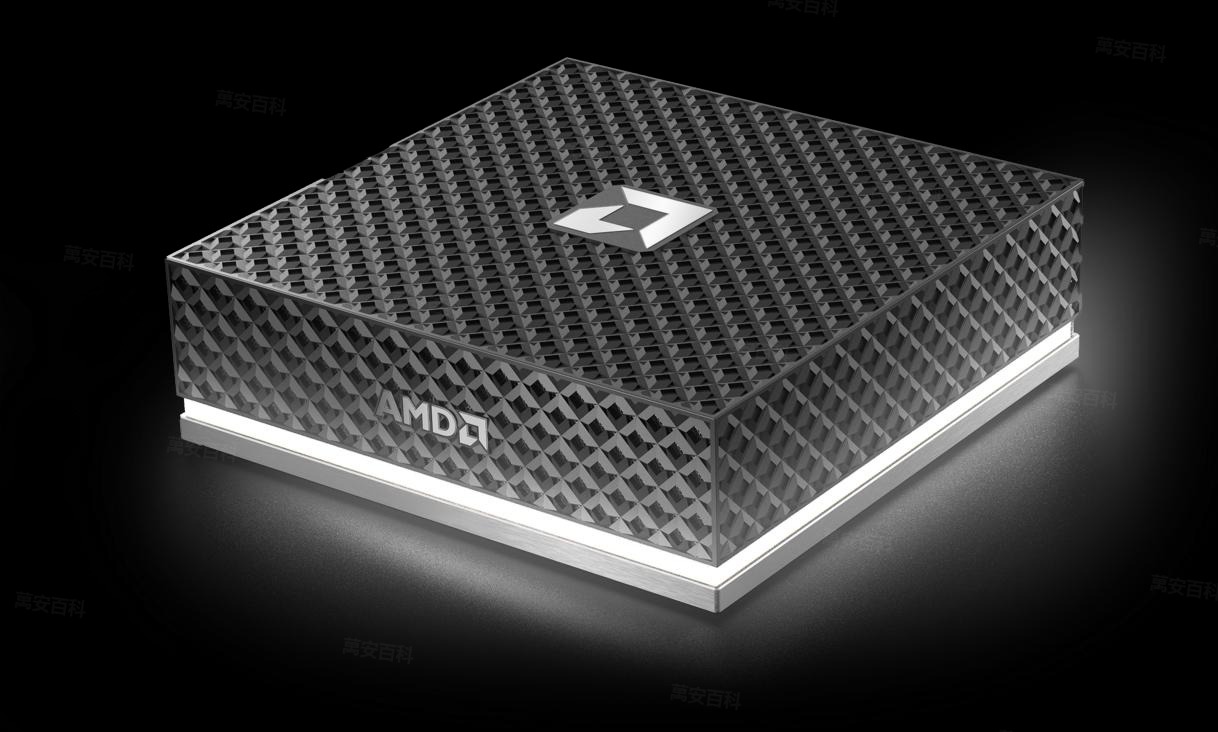
AMD Ryzen AI Max+ 395
Overview OVERVIEW
AMD Ryzen AI Max+ 395 (Codename Strix Halo ) is AMD's flagship AI APU announced at CES on as a January 6, 2025 (edge SoC): 16-core Zen 5 (32 threads, 3.0–5.1GHz) + Radeon 8060S iGPU (40 RDNA 3.5 compute units) + XDNA 2 NPU 50 TOPS three compute engines co-packaged, with up to 128GB LPDDR5X-8000 quad-channel unified memory (256GB/s, 256-bit) — CPU/GPU/NPU share a single memory pool, allowing hundred-billion-parameter-class models to be fully resident on-device (per AMD's official statements and CES announcements[1]).
It is the flagship representative of the "on-device LLM" category: of the 128GB unified memory, up to 96GB can be allocated to the GPU — community tests show it can fully keep GPT-OSS 120B-class models resident (per AMD's official blog demo[2]); the headline three-engine benchmark claim is "up to 68% faster than an RTX 4070 laptop GPU" (1080p, AMD marketing[1]). TDP is 45W, configurable up to 120W — the same chip powers everything from thin-and-light laptops to desktop mini PCs (official figures[1]).
Three things buyers should know upfront : ① The LPDDR5X memory is soldered and non-expandable (choosing 128GB or 64GB is a one-time decision); ② The iGPU has no dedicated VRAM, and its 256GB/s unified memory bandwidth is an order of magnitude below discrete GPUs' GDDR7 (~1.8TB/s) — don't benchmark throughput-sensitive workloads against data center cards; ③ It is a consumer/workstation-class chip with no server-grade warranty or full ECC suite — for mass deployment, choose OEMs based on overall system reputation.
Use Cases FIT
AIXX Index (0–100): estimated by this library using a weighted average of public specs—memory 40% + interconnect 30% + ecosystem 30%, with weights adjusted by use case. The methodology is transparent and verifiable, and does not constitute a performance guarantee.
History HISTORY
January 6, 2025 , CES launch of the Ryzen AI Max series (Strix Halo): 16-core Zen 5 + 40CU iGPU + up to 128GB unified memory (launch figures[1]).
First half of 2025 , OEM systems hit the market: ASUS ROG Flow Z13 tablet, HP Z2 Mini G1a workstation, Framework Desktop, etc. (public reporting[3]).
2025–2026 , the "128GB on-device LLM" narrative exploded: AMD's official blog demonstrated local GPT-OSS 120B inference[2]; the community benchmarked LLM throughput against peer devices like DGX Spark (community reporting[4]).
2026 , one of the benchmark SKUs for on-device inference and consumer AI systems; available through domestic channels as complete systems (market details in the table below).
Technical Specifications SPECIFICATIONS
| Item | Specifications (AMD official figures, verified 2026-10[1]) |
|---|---|
| Codename/Process | Strix Halo · TSMC 4nm (chiplet multi-die packaging, public reporting[1]) |
| CPU | 16-core Zen 5 · 32 threads · 3.0–5.1GHz (official figures[1]) |
| iGPU | Radeon 8060S · 40 RDNA 3.5 CUs · up to 2.9GHz (official figures[1]) |
| NPU | XDNA 2 · 50 TOPS (official figures[1]) |
| Unified memory | Up to 128GB LPDDR5X-8000 · quad-channel 256-bit · 256GB/s (official figures[1]; soldered, non-expandable) |
| Memory allocation | Shared by CPU/GPU/NPU; up to ~96GB allocatable to the iGPU (UMA+ dedicated allocation, official/community reporting[2]) |
| Power | TDP 45W configurable up to 120W (official figures[1]) |
| Graphics benchmark | AMD marketing claim: up to 68% faster than an RTX 4070 laptop GPU at 1080p (marketing[1]) |
| Platform features | USB4 · PCIe 4.0 · Wi-Fi 7 (platform figures[3]) |
| Typical systems | ASUS ROG Flow Z13 / HP Z2 Mini G1a / Framework Desktop (public reporting[3]) |
Specifications are subject to AMD's official releases and blog (verified 2026-10[1][2]); the "68% faster" claim is AMD marketing and limited to 1080p gaming — rely on third-party tests for cross-comparisons.
Selection comparison · top three for on-device LLMs CONTEXT
| Item | Ryzen AI Max+ 395 | NVIDIA DGX Spark | Apple M4 Pro-class |
|---|---|---|---|
| Unified memory | Up to 128GB LPDDR5X | 128GB LPDDR5X | 24–48GB class |
| Memory bandwidth | 256GB/s (official figures[1]) | 273GB/s (official documentation) | ~273GB/s (vendor page) |
| AI engines | 40CU iGPU + 50 TOPS NPU | Blackwell GPU(6,144 CUDA) | Apple GPU + Neural Engine |
| Software stack | ROCm (progressive Windows/Linux support, public reporting) | Full CUDA stack | MLX/Core ML |
| Form factor & power | Laptops/mini PCs 45–120W | All-in-one desktop 240W external | Laptops/mini PCs, model-dependent |
| One-line buying advice | Large memory + AMD ecosystem | CUDA-native development | Apple ecosystem, silent |
Comparisons are based on public figures; actual LLM throughput is heavily affected by framework/quantization/context — community tests (Framework/Level1Techs, etc.[4]) serve as horizontal reference; make purchase decisions based on your own model testing.
Family Members FAMILY
Ryzen AI Max series lineup (Strix Halo):
Cooling & Deployment COOLING
The Ryzen AI Max+ 395 is a SoC chip ; cooling is defined by the system: laptop form factor (ROG Flow Z13 tablet) and desktop mini workstations (HP Z2 Mini G1a, Framework Desktop) share the same 45–120W configurable power range (official figures[1]) — the same chip runs at 45W in a thin laptop and 120W in a workstation, a performance gap of a full tier : before buying a system, check the OEM's rated TDP and cooling specs, then set performance expectations. Sustained-load performance (thermal throttling) should be verified via system-level testing.
Model Compatibility MODEL FIT
| Scenario | Fit-for-purpose guide for 128GB unified memory (estimated: weights × precision + KV/framework overhead) |
|---|---|
| Hundred-billion-class quantized inference | GPT-OSS 120B-class fully resident (AMD official demo[2]): ~60–70GB at 4-bit, ample headroom on 128GB models |
| 70B-class FP16 residency | Weights at ~140GB exceed the limit — FP8/INT4 quantization fits (estimated) |
| 30B-class full residency | FP16 ~60GB class: even 64GB models can run it (estimated, size to fit) |
| LoRA fine-tuning | Small models feasible; throughput constrained by 256GB/s (estimated) |
| Not applicable | High-concurrency external serving (capped by both bandwidth and positioning) |
Method: VRAM usage ≈ parameter count × bytes per parameter (FP16=2B/FP8=1B/INT4≈0.5B), plus KV and framework overhead; same methodology as our selector's "VRAM accounting" for verification.
Gallery GALLERY
Chip-level official photos (die/wafer) are available in AMD's official materials library; this image is taken from AMD's official blog and accurately labeled[2].
Video Overview VIDEO
Software & Ecosystem ECOSYSTEM
Each engine's software stack: iGPU/NPU go through ROCm and DirectML/ONNX Runtime (Windows home turf); Large-model inference the mainstream route is llama.cpp/ollama/LM Studio with Vulkan/ROCm backends (community reporting[4]). The gap with the CUDA ecosystem is an honest discount: test-run your own model stack first (ROCm's operator coverage on Windows is still catching up), while the Zen 5 CPU side also serves as usable inference capacity (CPU offload as fallback).
Ecosystem positioning vs. DGX Spark: Spark sells "CUDA parity with the data center," while Max+ 395 sells "large memory + performance-per-watt + Windows ecosystem" — developer habit favors Spark; dual-use on-device deployment and creation favors Max+ (community reporting[4]).
Purchasing & Inspection PROCUREMENT
Common risks
For complete-system purchases, on-site inspection or third-party verification is recommended; serial number and warranty status must match — Marketplace Search ›
How to Stress Test BENCH TEST
Judgment tools: llama.cpp/ollama benchmarks (measured tokens/s, with Quantization level and context length specified), 3DMark/gaming tests (iGPU graphics tier), HWiNFO (power/temperature limit logs), Measured Bandwidth (AIDA64 memory bandwidth vs. the 256GB/s official figure[1]). Acceptance for an edge inference machine comes down to: sustained throughput of the target model at the target Quantization level + long-context stability. Dedicated case-study clips in production.
Shipping & Delivery LOGISTICS
| Stage | Key Points |
|---|---|
| Form Factor | Sold as complete systems (laptops/mini workstations) — verify original packaging and full accessories |
| Cross-border | Consumer compute tier, less export-control sensitive than data center cards — still subject to current listings and customs classification |
| Insurance | Insure at full system value (RMB tens of thousands tier); screen/portable-parts transit insurance recommended as an add-on |
OEM & Variants VARIANTS
| Variants / OEM | Form Factor & Positioning |
|---|---|
| AMD official design | Strix Halo SoC (FP11 package, official figures[1]) |
| ASUS ROG Flow Z13 | Tablet form factor · 128GB tier mainstream (public reporting[3]) |
| HP Z2 Mini G1a | Mini workstation form factor · content creation and edge inference (public reporting[3]) |
| Framework Desktop | Desktop modular form factor (public reporting[3]) |
Limitations & Controversies LIMITS
- 256GB/s bandwidth physical ceiling : Unified memory buys capacity at the cost of bandwidth — LLM decode throughput is orders of magnitude behind discrete-GPU platforms (official figures for comparison[1]), and training suffers most.
- Soldered memory : Capacity is fixed at purchase with no later upgrades — getting 64GB vs. 128GB wrong is a sunk cost.
- ROCm Windows ecosystem still catching up : Long-tail operator/framework support trails CUDA (community consensus[4]) — a trial run of your own stack is a prerequisite before buying.
- The “68% faster” marketing claim : Limited to 1080p gaming scenarios (AMD's claim[1]) — align scenarios and precision before any comparison.
- Consumer positioning : No server-grade warranty/full ECC — for volume deployment, choose OEMs based on system reputation and support.
Related Articles NEWS
Editor-reviewed coverage of this machine and related platforms.
Market Notes MARKET
| Date | Type | Market | Price Band | Basis |
|---|---|---|---|---|
| 2026-10 | Complete-system retail | overseas retail | Systems priced in the RMB tens of thousands tier depending on configuration (128GB tier as the mainstream) | Retail figures |
| 2026-10 | System-level market | Mainland China | China domestic/parallel imports coexist · subject to system model and warranty | Marketplace Search › |
Note: system prices vary widely with configuration (memory/brand/form factor); no standing transaction anchor for this SKU in our database. Market and inventory: AIXX Exchange (Zero-commission Matching; not a party to transactions).
Timeline MILESTONES
| Time | Event |
|---|---|
| 2025-01-06 | CES launch of Ryzen AI Max series (Strix Halo debut)[1] |
| First Half of 2025 | Systems like ROG Flow Z13/HP Z2 Mini hit shelves (public reporting[3]) |
| 2025–2026 | AMD official demo of GPT-OSS 120B running locally; edge LLM narrative explodes[2] |
| 2026-10 | One of the benchmark SKUs for edge inference; mainstream config for consumer AI systems (market details below) |
FAQ FAQ
Related Entries SEE ALSO
References REFERENCES
| [1] | AMD official/TechPowerUp · CES 2025 Ryzen AI Max series launch (16-core Zen5/40CU RDNA3.5/128GB LPDDR5X-8000/50 TOPS/45-120W) · https://www.techpowerup.com/330548/amd-debuts-ryzen-ai-max-s (verified 2026-10) |
| [2] | AMD official blog · Demo of GPT-OSS 120B running locally on Ryzen AI Max platform (image source) · https://www.amd.com/en/blogs/2026/amd-ryzen-ai-max-ai-pcs-de (verified 2026-10) |
| [3] | Public reporting · OEM system launch activity (ROG Flow Z13/HP Z2 Mini/Framework Desktop) · https://www.reuters.com/technology/ (per public reporting) |
| [4] | Community benchmarks · Framework/Level1Techs LLM throughput benchmark collection · https://forum.level1techs.com/t/strix-halo-ryzen-ai-max-395- (third-party figures) |
| [5] | This site · VRAM budgeting methodology in the selector (parameter count × precision + KV/framework overhead) · /wiki/xuanxing.html (this site's methodology) |
Specs anchored to AMD official figures; this database does not vouch for “marketing claims” or “community consensus” entries; edge performance should be verified with your own models.