AIXX Pedia › Model Entry › NVIDIA RTX PRO 6000 Blackwell Server Edition
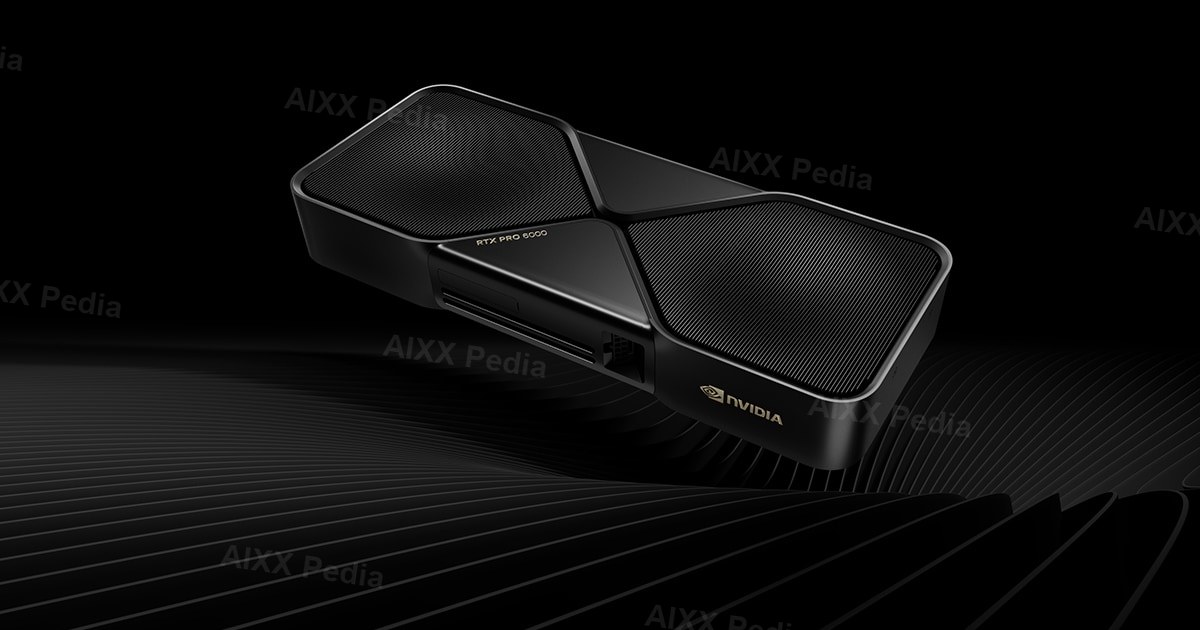
NVIDIA RTX PRO 6000 Blackwell Server Edition
Overview OVERVIEW
NVIDIA RTX PRO 6000 Blackwell Server Edition (Server Edition) is the rack form factor of the RTX PRO 6000 Blackwell family: same die as the workstation edition — 96GB GDDR7 with ECC (512-bit)、 24,064 CUDA cores , Blackwell architecture — with the differences being passive cooling (server airflow) + configurable power (up to 600W) + density positioning : multi-GPU rack-scale AI inference and VDI deployment (NVIDIA official and channel sources[1], verified 2026-10).
Key official specs: PCIe Gen5 x16, MIG up to 4 slices (24GB each) — splitting VRAM across multiple users/tenants per server; channel listings price it at roughly $16,700–26,900 per card (Newegg and other channel sources[3]); Supermicro and other OEMs offer 8-GPU PCIe server systems (with Xeon 6900/EPYC 9005, per public reports[2]). It is the official answer to "96GB big VRAM in the rack": a density sweet spot sitting between the L40S (48GB) and HGX baseboards (8× HBM) per card.
Three things buyers should know first : ① No NVLink — multi-GPU traffic runs over PCIe only, so large-model training scalability is not its lane (same as the workstation edition); ② 96GB is a GDDR7-class bandwidth tier (~1.6TB/s), leaving a generational gap versus HBM cards for throughput-sensitive workloads; ③ Passive cooling means strict chassis airflow requirements (same principle as the A16).
Use Cases FIT
AIXX Index (0–100): estimated by this library using a weighted average of public specs—memory 40% + interconnect 30% + ecosystem 30%, with weights adjusted by use case. The methodology is transparent and verifiable, and does not constitute a performance guarantee.
History HISTORY
March 2025 , GTC unveiled the RTX PRO Blackwell family (workstation/mobile/server lines, per public reports[2]).
2025–2026 , server edition channel volume ramped: retail channels like Newegg at roughly $16,700–26,900 per card (channel sources[3]); OEM 8-GPU systems from Supermicro and others went on sale (public reports[2]).
2026 , "96GB in the rack" became a common pick for inference/VDI density builds (see pricing table below).
Technical Specifications SPECIFICATIONS
| Item | Specifications (official/channel sources, verified 2026-10[1]) |
|---|---|
| Architecture | NVIDIA Blackwell (RTX PRO family) |
| CUDA | 24,064 cores (channel listing[1]) |
| Memory | 96GB GDDR7 with ECC · 512-bit · ~1,597GB/s (channel listing[1]) |
| RT Core | 355 TFLOPS (channel listing[1]) |
| MIG | Up to 4 slices · 24GB each (channel listing[1]) |
| Power | Up to 600W configurable · passive cooling (server airflow) |
| Interface | PCIe Gen5 x16 |
| Display output | 4× DisplayPort 2.1 (channel listing[1]) |
| System form | Supermicro and other 8-GPU PCIe servers (with Xeon 6900/EPYC 9005, public reports[2]) |
Specifications per NVIDIA official and channel listings (verified 2026-10[1]); AI TOPS figures per NVIDIA's official RTX PRO page; retail channel prices are channel figures, not official MSRP.
Selection comparison · three routes to 96GB in the rack CONTEXT
| Item | RTX PRO 6000 Server | L40S | HGX B300 (8-GPU baseboard) |
|---|---|---|---|
| Board Memory | 96GB GDDR7 ECC | 48GB GDDR6 | 288GB HBM3E class |
| Bandwidth | ~1.6TB/s (channel sources[1]) | 864GB/s | HBM class |
| Interconnect | PCIe (no NVLink) | PCIe | NVLink5 14.4TB/s |
| Power per card | Up to 600W configurable | 350W | Kilowatt-class per card |
| One-line buying advice | Big-VRAM rack density | Cost-effective inference | Flagship training/inference |
Comparison based on public figures; the bandwidth gap between 96GB big-VRAM cards and HBM cards significantly affects training throughput — choose by density and budget for inference/VDI/rendering scenarios.
Family Members FAMILY
RTX PRO 6000 Blackwell family (same die, three form factors):
Cooling & Deployment COOLING
The Server Edition features passive cooling + configurable power (channel sources[1]): the 600W cap makes chassis airflow and server thermal specs a hard prerequisite — OEMs like Supermicro have designed their 8-GPU systems' airflow around this; self-built environments must budget cooling as "600W × card count", and lower power tiers can trade for density. MIG×4 slicing (channel sources[1]) lets one card serve four light-load tenants/users — rack density and utilization are its selling points.
Model Compatibility MODEL FIT
| Scenario | Fit figures for 96GB VRAM (estimated: weights × precision + KV/framework overhead) |
|---|---|
| 70B-class resident in FP8 | Weights ~70GB: fits on a single card (estimated) |
| 100B+ class 4-bit inference | Weights ~50–60GB: ample headroom on one card (estimated) |
| MIG ×4 slicing | 24GB each: four 13B-class FP16 virtual instances (estimated) |
| Fine-tuning | LoRA/QLoRA small-to-mid models run on a single card (estimated) |
| Not applicable | Multi-GPU large-scale training (no NVLink, channel sources[1]) |
Gallery GALLERY
Video Overview VIDEO
Video walkthrough of this entry is in the production queue (see the video slot schedule for Chinese/multilingual workflow) — this section updates automatically once it goes live.
Software & Ecosystem ECOSYSTEM
Full CUDA-stack consumer workstation-class top spec: vGPU licensing enables virtualization slicing (heavier-GPU counterpart to the A16); PyTorch/TensorRT/ollama native; AI Enterprise compatible (ecosystem figures). Same die as the workstation edition — choose driver lines (Studio/GameReady vs data center drivers) by scenario.
Purchasing & Inspection PROCUREMENT
How to Stress Test BENCH TEST
Judgment tools: nvidia-smi/DCGM (MIG slicing in place/power tier), 3DMark (RT Core figures vs 355 TFLOPS), gpu-burn (600W-tier Burn-in Test), LLM benchmarks (96GB loading tests). Acceptance core for passive cards = "sustained 600W without throttling under compliant airflow." Dedicated test-case clips in production.
Shipping & Delivery LOGISTICS
| Stage | Key Points |
|---|---|
| Form Factor | Full-length dual-slot passive big card — anti-static + fin protection (no fan means don't stress the heatsink) |
| Cross-border | Consumer workstation tier — subject to current export control lists and customs rulings |
| Insurance | Insure by declared value (tens of thousands USD tier); record unboxing video as evidence |
Variants VARIANTS
| Variants | Positioning |
|---|---|
| Server Edition (this entry) | Passive cooling · rack density · 600W configurable |
| Workstation Edition | Active fan · 4× DP2.1 · creator flagship (entry on this site) |
| OEM 8-GPU systems | Supermicro and other PCIe servers (public reports[2]) |
Limitations & Controversies LIMITS
- No NVLink : multi-GPU interconnect runs over PCIe — limited large-model training scalability (same as workstation edition, channel sources[1]).
- 600W passive cooling : chassis airflow is a hard prerequisite — high throttling risk in self-built environments, prefer OEM systems.
- Wide channel price gaps : retail channel figures $16,700–26,900 per card ([3]) — weigh price gaps against warranty.
- GDDR7 bandwidth tier : ~1.6TB/s (channel sources[1]) — the throughput gap vs HBM cards remains; choose by density for inference/VDI.
- MIG capped at 4 slices : multi-tenant granularity is coarser than data center cards' multi-instance granularity (match to your business).
Market Notes MARKET
| Date | Type | Market | Price Band | Basis |
|---|---|---|---|---|
| 2026-10 | retail channel | Overseas | ~$16,700–26,900 per card (channel sources[3]) | retail channel |
| 2026-10 | System form | Overseas OEM | 8-GPU systems priced per OEM quote | Marketplace Search › |
Note: retail channel prices are channel figures, not official MSRP. Market and stock: AIXX Exchange (Zero-commission Matching; not a party to transactions).
Timeline MILESTONES
| Time | Event |
|---|---|
| 2025-03 | GTC unveiled the RTX PRO Blackwell family (Server Edition one of three lines)[2] |
| 2025–2026 | Channel ramp: retail roughly $16,700–26,900 per card; OEM 8-GPU systems on sale (figures[1][2]) |
FAQ FAQ
Related Entries SEE ALSO
References REFERENCES
| [1] | NVIDIA official · RTX PRO Blackwell family figures (96GB GDDR7 ECC / 4000 AI TOPS tier / MIG) · https://www.nvidia.com/en-us/products/workstations/rtx/ (verified 2026-10) |
| [2] | Retail Channel Page · Specs and pricing from retail channels like Newegg (96GB GDDR7 ECC / 24,064 CUDA / 512-bit / 1,597GB/s / 600W / DP 2.1 ×4) · https://www.newegg.com/p/pl?d=rtx+pro+6000+blackwell+96gb (channel figures, 2026-10) |
| [3] | Public Reports · RTX PRO Blackwell family launch and OEM 8-GPU systems (Supermicro, etc.) · https://www.reuters.com/technology/ (per public reporting) |
| [4] | This Site · RTX PRO 6000 Workstation Edition entry (same-chip comparison) · /wiki/rtx-pro-6000.html (This Site's Entry) |
Specs are anchored to NVIDIA's official figures; retail channel prices reflect channel listings and are not endorsed by this library; for procurement, rely on official confirmation documents and hands-on testing.