AIXX Pedia › Model Entry › NVIDIA GeForce RTX 5090
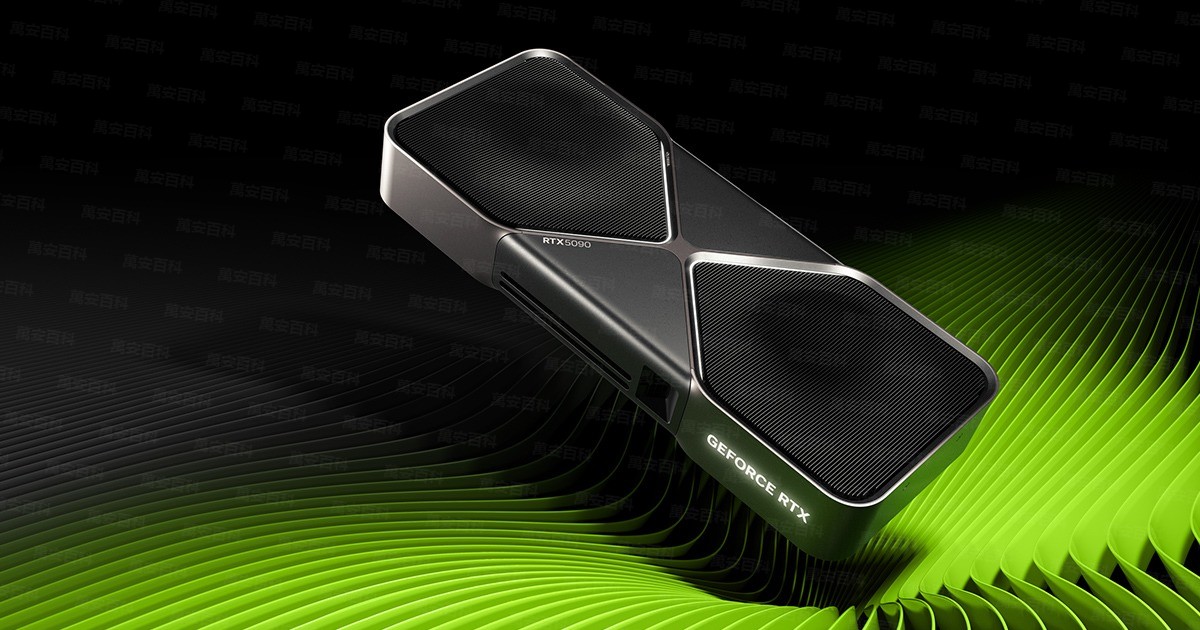
NVIDIA GeForce RTX 5090
Overview OVERVIEW
NVIDIA GeForce RTX 5090 Is NVIDIA GeForce RTX 50 series (Blackwell architecture) consumer flagship : announced at CES in January 2025, on sale January 30 (MSRP $1,999[2])—— 21,760 CUDA cores 、 32GB GDDR7 (512-bit · 1,792GB/s ), fifth-generation Tensor Cores (official AI rating of 3,352 AI TOPS) and fourth-generation RT Cores, with DLSS 4 Multi Frame Generation , PCIe 5.0, and total board power 575W (official figure[1]).
In the context of this library, it is a dark-horse sample of consumer-grade AI compute : 32GB of large GDDR7 memory plus the full CUDA stack make it both a 1080p/4K gaming flagship and an entry-level "personal AI workstation" card—running quantized 70B-class models locally, with SDXL/video generation throughput far exceeding the previous generation. Its price has fluctuated sharply with supply and demand since launch (launch price $1,999; channel pricing variance, see the market table), making it a textbook example of the "never-ending card-sniping cycle" (market data).
Three things buyers should know first : ① At 575W with a recommended 1,000W PSU (official user manual[2])—check your case and wiring first; ② the FE reference model and AIB custom cards differ widely in price; ③ it has been discontinued, and whether the price-hike cycle has peaked is hard to call—budget buyers may also compare a used 4090 or a 5080 (see the market table below for details).
Use Cases FIT
AIXX Index (0–100): estimated by this library using a weighted average of public specs—memory 40% + interconnect 30% + ecosystem 30%, with weights adjusted by use case. The methodology is transparent and verifiable, and does not constitute a performance guarantee.
History HISTORY
January 6, 2025 , CES launch of the RTX 50 series (Blackwell consumer line): RTX 5090 flagship, $1,999 (official figure[2]).
January 30, 2025 , official on-sale date: sold out at launch, with channel prices far above MSRP (public reporting[3]).
2025 , DLSS 4 Multi Frame Generation arrived via driver update; memory gating (early GDDR7 supply batches) and 575W power draw remained talking points all year (public reporting[3]).
2026 , supply stabilized and prices came down; strong installed base in both local AI and gaming (see the market table below).
Technical Specifications SPECIFICATIONS
| Item | Specifications (NVIDIA official figures, verified 2026-10[1]) |
|---|---|
| Architecture | NVIDIA Blackwell (consumer line) |
| CUDA cores | 21,760 (official figure[1]) |
| Memory | 32GB GDDR7 · 512-bit · 1,792GB/s (official figure[1]) |
| AI performance | 3,352 AI TOPS (official marketing figure[1]) |
| RT / Tensor | Fourth-gen RT Cores · Fifth-gen Tensor Cores (official figure[1]) |
| DLSS | DLSS 4 Multi Frame Generation (official figure[1]) |
| Boost clock | 2.41GHz (official figure[1]) |
| Power | 575W (total board power; official recommended PSU 1,000W, user manual[2]) |
| Interface | PCIe 5.0 x16 · 12V-2x6 power (official figure[1]) |
| Encode/Decode | Ninth-gen NVENC · Sixth-gen NVDEC · 4:2:2 support (official figure[1]) |
| Launch price | $1,999 (on sale 2025-01-30, official figure[2]) |
Specifications are per NVIDIA's official pages and user manual (verified 2026-10[1][2]); AI TOPS is a marketing figure; AIB custom cards vary in power draw and dimensions—defer to vendor pages.
Selection Comparison · RTX 4090 vs RTX 5090 CONTEXT
| Item | RTX 4090 | RTX 5090 |
|---|---|---|
| Architecture | Ada | Blackwell |
| CUDA | 16,384 | 21,760 (+33%, official figure[1]) |
| Memory | 24GB GDDR6X · 1,008GB/s | 32GB GDDR7 · 1,792GB/s (official[1]) |
| DLSS | DLSS 3 | DLSS 4 Multi Frame Generation (official[1]) |
| Power | 450W | 575W (official[1]) |
| Status | Discontinued (secondary/channel circulation) | In supply (official figure[1]) |
4090 figures are from its historical official page; discontinued cards see volatile secondary-market pricing—for inspection points, see this site's selector and market band.
Family Members FAMILY
GeForce RTX 50 series lineup (Blackwell consumer line):
Cooling & Deployment COOLING
575W board power (official figure[1]) + 12V-2x6 power connector— case airflow and PSU (1,000W recommended, user manual[2]) are the first deployment prerequisites ; the FE reference model is dual-slot dual-fan, while AIB custom cards vary from three to four slots (measure case clearance before purchase). The 12V-2x6 connector must be fully seated (all melted-connector incidents stemmed from improper seating, public reporting[3]).
Model Compatibility MODEL FIT
| Scenario | Fit guidelines for 32GB of VRAM (estimated: weights × precision + KV/framework overhead) |
|---|---|
| 70B-class 4-bit inference | Weights run ~35–40GB, over a single card—dual cards or a resident 32B-class FP8 model is the comfort zone (estimated) |
| 30B-class FP8/FP16 resident | ~30GB-class FP8 fits on a single card (estimated) |
| SDXL/video generation | 32GB offers ample headroom: the consumer ace for batch image generation and long video pipelines (estimated) |
| LoRA fine-tuning | SDXL/small-model LoRA runs on a single card; large-model LoRA requires offload (estimated) |
| Not applicable | Multi-GPU large-scale training (no NVLink); 7×24 server-grade workloads (consumer positioning) |
Gallery GALLERY
Video Overview VIDEO
Software & Ecosystem ECOSYSTEM
Full consumer-side CUDA stack: DLSS 4/Reflex/Broadcast for gaming; Studio drivers + NVENC 4:2:2 for creative work; native CUDA/PyTorch/TensorRT support for AI, with plug-and-play ollama/ComfyUI ecosystems (ecosystem data). A consumer card with unlimited-session NVENC transcoding plus 32GB of VRAM is what makes "one machine, three jobs" (gaming/creative/AI) viable (ecosystem data).
Purchasing & Inspection PROCUREMENT
Common risks
For a high-value single card, third-party inspection or platform verification with Buyer Fund Verification is recommended— Marketplace Search ›
How to Stress Test BENCH TEST
Judgment tools: 3DMark (Time Spy/Speed Way score tiers), FWL/in-game benchmarks (4K ray tracing + DLSS 4, both modes), gpu-burn/OCCT (Burn-in Test + power-throttle logs), GPU-Z sensors (per-rail current balance on 12V-2x6). On the AI side: ComfyUI image throughput + LLM tokens/s measured (quantization level noted). Dedicated case-study videos in production.
Shipping & Delivery LOGISTICS
| Stage | Key Points |
|---|---|
| Form Factor | Three-slot-class large card—anti-static bag + rigid support (prevent cooler-sag deformation) |
| Cross-border | Consumer 5090s and datacenter cards fall under different export-control tiers—defer to current lists and customs guidance; the China-market Variant 5090D is listed separately (public reporting[3]) |
| Insurance | Insure by declared value (market table price bands); record an unboxing video as evidence |
OEM & Variants VARIANTS
| Variants / AIB | Form Factor & Positioning |
|---|---|
| NVIDIA Founders Edition | Dual-slot dual-fan reference model (official figure[1]) |
| AIB custom cards | ASUS/MSIGigabyte/GALAX and others (OC/silent/AIO cooling vary, vendor figures) |
| RTX 5090 D | China-market Variant trimmed edition (public reporting[3]) |
| Laptop RTX 5090 | Mobile Max-Q specification (lower specs than desktop, don't confuse them) |
Limitations & Controversies LIMITS
- 575W power limit : PSU/case/wiring are three prerequisites (official figure[1])—efficiency-per-watt improved less than raw compute versus the previous generation.
- Price volatility : launch price and channel price have long been inverted (market table data)—an eternal tug-of-war between the "wait-and-see camp" and the "need-it-now camp."
- No NVLink : the consumer line dropped bridge connectors—multi-GPU training scaling is not its lane (official figure[1]).
- 12V-2x6 connector controversy : a history of melted connectors (public reporting[3])—seating it fully + OEM cables is discipline, not advice.
- AI TOPS marketing figure : 3,352 TOPS is a sparse-inclusive marketing number—convert to dense uniformly for cross-comparisons.
Market Notes MARKET
| Date | Type | Market | Price Band | Basis |
|---|---|---|---|---|
| 2025-01 | Launch price | Global official | $1,999 (official figure[2]) | MSRP |
| 2026-10 | Market circulation | overseas retail | Fluctuates with supply and demand · subject to the real-time price on the retail page | retail channel |
| 2026-10 | Mainland channel | Mainland China | Official import and grey market in parallel · see the market band for the used 4090 vs 5090 price gap | Marketplace Search › |
Note: consumer GPU prices fluctuate sharply; snapshots in this database are accumulated daily and traceable. Asking prices are not transaction prices. Market and inventory: AIXX Exchange (Zero-commission Matching; not a party to transactions).
Timeline MILESTONES
| Time | Event |
|---|---|
| 2025-01-06 | CES launch of the RTX 50 series (Blackwell consumer line)[2] |
| 2025-01-30 | RTX 5090 launches at $1,999; initial stock shortages[2] |
| Within 2025 | DLSS 4 ecosystem rollout; 12V-2x6 and power draw discussions throughout (per public reporting[3]) |
| 2026 | Supply stabilizing; large installed base for local AI workloads (market details in table below) |
FAQ FAQ
Related Entries SEE ALSO
References REFERENCES
| [1] | NVIDIA official · RTX 5090 product page and user manual (21,760 CUDA/32GB GDDR7/1,792GB·s/575W/$1,999/DLSS4) · https://www.nvidia.com/en-us/geforce/rtx-5090/ (verified 2026-10) |
| [2] | NVIDIA official newsroom · CES 2025 RTX 50 series launch (on sale 2025-01-30 at $1,999) · https://nvidianews.nvidia.com/ (official) |
| [3] | Public reporting · launch stock shortages / 12V-2x6 connector incident history / 5090D China-market Variant updates · https://www.reuters.com/technology/ (per public reporting) |
| [4] | This site · VRAM budgeting methodology in the selector (parameter count × precision + KV/framework overhead) · /wiki/xuanxing.html (this site's methodology) |
Specs anchored to NVIDIA official figures; marketing claims are not endorsed by this database; consumer GPU prices fluctuate sharply — transact based on live market checks.