AIXX Pedia › Model Entry › Apple Mac Studio
Apple Mac Studio
Overview OVERVIEW
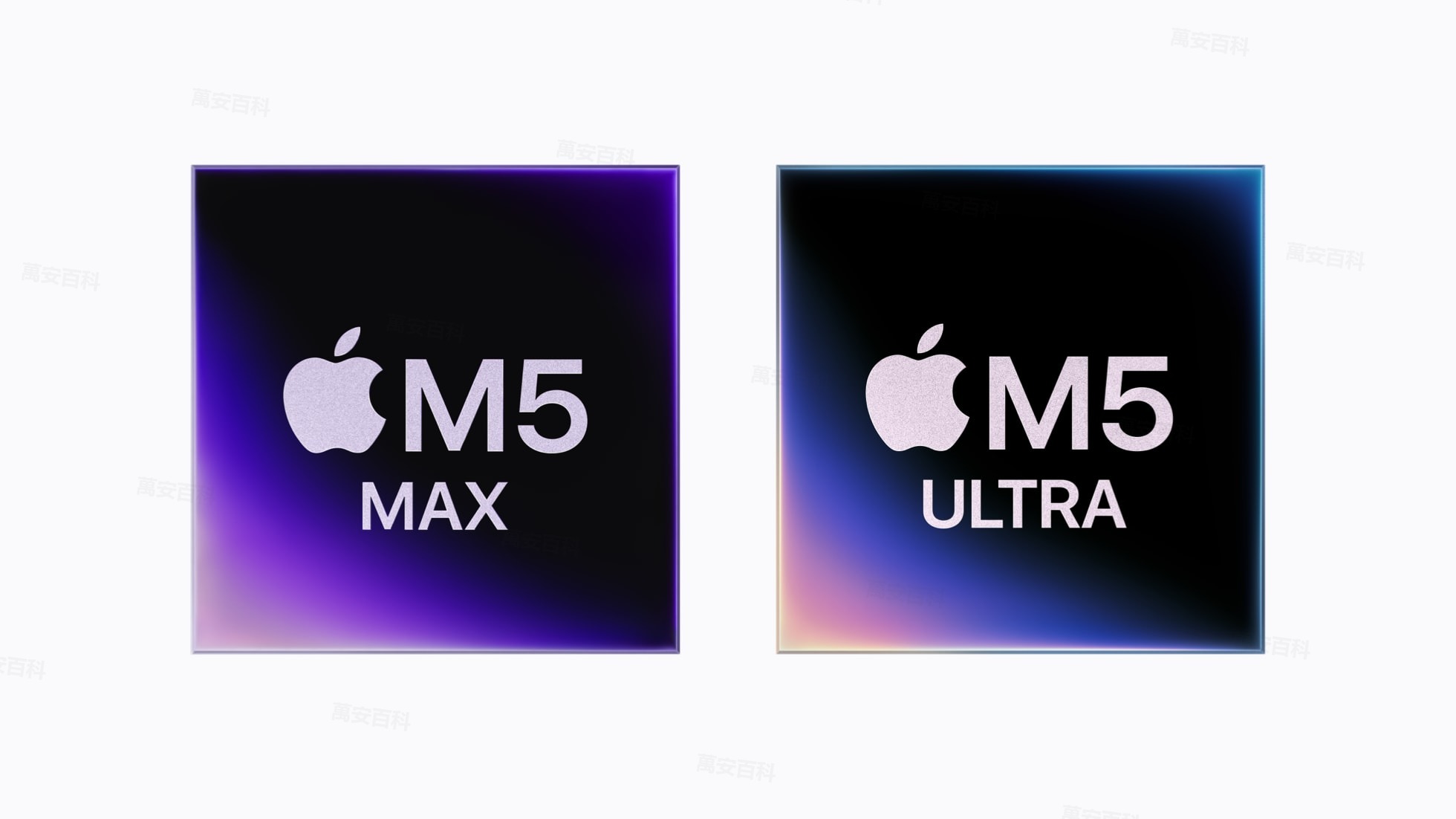
Apple Mac Studio is Apple's Workstation-class Desktop Host , and the current lineup consists of a M4 Max and M5 Ultra Dual-chip configuration (Apple official page, verified 2026-10[1]): M4 Max targets the creative mainstay tier (up to 128GB unified memory); M5 Ultra fuses two M5 Max dies into a single SoC —up to a 36-core CPU + 80-core GPU, up to 512GB unified memory , memory bandwidth 1.2TB/s , 32-core Neural Engine, and Thunderbolt 5 (up to 120Gb/s) across 9 TB ports (official figures[1]).
In the context of this library, it is "The ceiling of desktop unified memory" : 512GB of unified memory lets hundred-billion-parameter models run FP16 fully resident on the desktop (MLX ecosystem estimate), and its 1.2TB/s bandwidth is an order of magnitude ahead in the unified-memory camp (official figures[1])—it is the Mac route's "large-model workstation," and together with the 128GB tier of DGX Spark/Ryzen AI Max and the 64GB tier of the mini, forms the on-device spectrum.
Three things buyers should know first : ① Memory and SSD soldered and non-upgradeable (Apple convention); ② No CUDA—the MLX/PyTorch MPS backend ecosystem is isolated from the rigid CUDA stack, the first question in any selection (ecosystem view); ③ 384GB/512GB high-memory tiers have long lead times (officially arriving in late October per announcements[1]); factor this into planning up front.
Use Cases FIT
AIXX Index (0–100): estimated by this library using a weighted average of public specs—memory 40% + interconnect 30% + ecosystem 30%, with weights adjusted by use case. The methodology is transparent and verifiable, and does not constitute a performance guarantee.
History HISTORY
March 2025 : Mac Studio refreshed with the M4 Max / M3 Ultra generation (public reporting[2]).
2026 , the current lineup moved up to M4 Max / M5 Ultra : M5 Ultra fuses dual M5 Max dies; the 512GB tier officially arrives in late October (Apple official page, verified 2026-10[1]).
2026 , and the "512GB desktop large-model workstation" became the new ceiling of the on-device AI narrative (community/media view[2]).
Technical Specifications SPECIFICATIONS
| Item | Specifications (Apple official specs, verified 2026-10[1]) |
|---|---|
| Chip tiers | M4 Max (creative mainstay tier) / M5 Ultra (fused dual M5 Max · workstation flagship tier) |
| CPU / GPU | M5 Ultra: up to 36-core CPU + 80-core GPU (official figures[1]) |
| Unified memory | M5 Ultra up to 512GB · 1.2TB/s bandwidth (official figures[1]); M4 Max up to 128GB tier |
| Neural Engine | 32-core (M5 Ultra, official figures[1]) |
| Ports | TB5 up to 120Gb/s across 9 ports (2 front + 4 rear) · SDXC · 10GbE · HDMI (official figures[1]) |
| Video | Up to 33 streams of 8K ProRes 422 @30fps · up to 8 displays (official figures[1]) |
| Wireless | Wi-Fi 7 · Bluetooth 6 (official figures[1]) |
Specs per Apple official page (verified 2026-10[1]); 384GB/512GB high-memory tiers have long lead times (official announcements[1]); prices per the online configurator in real time.
Selection Comparison · Desktop Large-Model Workstations CONTEXT
| Item | Mac Studio M5 Ultra | DGX Station GB300 | Dual-GPU RTX Workstation |
|---|---|---|---|
| Memory | Up to 512GB unified | 748GB coherent (official[3]) | 48–96GB×N GDDR7 |
| Bandwidth | 1.2TB/s (official[1]) | HBM3e + LPDDR5X split pools | approx. 1.8TB/s per card |
| Ecosystem | MLX/Core ML(macOS) | Full CUDA stack (DGX OS) | Full CUDA stack |
| Silent | Silent desktop (official figures) | Silent desktop (official figures) | Server-room-level noise |
| One-line buying advice | Apple-ecosystem large-model workstation | CUDA desktop flagship | CUDA multi-GPU value pick |
Comparison based on public figures; see the DGX Station GB300 entry on this site; dual-GPU RTX workstations offer better value but differ in noise and maintenance.
Family Members FAMILY
Mac Studio current lineup (2026-10):
Cooling & Deployment FOOTPRINT
Mac Studio is a silent desktop workstation (official figures[1]): a 7.7×7.7-inch small footprint with fan ramping based on load—for sustained large-model inference, verify performance release with full-system testing. Deployment prerequisites = power (standard outlet) + networking (built-in 10GbE); no native dual-unit interconnect (TB5 external or network-distributed).
Model Compatibility MODEL FIT
| Scenario | Fit guide for 512GB unified memory (estimate: weights × precision + KV/framework overhead, MLX ecosystem) |
|---|---|
| Hundred-billion-class FP16 resident | Weights in the 200–400GB range: ample headroom on the 512GB model (estimate) |
| Trillion-class quantized inference | 4-bit trillion-class approx. 500GB range: within reach of the 512GB tier (estimate; throughput per MLX benchmarks) |
| FP8/FP4 inference | Large headroom for long context + high-concurrency sessions (estimate) |
| LoRA/Fine-tuning Experiments | MLX fine-tuning ecosystem can run (experiment-grade, not a training-rig positioning) |
| Not applicable | Rigid CUDA stacks; high-concurrency external serving |
Gallery GALLERY
Video Overview VIDEO
Software & Ecosystem ECOSYSTEM
MLX is a front-line framework for large-model inference/fine-tuning (Apple official open source); ollama/LM Studio natively support Apple Silicon; PyTorch uses the MPS backend. Isolation from CUDA is the first question in selection (ecosystem view). Media capabilities (ProRes engines/multi-display) are a unique edge for creative scenarios (official figures[1]).
Purchasing & Inspection PROCUREMENT
How to Stress Test BENCH TEST
Judgment tools: official MLX examples (generation throughput), ollama/LM Studio benchmarks (write out the quantization tier), Geekbench 6 (tier comparison), plus thermal and throttling logs from long inference runs. Dedicated case-study clips in production.
Shipping & Delivery LOGISTICS
| Stage | Key Points |
|---|---|
| Form Factor | Compact all-in-one unit—factory packaging with shock protection is sufficient |
| Channel | China-market Variant/overseas warranty differences up front; for used units check activation lock |
| Insurance | Insure per declared value; AppleCare+ can be added (official specs) |
Variants VARIANTS
| Configuration | Positioning |
|---|---|
| M4 Max / 128GB tier | Creative mainstay tier (this site's comparison figures) |
| M5 Ultra / 96–512GB tiers | Workstation flagship · Large-model workstation (official figures[1]) |
| Previous gen M1/M3 Ultra | Second-hand Market Circulation |
Limitations & Controversies LIMITS
- No CUDA : rigid CUDA stacks are simply out (ecosystem view)—the first question in selection.
- Soldered memory/storage : a one-time decision (Apple convention).
- High-memory tier lead times : 384/512GB tiers have long supply lead times (official announcements[1])—transact early to lock in schedule if urgent.
- Not built for training : 1.2TB/s bandwidth is high, yet still no HBM cluster—positioned honestly as fine-tuning experiment-grade (ecosystem view).
- Price segment : workstation-level pricing—the dividing line between personal creative budgets and institutional ones; decide by ROI.
Related Articles NEWS
Editor-reviewed coverage related to this machine.
Market Notes MARKET
| Date | Type | Market | Price Band | Basis |
|---|---|---|---|---|
| 2026-10 | Retail | Global official | Per Apple's official configurator in real time (tiered by chip/memory/storage) | Official specs |
| 2026-10 | Second-hand Market Circulation | China/overseas | Previous-gen M1/M3 Ultra circulation · priced by warranty and configuration | Marketplace Search › |
Outlook: Apple products hold official prices steady, with Second-hand Market Circulation as the main variable. Market and inventory: AIXX Exchange (Zero-commission Matching; not a party to transactions).
Timeline MILESTONES
| Time | Event |
|---|---|
| 2025-03 | Mac Studio refreshed with M4 Max/M3 Ultra generation (public reporting[2]) |
| 2026 | Current lineup up to M4 Max/M5 Ultra: M5 Ultra fused dual-die + 512GB tier officially announced (verified 2026-10[1]) |
FAQ FAQ
Related Entries SEE ALSO
References REFERENCES
| [1] | Apple official · Mac Studio product page (current M4 Max/M5 Ultra/M5 Ultra fused dual M5 Max/up to 512GB/1.2TB·s/TB5×9/33-stream 8K ProRes) · https://www.apple.com/mac-studio/ (verified 2026-10) |
| [2] | Public reporting · Mac Studio generational evolution and the large-model workstation narrative · https://www.reuters.com/technology/ (per public reporting) |
| [3] | This site · DGX Station GB300 entry (comparison data source) · /wiki/dgx-station-gb300.html (This Site's Entry) |
Specs are anchored to Apple's official page; on-device performance based on our own model testing.