AIXX Pedia › Model Entry › Apple Mac mini
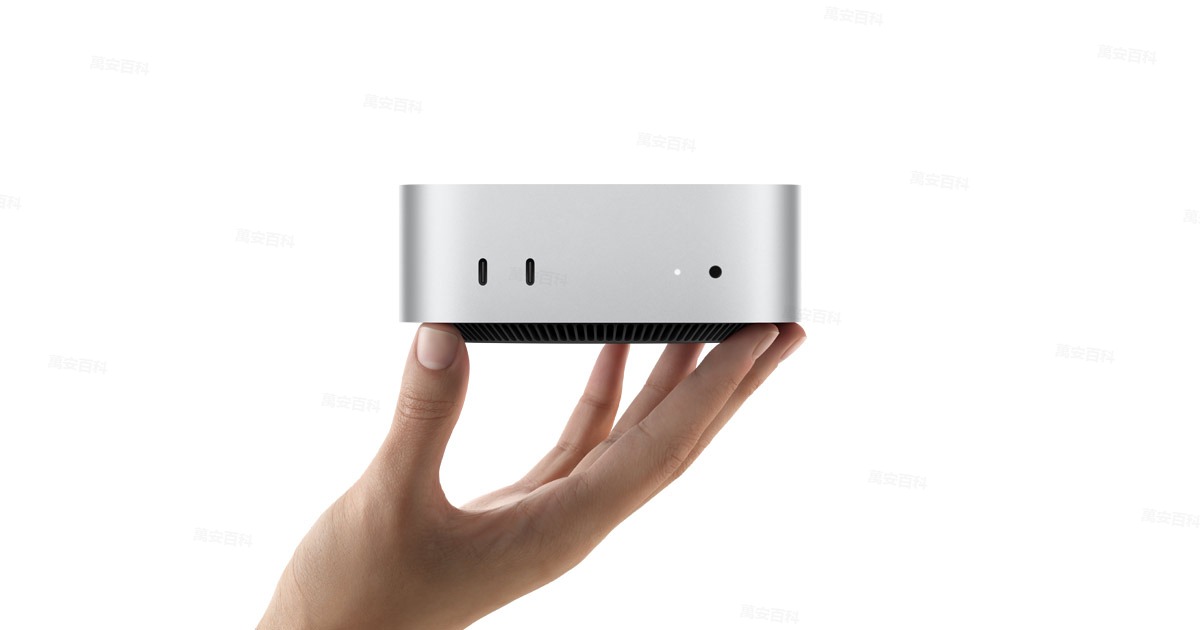
Apple Mac mini
Overview OVERVIEW
Apple Mac mini is Apple's five-inch (5×5 inch) mini desktop , and the current lineup consists of a M6 and M5 Pro dual-chip configuration (verified against Apple's official page, 2026-10[1]): the M6 (12-core CPU + 12-core GPU, up to 32GB unified memory) covers everyday/light creative work; the M5 Pro (up to 18-core CPU + 20-core GPU, up to 64GB unified memory) is the productivity tier, with Thunderbolt 5 (up to 120Gb/s) and triple 6K display output (per official specs[1]).
In the context of this library, it is "A quiet, big-memory on-device AI host" : With M5 Pro 64GB unified memory, quantized models in the 32B–70B class can run fully resident; the MLX/Core ML inference stack in Apple's ecosystem is mature, and power draw and noise stay at mini-desktop levels — a direct rival in the "128GB/64GB on-device tier" alongside DGX Spark and Ryzen AI Max (comparison table below). iPhone mirroring/Continuity is its exclusive bonus (per official specs[1]).
Three things buyers should know first : ① Unified memory is soldered and non-upgradeable (long-standing Apple practice) — capacity is a one-time decision; ② No discrete GPU option — the GPU is the integrated GPU inside the SoC; ③ AI frameworks in the macOS ecosystem (MLX) are incompatible with CUDA — confirm stack compatibility before deciding (ecosystem perspective).
Use Cases FIT
AIXX Index (0–100): estimated by this library using a weighted average of public specs—memory 40% + interconnect 30% + ecosystem 30%, with weights adjusted by use case. The methodology is transparent and verifiable, and does not constitute a performance guarantee.
History HISTORY
In October 2024 , the Mac mini first shipped with the M4/M4 Pro generation (per Apple), debuting the new five-inch form factor.
2025–2026 , the current lineup has evolved to a M6/M5 Pro dual-chip configuration: TB5 extended to the Pro tier, memory raised to 64GB (verified against Apple's official page, 2026-10[1]).
2026 , the "big-memory mini desktop = on-device AI host" narrative has matured: the M5 Pro 64GB competes head-to-head with DGX Spark and Ryzen AI Max (community/media perspective[2]).
Technical Specifications SPECIFICATIONS
| Item | Specifications (Apple official specs, verified 2026-10[1]) |
|---|---|
| Model | 5×5-inch mini desktop (per official specs[1]) |
| Chip tiers | M6 (12-core CPU + 12-core GPU) / M5 Pro (up to 18-core CPU + 20-core GPU) |
| Unified memory | Up to 32GB (M6) / up to 64GB (M5 Pro) (soldered and non-upgradeable, per official specs[1]) |
| Ports | Front: 2× USB-C + headphone jack; rear: 3× TB4 (M6) / 3× TB5 120Gb/s (M5 Pro) + HDMI + 2.5GbE (per official specs[1]) |
| Display | M6 up to two 6K displays + one 5K / M5 Pro up to three 6K displays (per official specs[1]) |
| Wireless | Wi-Fi 7 + Bluetooth 6 (per official specs[1]) |
| AI ecosystem | MLX/Core ML (Apple framework specs); Apple Intelligence (official specs) |
Specifications are per Apple's official page (verified 2026-10[1]); per-tier memory/storage combinations are governed by Apple's configurator; prices are subject to Apple's official site in real time.
Buying comparison · the big three of the 64GB on-device tier CONTEXT
| Item | Mac mini M5 Pro | DGX Spark | Ryzen AI Max+ 395 system |
|---|---|---|---|
| Unified memory | Up to 64GB (soldered) | 128GB LPDDR5X (soldered) | Up to 128GB LPDDR5X (soldered) |
| Ecosystem | MLX/Core ML(macOS) | Full CUDA stack | ROCm/Windows |
| Power/noise | Mini-level silence (official specs) | 240W external power brick | 45–120W depending on system |
| Runnable model class | 32B-class quantized comfortably (64GB, estimated) | 120B-class demos (official) | 120B-class demos (official) |
| One-line buying advice | Quiet host for the Apple ecosystem | CUDA development isomorphism | Big-memory value on Windows |
Comparison based on public specs; real-world LLM throughput varies heavily with framework/quantization — test with your own models.
Family Members FAMILY
Mac mini current lineup (2026-10):
Generational Evolution GENERATIONS
A vertical comparison of M-series Apple Silicon Mac minis — the unified memory ceiling and interconnect specs of each generation are the real dividing line for on-device AI hosts.
| Generation | Launch | Unified Memory Ceiling | Generation Notes |
|---|---|---|---|
| M1 | 2020-11 | 16GB | First Apple Silicon mini, the starting point of on-device AI (official figures) |
| M2 Pro | 2023-01 | 32GB | Pro tier returns: a step up in multi-core and bandwidth (official figures) |
| M4 / M4 Pro | 2024-10 | 64GB(M4 Pro) | Smaller chassis · Thunderbolt 5 · front USB-C — 64GB comes to mini for the first time (official figures) |
| M5 Pro / M6 | Current generation | 64GB / 32GB | M5 Pro 18-core + TB5 as the main AI tier, M6 covers everyday use (primary framing of this entry) |
Per-generation specs follow Apple's official pages; earlier Intel-era models (2010-2018) are outside the scope of this table. Standalone entries for each generation are in the editorial pipeline.
Cooling & Deployment FOOTPRINT
Five-inch box, silent fan (per official specs[1]) — deploy right on the desk, power draw at mini-desktop level. For sustained large-model inference, verify thermal-throttling behavior with full-system testing; the community track record for 7×24 operation is solid (community perspective). No native interconnect for multi-unit scaling — rely on TB5 daisy-chaining or network distribution (no NVLink-class fabric).
Model Compatibility MODEL FIT
| Scenario | Fitment guidelines for 64GB unified memory (estimated: weights × precision + KV/framework overhead, MLX/Core ML ecosystem) |
|---|---|
| 32B-class FP16/FP8 resident | Weights in the 32–64GB range: moderate headroom on the 64GB model (estimated) |
| 70B-class at 4-bit | Weights roughly 35–40GB: fits (estimated; the MLX quantization ecosystem is mature) |
| Hundred-B class | Exceeds the 64GB limit — step up to the Mac Studio 512GB tier (estimated) |
| Not applicable | Rigid CUDA stacks; high-concurrency external serving |
Gallery GALLERY
Video Overview VIDEO
Software & Ecosystem ECOSYSTEM
MLX (Apple's official open-source framework) is already a first-line ecosystem for LLM inference/fine-tuning on macOS: ollama/LM Studio natively support Apple Silicon; Core ML covers on-device apps. Its isolation from CUDA is the first question in any buying decision (ecosystem perspective). Continuity/iPhone mirroring/home ecosystem are exclusive bonuses (per official specs[1]).
Related Articles NEWS
Editor-reviewed coverage related to this machine — promotions and pricing follow the figures given in the articles.
Purchasing & Inspection PROCUREMENT
How to Stress Test BENCH TEST
Judgment tools: ollama/LM Studio benchmarks (tokens/s, quantization tier stated), official MLX examples (generation throughput), Geekbench 6 (CPU/GPU tier comparison), and long-run inference temperature logs (fan-policy verification). Dedicated case-study videos in production.
Shipping & Delivery LOGISTICS
| Stage | Key Points |
|---|---|
| Form Factor | Small complete system — factory packaging, shock protection suffices |
| Channel | Verify China/HK/US warranty differences up front; used buyers must check Activation Lock |
| Insurance | Insure per declared value; AppleCare+ can be added (official specs) |
Variants VARIANTS
| Configuration | Positioning |
|---|---|
| M6 / 32GB tier | Everyday/light creative/home server |
| M5 Pro / 64GB tier | Productivity + on-device AI host (main focus of this entry) |
| Previous-gen M4/M4 Pro | Circulating on the used market (priced by warranty and cycle count) |
Limitations & Controversies LIMITS
- No CUDA : Rigid CUDA stacks (some training/inference tools) are simply out (ecosystem perspective) — the first question in any buying decision.
- Soldered memory : Capacity is a one-time decision with no later upgrades (Apple practice).
- Bandwidth and compute ceilings : The Mini's thermals and unified-memory bandwidth make it unsuited to training/high-concurrency workloads (estimated).
- Soldered storage : The SSD is likewise non-upgradeable — buy with enough capacity up front.
- Ecosystem migration cost : Factor in the learning curve for Linux/Windows toolchain users moving to macOS.
Market Notes MARKET
| Date | Type | Market | Price Band | Basis |
|---|---|---|---|---|
| 2026-10 | Retail | Global official | Per Apple's official configurator in real time (tiered by chip/memory/storage) | Official specs |
| 2026-10 | Second-hand Market Circulation | China/overseas | Previous-gen M4/M4 Pro actively traded · priced by warranty and cycle count | Marketplace Search › |
Outlook: Apple products have no standing channel-discount system — official prices are stable, with the used market as the main source of fluctuation. Market and stock watch: AIXX Exchange (Zero-commission Matching; not a party to transactions).
Timeline MILESTONES
| Time | Event |
|---|---|
| 2024-10 | Mac mini moves to M4/M4 Pro · new five-inch form factor (per Apple) |
| 2026 | Current lineup evolves to M6/M5 Pro (TB5/64GB push, verified 2026-10[1]) |
| 2026 | On-device AI host positioning matures: M5 Pro 64GB benchmarks against the big three of the on-device tier (community/media perspective[2]) |
FAQ FAQ
Related Entries SEE ALSO
References REFERENCES
| [1] | Apple official · Mac mini product page (current M6/M5 Pro / up to 64GB / TB5 120Gb·s / three 6K displays / Wi-Fi 7) · https://www.apple.com/mac-mini/ (verified 2026-10) |
| [2] | Community/media · on-device AI host benchmarks and testing methodology · https://www.reddit.com/r/LocalLLaMA/ (third-party figures) |
| [3] | This site · VRAM sizing methodology from our selector tool · /wiki/xuanxing.html (this site's methodology) |
Specs are anchored to Apple's official page; on-device performance based on our own model testing.