AIXX Pedia › Model Entry › NVIDIA DGX Station GB300
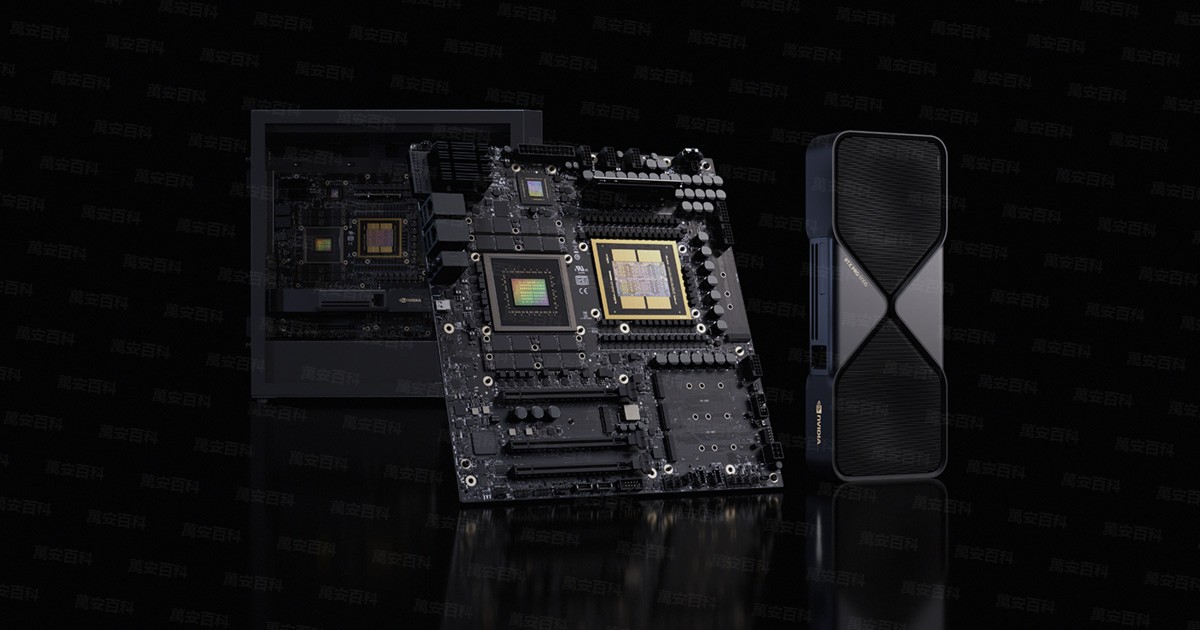
NVIDIA DGX Station GB300
Overview OVERVIEW
NVIDIA DGX Station GB300 is NVIDIA's Flagship desktop AI supercomputer : built on the GB300 Grace Blackwell Ultra Desktop Superchip (72-core Grace Arm CPU + Blackwell Ultra GPU fused package), with official figures of 748GB coherent memory (496GB LPDDR5X @396GB/s on the CPU side + 252GB HBM3e on the GPU side) and up to 20 PFLOPS of AI compute (FP4 marketing figures) — unveiled at GTC in March 2025 alongside Blackwell Ultra, in a liquid-cooled, near-silent desktop form factor (official page verified 2026-10[1]; public reporting[2]).
It's the "big brother" of the DGX Spark: the same desktop-socket positioning, but with 6x the memory class — 748GB of coherent memory means hundred-billion-parameter models can reside fully on the desktop . It integrates a ConnectX-8 SuperNIC (up to 800Gb/s) , and two DGX Stations can be paired and scaled via NVLink Fusion (official figures[1]). It runs the full NVIDIA software stack on DGX OS, identical to data center environments (official figures[1]).
Channel and expectation management : no official standing list price — third-party system integrators quote roughly in the $95K range (Exxact and other channels[3]); it targets workstation-class procurement rather than consumers; and the GB300 Desktop Superchip generation faces China-market export license treatment as strict as data center cards (subject to current control lists[4]).
Use Cases FIT
AIXX Index (0–100): estimated by this library using a weighted average of public specs—memory 40% + interconnect 30% + ecosystem 30%, with weights adjusted by use case. The methodology is transparent and verifiable, and does not constitute a performance guarantee.
History HISTORY
March 18, 2025 , GTC unveiled the DGX Station (GB300 Desktop Superchip edition): flagship desktop AI supercomputer with liquid-cooled silent design (public reporting[2]).
2025–2026 , OEM systems began shipping (Exxact/Bizon and others; third-party channel quotes starting around the $95K range[3]).
2026 , official page shows in stock; "DGX Station for Windows" variant officially announced later (public reporting[2]).
Technical Specifications SPECIFICATIONS
| Item | Specifications (NVIDIA official figures, verified 2026-10[1]) |
|---|---|
| Superchip | GB300 Grace Blackwell Ultra Desktop Superchip (72-core Grace Arm CPU + Blackwell Ultra GPU fused package) |
| Coherent memory | 748GB: 496GB LPDDR5X @396GB/s on the CPU side + 252GB HBM3e on the GPU side (official page[1]) |
| AI performance | Officially up to 20 PFLOPS (FP4, marketing figures — sparse/dense per official footnotes and measured results) |
| Interconnect scaling | ConnectX-8 SuperNIC · up to 800Gb/s · dual QSFP; NVLink Fusion two-unit pairing (official figures[1]) |
| Cooling | Liquid-cooled · silent desktop design (official figures[1]) |
| System | DGX OS (Ubuntu base) + full NVIDIA stack (NIM microservices/AMA inference libraries, official figures[1]) |
| Power | Around 1400W class (public reporting[3]) — verify circuit capacity for office deployment |
| Channel | OEM systems (Exxact/Bizon and others; third-party channel around the $95K range and up[3]) |
Specifications subject to the NVIDIA DGX Station official page (verified 2026-10[1]); memory breakdowns per official page; FP4 compute figures are marketing claims — verify by actual testing before purchase.
Selection comparison · desktop AI supercomputer tiers CONTEXT
| Item | DGX Spark | DGX Station GB300 | RTX PRO 6000 workstation |
|---|---|---|---|
| Chip | GB10 Desktop | GB300 Desktop Superchip | Blackwell GPUs |
| Memory | 128GB LPDDR5X | 748GB coherent memory (official[1]) | 96GB GDDR7 |
| AI compute figures | 1 PFLOP FP4 nominal | Up to 20 PFLOPS FP4[1] | 4000 TOPS FP4 (official page) |
| Interconnect scaling | CX-7 two-unit pairing | CX-8 + NVLink Fusion[1] | None native |
| Price band | $3,999–6,950 (channel figures) | Around the $95K range and up (third-party channels[3]) | Single-card $10K tier |
| One-line buying advice | Edge development entry point | Desktop flagship · hundred-billion-class residency | Single-card workstation value |
Comparison based on official pages and channel figures; RTX PRO 6000 data see our entry. The workstation single-card path lacks the Grace CPU and coherent memory — Station is irreplaceable for ultra-large model residency scenarios.
Family Members FAMILY
DGX desktop/workstation lineup:
Cooling & Deployment COOLING
Liquid-cooled silent desktop design (official figures[1]): all-in-one liquid cooling + silent tuning, deployable right on the office/lab desk — no server room, no liquid-cooling retrofit barrier. Only two deployment prerequisites: Power capacity (around 1400W class, public reporting[3] — a standard office outlet requires checking circuit capacity) and Ambient heat dissipation (liquid-cooling internal loop + exhaust, expect desktop-PC thermal behavior). Two-unit NVLink Fusion scaling requires ConnectX-8 cables and budget for a second unit.
Model Compatibility MODEL FIT
| Scenario | Fit envelope for 748GB coherent memory (estimated: weights × precision + KV/framework overhead) |
|---|---|
| Hundred-billion-class FP16 fully resident | 100B+ class FP16 weights at roughly 200GB+: fits in the 252GB HBM3e GPU side (estimated) |
| Trillion-class quantized inference | Trillion-parameter FP4/FP8 quantized models reachable within the 748GB pool (estimated; throughput per actual testing) |
| FP8/FP4 inference | Official 20 PFLOPS FP4 figures[1]: the main tier for large-model low-precision inference |
| Fine-tuning | LoRA/QLoRA at the 100B class; full-parameter fine-tuning throughput constrained by LPDDR5X bandwidth (estimated) |
| Not applicable | High-concurrency production serving (desktop positioning); multi-tenant virtualization (not a server form factor) |
Method: VRAM footprint ≈ parameter count × bytes per parameter, plus KV and framework overhead; under the Grace-GPU coherent memory model, allocation strategy (GPU-dedicated vs shared pool) affects actual capacity — verify with framework-level testing.
Gallery GALLERY
Video Overview VIDEO
Software & Ecosystem ECOSYSTEM
Full CUDA stack on DGX OS (identical to data center DGX environments): NIM microservices, NVIDIA AI Enterprise, officially supported inference libraries (official figures[1]); after two-unit NVLink Fusion pairing, usable as a development/inference cluster. Community ecosystem (llama.cpp/ollama etc.) support for the GB300 Desktop matures with install base (community figures). The choice logic vs Spark is the same: prioritize Station for CUDA parity and large memory , Spark for budget- and power-sensitive scenarios.
Purchasing & Inspection PROCUREMENT
Common risks
For high-value system transactions, third-party inspection recommended; serial numbers should match channel customs declarations.
How to Stress Test BENCH TEST
DGX OS ships with diagnostic tools: nvidia-smi (Grace+GPU topology/memory), bandwidthTest (HBM/LPDDR5X bandwidth vs official figures), gpu-burn (Burn-in Test), nccl-tests (two-unit NVLink Fusion stress test). On the model side: full residency of the target model plus measured inference throughput is the acceptance core; keep records of long-duration Burn-in Test temperatures for the liquid-cooled silent tier. Dedicated case-study clips in production.
Shipping & Delivery LOGISTICS
| Stage | Key Points |
|---|---|
| Form Factor | All-in-one desktop (integrated liquid-cooling module) — original packaging + liquid-cooling transport fixtures complete |
| Power accessories | Verify high-wattage power cord standards per deployment region; missing accessories are a bargaining point |
| Cross-border Compliance | GB300-generation systems are export-control-sensitive items — subject to current lists and customs rulings; compliance documentation first |
| Insurance | Insure at full value (channel price around the $95K range[3]); additional transit insurance for liquid-cooling components recommended |
OEM & Variants VARIANTS
| Variants / OEM | Form Factor & Positioning |
|---|---|
| NVIDIA reference design | GB300 Desktop Superchip official design (official figures[1]) |
| Exxact/Bizon and other systems | OEM channel systems (third-party channel figures[3]) |
| DGX Station for Windows | Windows variant (officially announced later, public reporting[2]) |
| DGX Spark | GB10 desktop entry tier (our entry) |
Limitations & Controversies LIMITS
- LPDDR5X bandwidth constraint : large coherent memory capacity but 396GB/s bandwidth (CPU side, official figures[1]) — training throughput differs from HBM clusters by orders of magnitude; the desktop positioning determines everything.
- Around the $95K range barrier (third-party channel figures[3]): workstation/institutional budget tier — out of reach for individuals and small teams.
- Strict for China market : GB300-generation system license status is equivalent to data center cards (subject to current lists[4]).
- 20 PFLOPS marketing figure : sparse vs. dense is not itemized — for fair comparison, normalize to dense figures across the board; rely on measured results for procurement.
- Liquid-cooled maintenance surface : integrated liquid cooling = requires vendor or channel maintenance support (limited room for self-repair); write warranty period and response SLA into the contract.
Market Notes MARKET
| Date | Type | Market | Price Band | Basis |
|---|---|---|---|---|
| 2026-10 | System quotes | Overseas OEM channels | from around the US$95,000 level (third-party channel figures[3], subject to the official quote) | OEM full systems |
| 2026-10 | Mainland status | Mainland China | No official channels · Cross-border compliance is tightening (subject to the current control list[4]) | Marketplace Search › |
Note: channel quotes are asking prices, not transaction prices; this database has no standing transaction anchor for this model. Market and listings: AIXX Exchange (Zero-commission Matching; not a party to transactions).
Timeline MILESTONES
| Time | Event |
|---|---|
| 2025-03-18 | DGX Station announced at GTC (GB300 Desktop Superchip version)[2] |
| 2025–2026 | OEM-channel systems go on sale (third-party channels, from around the US$95,000 level[3]) |
| 2026 | In stock per the official page; Windows variant officially confirmed (public reports[2]) |
FAQ FAQ
Related Entries SEE ALSO
References REFERENCES
| [1] | NVIDIA official · DGX Station product page (GB300 Desktop Superchip/748GB coherent memory/20 PFLOPS FP4 figure/CX-8/NVLink Fusion/Liquid-cooled silent operation) · https://www.nvidia.com/en-us/products/workstations/dgx-stati (verified 2026-10) |
| [2] | Public reports · GTC 2025 announcement and Windows variant confirmation · https://www.reuters.com/technology/ (per public reporting) |
| [3] | Third-party system channels · Exxact/Bizon quotes and configurations (from around the US$95,000 level/around the 1400W class) · https://bizon-tech.com/gb300.html (third-party channel figures) |
| [4] | Public reports · Export controls toward China (subject to the current control list) · https://www.reuters.com/technology/ (per public reporting) |
| [5] | This site · DGX Spark entry (desktop-tier comparison data source) · /wiki/dgx-spark.html (This Site's Entry) |
Specifications anchored to the NVIDIA official page; entries tagged "third-party channel figures" or "public reports" are not vouched for by this database; procurement should rely on officially confirmed documents and measured results.