AIXX Pedia › Model Entry › NVIDIA DGX Spark
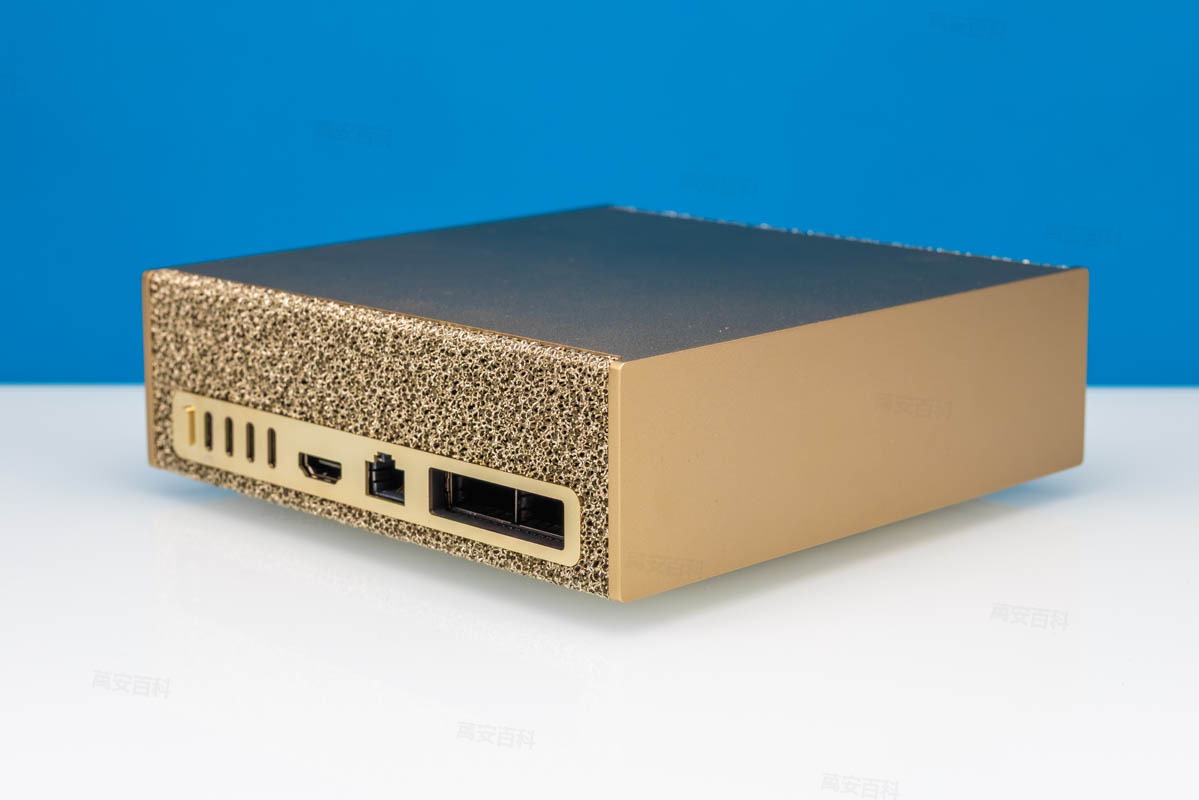
NVIDIA DGX Spark
Overview OVERVIEW
NVIDIA DGX Spark is a desktop AI supercomputer officially released on October 15, 2025 by NVIDIA (official framing: "AI supercomputer on your desk"). It is built on the GB10 Grace Blackwell Superchip — a 20-core Arm CPU (10× Cortex-X925 + 10× Cortex-A725) co-packaged with a Blackwell-architecture GPU (6,144 CUDA cores), with a nominal 1 PFLOP(1,000 AI TOPS)FP4 of compute and 128GB LPDDR5X coherent unified memory[1]. Its predecessor is the Project DIGITS (Renamed at GTC March 2025)[3].
It is positioned as an edge development and fine-tuning endpoint , not a datacenter card: per official figures, a single unit can fine-tune models up to 70B parameters , and two units linked via ConnectX-7 can handle workloads up to the 200B parameter -level tasks[1]; DGX OS (Ubuntu-based) ships with the full CUDA stack out of the box. 128GB unified memory is its core selling point against consumer workstations (RTX 4090's 24GB).
But one physical ceiling must be addressed first : LPDDR5X memory bandwidth is 273GB/s (per official documentation[2]) — less than a third of the RTX 4090 and about 3.4% of HBM-class cards (B300 at roughly 8TB/s). Training/inference throughput is extremely bandwidth-sensitive, —this is lesson one in managing purchase expectations (see "Limitations & Controversies"). Edge model development and fine-tuning
Use Cases FIT
AIXX Index (0–100): estimated by this Pedia via weighted public specifications — memory 40% + interconnect 30% + ecosystem 30%, with weights adjusted by use case. 90+ flagship tier · 75+ Excellent · 60+ usable · below 60 not recommended. The methodology is transparent and verifiable, and does not constitute a performance guarantee.
History HISTORY
January 6, 2025 , the CES keynote announced Project DIGITS : a desktop AI supercomputer expected from about $3,000, and the GB10 superchip's debut (per public reporting[3]).
March 18, 2025 ; renamed at the GTC event DGX Spark (with the workstation-form DGX Station teased alongside), ConnectX-7 dual-machine interconnect and 200B-class two-machine figures disclosed (per public reporting[3]).
October 15, 2025 : official launch at $3,999 (128GB version, NVIDIA official channel; per public reporting[3]).
February 2026 , overseas channel price lists showed an increase to $4,699 (per channel price list[6]); third-party street prices subsequently settled at $5,600–6,950 (per channel quotes, this site's market floor anchored at $6,950[6]).
2026 , supply stabilized, and the developer/education market scaled up; public discussion of measured power draw and firmware tuning (including Carmack's measurements) pushed expectations back toward rationality[4].
Technical Specifications SPECIFICATIONS
| Item | Specifications (NVIDIA official figures, verified 2026-10[1][2]) |
|---|---|
| Superchip | GB10 Grace Blackwell Superchip (per official product page[1]) |
| CPU | 20-core Arm: 10× Cortex-X925 + 10× Cortex-A725 (per official figures[1]) |
| GPU | Blackwell architecture · 6,144 CUDA cores (per official figures[1]) |
| AI performance | Official nominal 1 PFLOP (1,000 AI TOPS) FP4—the marketing figure does not itemize sparse/dense; verify with real-world testing before purchase |
| Unified memory | 128GB LPDDR5X coherent unified memory (official page also lists a 64GB configuration[1]) |
| Memory bandwidth | 273GB/s · 256-bit (per official documentation[2] — see "Limitations": this is the machine's physical ceiling) |
| Storage | Up to 4TB NVMe M.2 (self-encrypting, per official figures[1]) |
| Interconnect | ConnectX-7 · 200Gb/s (per official figures for dual-machine interconnect[1]) |
| Networking | 10GbE RJ45 · WiFi 7 · 4× USB-C (per official/public reporting[1][3]) |
| Power | 240W external PSU (included); GB10 SoC TDP 140W (per official documentation[2]) |
| System | DGX OS (Ubuntu-based, full CUDA stack) |
| Launch price | $3,999 (October 15, 2025 launch figure[3]) |
Specifications per NVIDIA official product page and hardware documentation (verified October 2026[1][2]); the FP4 compute figure is a marketing number that may include 2:1 sparsity per industry convention — verify dense performance with your own benchmarks.
Selection comparison · DGX Spark vs consumer/professional workstations CONTEXT
| Item | DGX Spark | RTX 4090 workstation | RTX PRO 6000 workstation |
|---|---|---|---|
| VRAM/Memory | 128GB LPDDR5X unified | 24GB GDDR6X | 96GB GDDR7 |
| Memory Bandwidth | 273GB/s (official documentation[2]) | 1,008GB/s | Approx. 1.79TB/s |
| Architecture | GB10 (Blackwell + Grace co-packaged) | Ada | Blackwell |
| Dual-unit link | ConnectX-7 · 200Gb/s (official[1]) | None native | None native |
| Software stack | DGX OS full CUDA (isomorphic with the datacenter) | Standard driver/CUDA | Standard driver/CUDA |
| Form factor/Power | Desktop all-in-one · 240W external PSU | Tower/rack · 450W card-level | Workstation · 600W card-level |
| One-line buying advice | Big-memory development/fine-tuning endpoint | Throughput-first consumer flagship | Big-VRAM professional workstation |
Comparison based on public specification figures; for 4090/PRO 6000 numbers see their official pages and the corresponding entries on this site. For bandwidth's impact on training/inference throughput, real-world testing with your own models is recommended.
Family Members FAMILY
The DGX desktop line and family tree:
Cooling & Deployment COOLING
The DGX Spark is a desktop air-cooled all-in-one : a 240W external PSU is included (per official documentation[2]); a household outlet is all it takes — no server room, no liquid cooling, no power upgrades and that's the most fundamental deployment difference from the data center line. Third-party testing shows full-load system power under about 200W, with typical operation in the 100–130W range (per ServeTheHome review[5]); desktop noise and thermals can be expected at ordinary desktop-PC levels.
Two-machine interconnect deployment: a ConnectX-7 200Gb/s direct cable pairs two Sparks (the prerequisite for the official 200B-class figures[1]) — the cable and the second unit are hidden budget items; account for both when purchasing.
Model Compatibility MODEL FIT
| Scenario | Fit figures for 128GB unified memory (extrapolation: weights × precision + KV/framework overhead; methodology detailed in the selector) |
|---|---|
| 70B-class fine-tuning | Official figures cite single-machine fine-tuning up to 70B[1] — LoRA/QLoRA are the mainstream workloads (full-parameter 70B fine-tuning requires two machines) |
| Hundreds-of-B inference | Official figures cite two-machine handling up to the 200B-parameter class[1]; single-machine 4-bit Quantization of 100B-class models is the community's mainstream practice (estimated + measured figures) |
| 30B-class full residency | About 60GB in FP16: a comfortable single-card zone, with KV headroom for long context and concurrency |
| FP4/FP8 quantized inference | Blackwell-generation formats: memory halved, throughput doubled — but the 273GB/s bandwidth sets the concurrency ceiling (official documentation[2]) |
| Not applicable | Hundred-billion-scale full-parameter training / high-concurrency production inference services (dual ceilings on bandwidth and compute—datacenter-card territory) |
Figure basis: memory usage ≈ parameter count × bytes per parameter (FP16=2B / FP8=1B / FP4=0.5B), with KV and framework overhead counted separately; same source as the selector's "VRAM math" and independently verifiable.
Gallery GALLERY
For system form factor see NVIDIA's official product page[1] and official hardware documentation[2] (ports/teardown/power details).
Video Overview VIDEO
Software & Ecosystem ECOSYSTEM
The core premium of DGX Spark lies in software stack parity : DGX OS (Ubuntu-based) ships with the full CUDA toolchain out of the box, identical to the data center DGX/HGX environment — develop at the edge, deploy in the cloud with zero migration (per official positioning[1]). NIM microservices, TensorRT-LLM, and the NeMo fine-tuning suite all have official support; community stacks like Ollama/llama.cpp/vLLM are also mature on GB10 (per community reporting).
The rivalry with Mac Studio (large unified memory but no CUDA): Spark is betting on developer inertia around "CUDA ecosystem + data center parity" — models migrate seamlessly from Spark to H100/B300 clusters, which is its moat against the ARM ecosystem.
Purchasing & Inspection PROCUREMENT
Common risks
For full-unit transactions, inspect in person or use a third-party inspector; serial numbers must match customs declarations.
How to Stress Test BENCH TEST
DGX OS ships with diagnostic tools: nvidia-smi (topology/power/temperature), bandwidthTest (measured memory bandwidth vs the 273GB/s official rating[2]), gpu-burn (Burn-in Test stability), and nccl-tests (two-unit interconnect stress testing). On the model side: measured fine-tuning throughput and inference latency of your own models are the acceptance core — community benchmarks (public llama.cpp/vLLM scores on GB10) serve as a cross-reference.
Power draw reference: third-party reviews show full-load system power under about 200W (per ServeTheHome[5]); card-specific testing in production.
Shipping & Delivery LOGISTICS
| Stage | Key Points |
|---|---|
| Form Factor & Weight | Compact desktop all-in-one (roughly 1.2L-class chassis, per public reporting[3]) — ship the complete unit in original packaging |
| Packaging | Original retail box + 240W external PSU with all accessories; a missing PSU is a negotiation item (per official documentation[2]) |
| Cross-border Compliance | GB10 is an AI compute appliance — for cross-border purchase, follow the current export control list and customs rules; compliance paperwork comes first |
| Insurance | Insure at full value (channel price $5,600–6,950[6]); shipping and unboxing insurance recommended |
OEM & Variants VARIANTS
| Variants / OEM | Form Factor & Positioning |
|---|---|
| NVIDIA Founders Edition | 128GB LPDDR5X · mainstream form via official direct sales (per official figures[1]) |
| 64GB config | Low-spec option listed on the official page[1] — occasionally seen in channels; verify carefully |
| OEM units like ASUS Ascent GX10 | GB10 third-party system form (per public reporting[3]) |
| DGX Station | GB300-architecture workstation (teased at GTC 2025, per public reporting[3]) |
Limitations & Controversies LIMITS
- The 273GB/s bandwidth is a physical ceiling : the big memory of LPDDR5X comes at the cost of bandwidth — training throughput is less than a third of the RTX 4090's and about 3.4% of HBM-class cards (cross-referenced from official product pages[1][2]). You can't have both big memory and big bandwidth — this machine's first limitation.
- Power/performance controversy : John Carmack measured whole-system power at only about the 100W level, reported by media as "running at half power" (per TechPowerUp[4]); the official response cites the 240W PSU and 140W SoC TDP (official documentation[2]) — firmware tuning is still iterating, so judge by your own measurements on arrival.
- Channel premium : launch price $3,999 vs street prices of $5,600–6,950 (figures in the market section[6]) — a premium over 40%; buyers reasoning from launch pricing should reassess.
- No official channel : no official release in mainland China — warranty, power spec, and cross-border compliance risks for gray-market/overseas units are on the buyer.
- Ambiguous FP4 compute figure : the 1 PFLOP figure is marketing language and doesn't specify sparse vs dense — for apples-to-apples comparisons, normalize to dense before comparing.
Market Notes MARKET
| Date | Type | Market | Price Band | Basis |
|---|---|---|---|---|
| 2025-10 | Launch price | Official overseas channel | $3,999 (launch figure[3]) | official direct sales |
| 2026-02 | Channel price list | overseas retail | $4,699 (per channel price list[6]) | retail channel |
| 2026-10 | Market circulation | third-party channel | $5,600–6,950 (per channel quotes, this site's market floor anchored at $6,950[6]) | Marketplace Search › |
| 2026-10 | Mainland status | Mainland China | No official channel · gray-market/overseas circulation only | Warranty and compliance risks on the buyer |
Note: channel quotes are asking prices, not transaction prices; our quote database accumulates daily and is fully traceable. Market & inventory: AIXX Exchange (Zero-commission Matching; not a party to transactions).
Timeline MILESTONES
| Time | Event |
|---|---|
| 2025-01-06 | CES: Project DIGITS unveiled (GB10 debut · expected from ~$3,000)[3] |
| 2025-03-18 | GTC: renamed DGX Spark; ConnectX-7 two-unit interconnect and 200B figures disclosed[3] |
| 2025-10-15 | Official launch at $3,999 (per public reporting[3]) |
| 2025-10 | Carmack's power measurements sparked the public "half power" discussion (per TechPowerUp[4]) |
| 2026-02 | Overseas channel price list at $4,699 (per channel figures[6]) |
| 2026-10 | Street prices $5,600–6,950; market floor anchored at $6,950 (this site's figures[6]) |
FAQ FAQ
Related Entries SEE ALSO
References REFERENCES
| [1] | NVIDIA official · DGX Spark product page (GB10/20-core Arm/6,144 CUDA/128GB LPDDR5X/ConnectX-7/64GB config figures) · https://www.nvidia.com/en-us/products/workstations/dgx-spark (verified 2026-10) |
| [2] | NVIDIA official · DGX Spark hardware docs (240W external PSU/GB10 TDP 140W/273GB/s/4TB NVMe self-encrypting) · https://docs.nvidia.com/dgx/dgx-spark/hardware.html (verified 2026-10) |
| [3] | Public reports · Project DIGITS launch and DGX Spark on-sale (CES 2025/GTC 2025/2025-10-15 $3,999) · https://www.reuters.com/technology/ (per public reporting) |
| [4] | TechPowerUp · Carmack power measurements and "half power" coverage (2025-10) · https://www.techpowerup.com/342321/nvidia-dgx-spark-reported (verified 2026-10) |
| [5] | ServeTheHome · DGX Spark review (measured system draw under 200W) · https://www.servethehome.com/nvidia-dgx-spark-review-the-gb1 (verified 2026-10) |
| [6] | Channel quotes · overseas price lists and third-party market prices ($4,695 list/$5,600–6,950 circulation) · /hall.html (our data, 2026-10) |
| [7] | Selector tool · VRAM budgeting methodology (parameters × precision + KV/framework overhead) · /wiki/xuanxing.html (this site's methodology) |
Specifications are anchored to NVIDIA's official pages/docs; items labeled "per public reports" or "channel pricing" are media/channel secondhand accounts and are not vouched for by this archive — base procurement decisions on official documents and your own measurements.