AIXX Pedia › Model Entry › NVIDIA A16
NVIDIA A16
Overview OVERVIEW
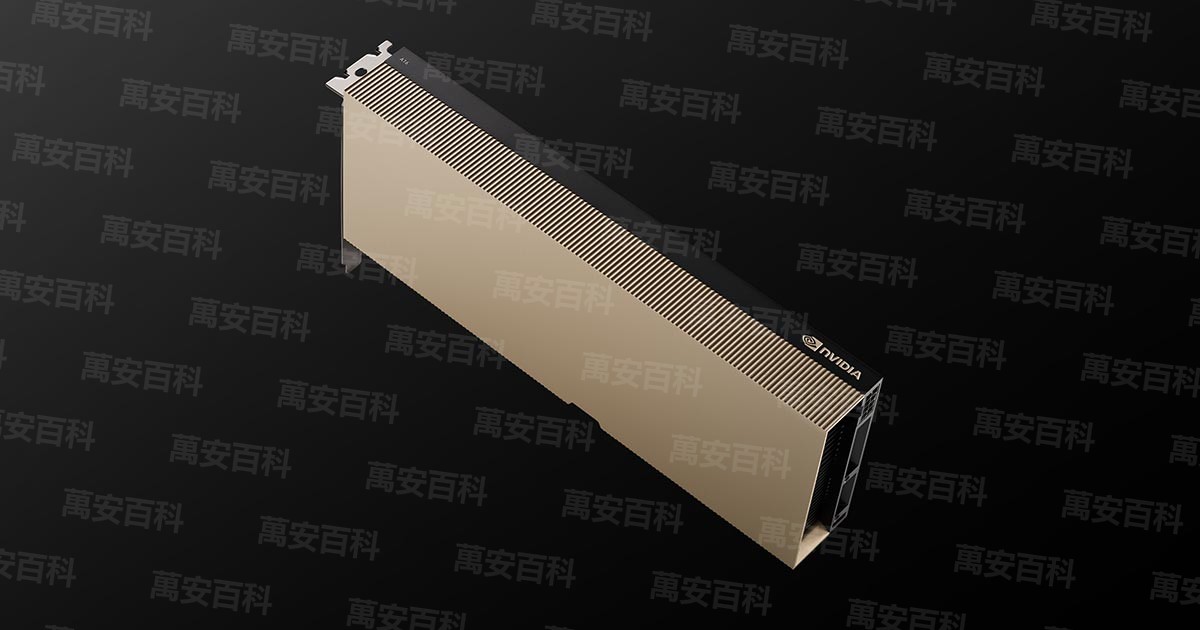
NVIDIA A16 is a NVIDIA High-density graphics VDI (virtual desktops) A quad-GPU single-board card: one full-height dual-slot PCIe card integrating 4 GPUs (16GB GDDR6 each, 64GB total) , Ampere architecture (2nd-gen RT Core + 3rd-gen Tensor Core), 4 NVENC + 8 NVDEC (with AV1 decode) , whole-card power draw of just 250W , PCIe Gen4 x16, passive cooling, NEBS Level 3 ready (official page verified 2026-10 [1]).
Official positioning math: rich-graphics VDI Up to 64 concurrent users per board (double the previous-gen M10, official figure [1]); the quad-GPU design allows mixed user profiles within one board (vPC knowledge workers + vWS designers); NVIDIA claims up to 70% performance gain over CPU-only VDI in vPC scenarios (marketing figure [1]). It's the density play of "cramming an entire department's desktops into one server."
Three things buyers should know first : ① 16GB per GPU — heavy-GPU users (3D designers) hit the ceiling on per-VM allocation; vWS-class needs should look at the L40S or A16 successors; ② passive cooling = strict chassis airflow prerequisites; ③ it runs on a virtualization licensing stack (vPC/vWS licenses are bought per user — this often costs more than the card, licensing figure [1]).
Use Cases FIT
AIXX Index (0–100): estimated by this library using a weighted average of public specs—memory 40% + interconnect 30% + ecosystem 30%, with weights adjusted by use case. The methodology is transparent and verifiable, and does not constitute a performance guarantee.
History HISTORY
2021 : the A16 launched with the Ampere data-center line (public reporting [2]): a quad-GPU board aimed squarely at VDI.
2022–2024 : the vPC/vWS licensing ecosystem scaled up, and the A16 became the density workhorse for graphics VDI integration (public reporting [2]).
2025–2026 : still in supply on the official page, with NEBS Level 3 readiness listed (verified 2026-10 [1]); successor roadmap pending official word (accurately awaiting official statements).
Technical Specifications SPECIFICATIONS
| Item | Specs (NVIDIA A16 · official figures, verified 2026-10 [1]) |
|---|---|
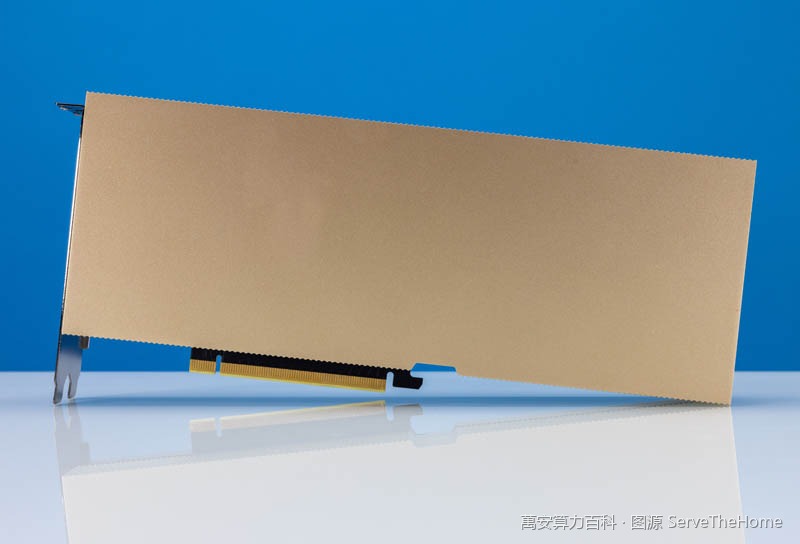
| Form Factor | Full-height full-length dual-slot · passive cooling · PCIe card |
| GPU | 4× GPUs per board · Ampere architecture (2nd-gen RT + 3rd-gen Tensor, official figure [1]) |
| Memory | 4× 16GB GDDR6 (ECC) · 64GB total (official figure [1]) |
| Memory Bandwidth | 4× 200GB/s (official figure [1]) |
| Media Engine | NVENC ×4 | NVDEC ×8 (with AV1 decode, official figure [1]) |
| Power | 250W max · 8-pin CPU power connector (official figure [1]) |
| Interface | PCIe Gen4 x16 (official figure [1]) |
| Reliability | NEBS Level 3 ready · optional secure/measured boot (official figure [1]) |
| VDI figures | Up to 64 concurrent users per board for rich-graphics VDI (official figure [1]) |
Specs per the NVIDIA A16 official page (verified 2026-10 [1]); INT8/FP16 details not listed on the official page, defer to technical documentation and hands-on testing; vPC/vWS are NVIDIA virtualization licensing product lines.
Selection comparison · VDI density tier CONTEXT
| Item | A16 | L4 | L40S |
|---|---|---|---|
| Positioning | Graphics VDI density champion | Video/inference value | Large-Memory Inference |
| Memory | 64GB (4×16GB, official [1]) | 24GB (official) | 48GB (official) |
| Power | 250W | 72W | 350W |
| Form Factor | Full-height dual slot | half-height single slot | Full-height dual slot |
| One-line buying advice | Users × graphics desktops | Transcoding + light inference | Large-Memory Inference |
Comparison based on official figures and product pages; all three cards can be mixed in one server per workload ratios (cross-linked entries on this site).
Family Members FAMILY
NVIDIA virtualized GPU lineup (VDI-oriented):
Cooling & Deployment COOLING
The A16 is passively cooled (official figure [1]) — server airflow is a hard prerequisite: the heat from a dual-slot footprint at 250W must be carried away by forced air cooling, and the chassis' airflow design directly determines whether it can run at full speed . NEBS Level 3 readiness (official figure [1]) means telecom-grade rack environments are also viable. The density math: a 1U server can hold 2–3 A16s (depending on OEM definitions), and a rack's desktop-user capacity is computed directly as "boards × 64 users."
Model Compatibility MODEL FIT
| Scenario | Fit for 4×16GB (estimated: weights × precision + overhead) |
|---|---|
| Per-VM allocation | A single-user VM can get 1–4GB-class memory slices (vPC/vWS configuration) — smooth light graphics |
| 7B/13B quantized inference | One GPU's 16GB fits a 7B FP8 or 13B 4-bit model (estimated) — viable for the AI side gig |
| Video transcoding | 4 NVENC parallel pipelines (official figure [1]) |
| Not applicable | Tens-of-billions-parameter models; training (memory slicing and interconnect physical limits) |
Gallery GALLERY
Video Overview VIDEO
Video walkthrough of this entry is in the production queue (see the video slot schedule for Chinese/multilingual workflow) — this section updates automatically once it goes live.
Software & Ecosystem ECOSYSTEM
The ecosystem core is the NVIDIA virtualization licensing stack : NVIDIA AI Enterprise (vPC/vWS/rGPU licensing models, official figure [1]) — beyond the hardware purchase, licenses are subscribed per concurrent user, and the licensing cost model must be counted together with the card . Major VDI brokers like Citrix and VMware Horizon are officially compatible (ecosystem figure); surplus compute can be switched to AI Enterprise for inference side gigs (official figure [1]).
Purchasing & Inspection PROCUREMENT
How to Stress Test BENCH TEST
Judgment tools: nvidia-smi (four-GPU presence/temperature/power), memtestG80-class memory stress tests 、 , PerfHunter/VDI benchmarks (target-profile concurrency), FFmpeg transcoding pipelines (NVENC/NVDEC throughput vs official figure [1]). VDI board acceptance = the two metrics of "target-profile concurrency × image-quality tier." Dedicated case-study video in production.
Shipping & Delivery LOGISTICS
| Stage | Key Points |
|---|---|
| Form Factor | Full-length dual-slot large card — anti-static + protect the heatsink (do not crush passive cooling fins) |
| Cross-border | Low regulatory sensitivity in the VDI tier — still defer to current trade lists and customs guidance |
| Insurance | Insure by goods value; for VDI integration projects, insure on board + license combined price |
Variants VARIANTS
| Variants | Positioning |
|---|---|
| NVIDIA A16 | Standard quad-GPU board (official figure [1]) |
| OEM integrated systems | Pre-built in Dell/Lenovo/Supermicro VDI servers (public reporting [2]) |
| Successor generation | Awaiting official roadmap (accurately awaiting official statements) |
Limitations & Controversies LIMITS
- 16GB per-GPU ceiling : heavy-GPU VMs (3D rendering/AI inference-heavy) hit the per-VM allocation limit — heavy vWS users should look at large-memory tiers.
- Licensing is the cost centerpiece : vPC/vWS per-user subscriptions — annual license fees for 64 users/board often exceed the card price; TCO must be computed together.
- Passive cooling airflow dependency : poor chassis airflow = throttling (see deployment section).
- PCIe Gen4 : not Gen5 — limited impact in virtualization scenarios, but bandwidth-bound passthrough-GPU workloads will see a gap.
- Generation roadmap pending : no official successor statements yet — long-cycle projects should watch for upgrade windows.
Market Notes MARKET
| Date | Type | Market | Price Band | Basis |
|---|---|---|---|---|
| 2026-10 | Board retail | Overseas channels | Channel quotes fluctuate with supply and demand · see channel page for real-time pricing | Retail figures |
| 2026-10 | Second-hand Market Circulation | Channel/secondhand | Retired VDI boards in circulation · priced by 7×24 runtime history and warranty | Marketplace Search › |
Note: board prices fluctuate with VDI project cycles; this database's snapshots accumulate daily. Market and inventory: AIXX Exchange (Zero-commission Matching; not a party to transactions).
Timeline MILESTONES
| Time | Event |
|---|---|
| 2021 | A16 launch (Ampere data-center line, public reporting [2]) |
| 2022–2024 | Scaled as the density workhorse for graphics VDI integration (public reporting [2]) |
| 2026-10 | In supply on the official page · NEBS L3 readiness listed (verified [1]) |
FAQ FAQ
Related Entries SEE ALSO
References REFERENCES
| [1] | NVIDIA Official · A16 Product Page (4×16GB/200GB·s/250W/dual-slot passive/4 NVENC+8 NVDEC/64-user spec/NEBS L3) · https://www.nvidia.com/en-us/data-center/a16/ (verified 2026-10) |
| [2] | Public Reports · A16 Launch and VDI Rollout News · https://www.reuters.com/technology/ (per public reporting) |
| [3] | This Site · L4/L40S Entries (VDI Mixed Deployment Comparison) · /wiki/l4.html (This Site's Entry) |
Specs are anchored to NVIDIA's official page; licensing cost models follow NVIDIA's virtualization licensing page.