2026-10-27 · Source:Tom's Hardware
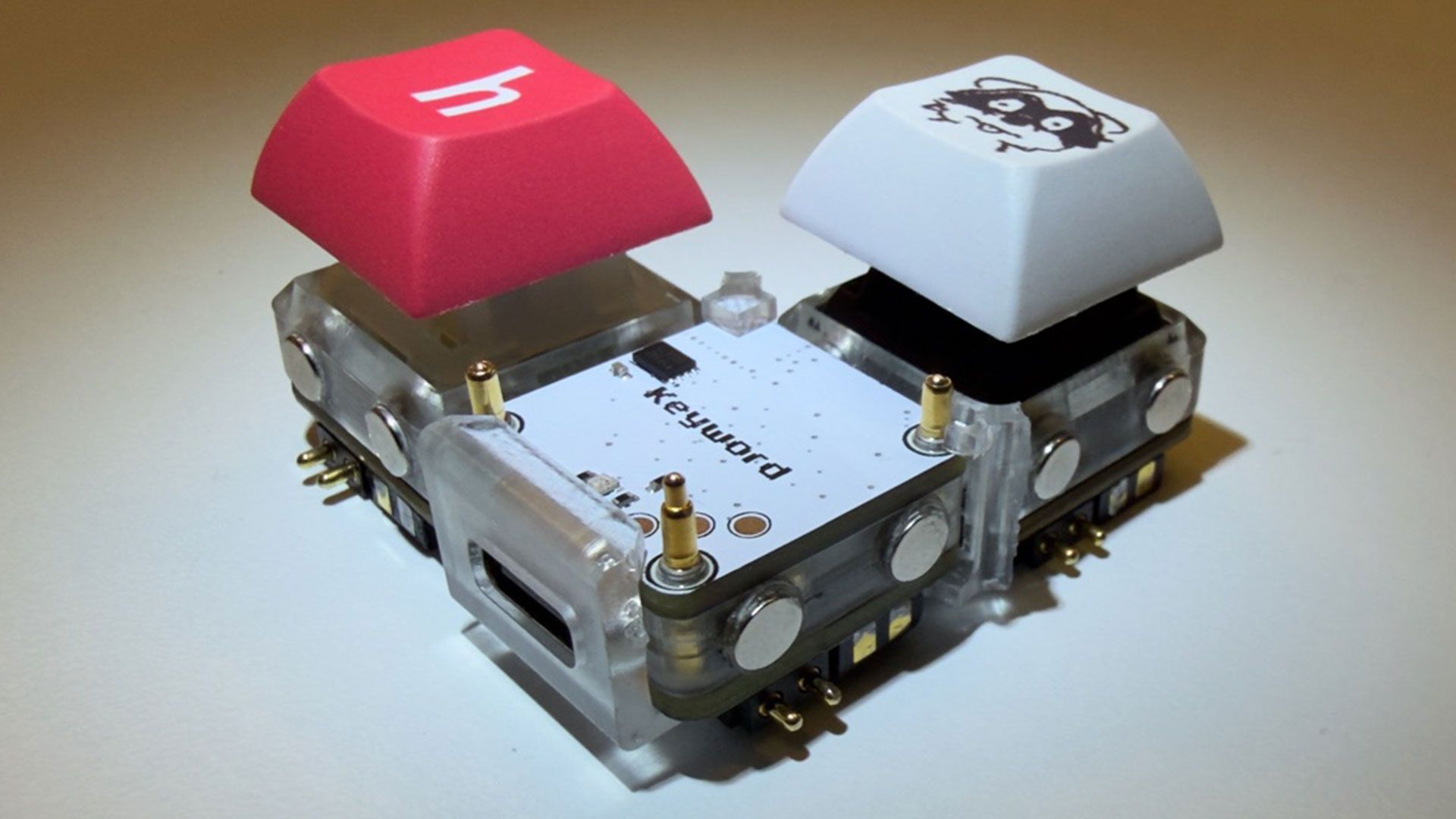
The magnetic hub-and-Keybit system grows one switch at a time, turning a keyboard into an expandable field of single-chip modules.
One key. That is the entire starting point for Keybytes, a modular keyboard project whose smallest configuration is a single magnetically attached key module — and each of those modules carries its own RISC-V microcontroller.
The design divides the board into two building blocks. A hub named Keyword anchors the system, while individual key modules, dubbed Keybits, attach to it magnetically. The defining engineering choice sits inside each Keybit: instead of one central controller handling all the keys, Keybytes gives every key module a microcontroller of its own, built on the RISC-V instruction set architecture. The project bills the outcome as a "truly modular keyboard" assembled like Legos, with customizability positioned as the ultimate goal.
Growth is literal: a build begins with a single key and expands as more Keybits snap onto the magnetic hub, letting the layout take whatever shape its owner decides.
For anyone tracking RISC-V's spread, the project is a small but pointed data point: the open instruction set architecture has now been placed inside a single keyswitch. Conventional keyboards concentrate control in one chip; Keybytes disperses it, one microcontroller per module. The stated payoff is not performance but flexibility — modules can be detached, rearranged and swapped on the hub, which is what the "ultimate in customizability" pitch amounts to in practice.
No pricing, availability or silicon specifics accompany the report. What is fixed is the concept itself: a Lego-style assembly model in which the unit of upgrade is a single key — and every key, unusually for an input device, does its own computing.
Tags: Keybytes · Keybit · RISC-V · Modular Keyboard · Microcontroller
萬安算交所 AIXX · AIXX · Verified compute exchange · Enter spot hall