2026-09-11 · Source:deep-siliconangle.com-p10
As generative and agentic applications reach production, the cost and speed of producing tokens increasingly hinge on storage latency, bandwidth, data movement and power — not GPU performance alone.
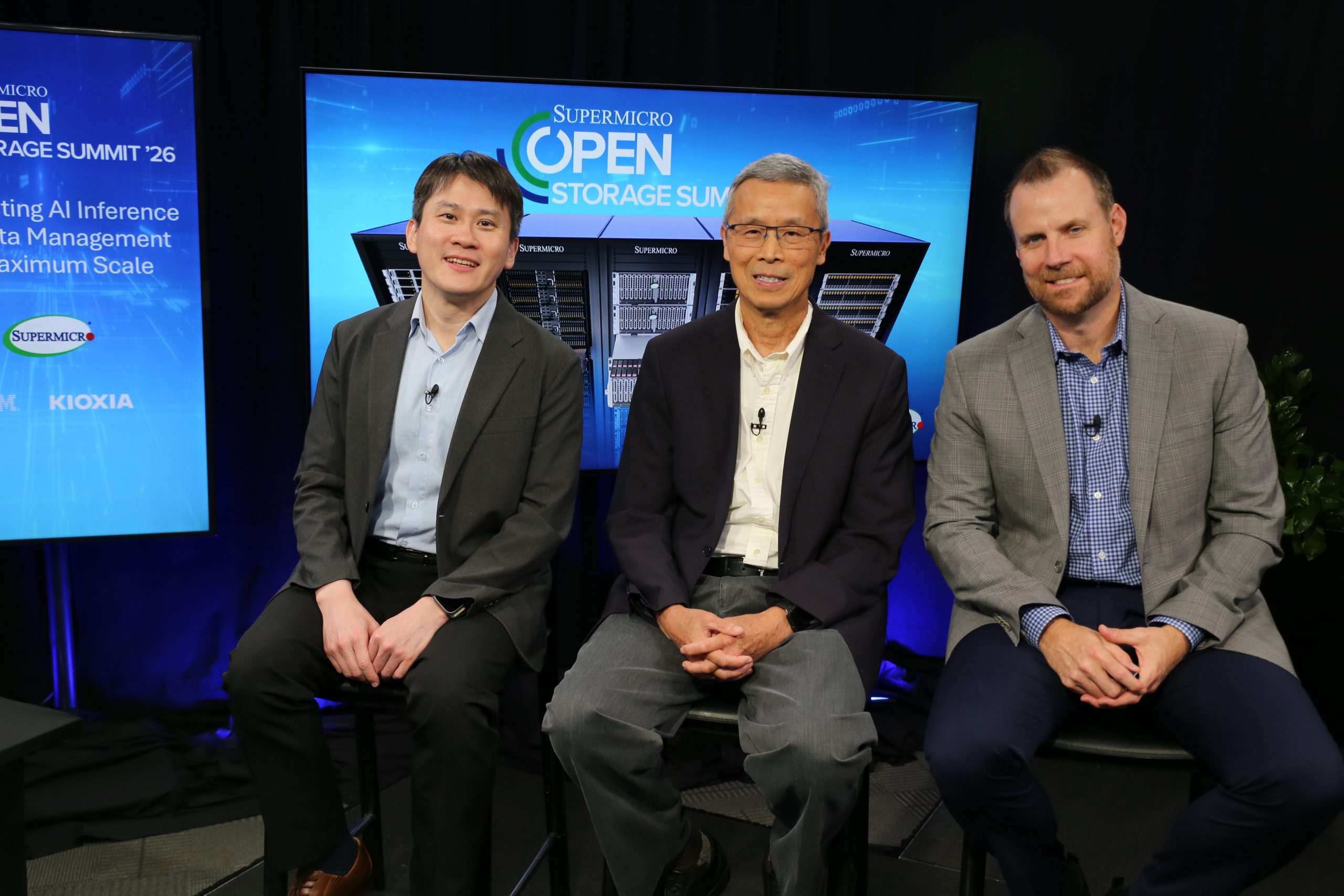
The competitive frontier in AI inference is no longer defined by accelerator silicon alone. As organizations move generative and agentic applications into production, the infrastructure challenge has widened into a system-level engineering problem in which every layer of the stack, from storage to power delivery, shapes performance outcomes. That assessment anchors recent coverage emerging from Supermicro's Open Storage Summit.
Raw GPU performance still matters, but it no longer decides inference outcomes on its own. Storage latency, network bandwidth, data movement and power consumption increasingly determine both the cost and the speed of producing tokens, the basic unit of output for inference systems. In practical terms, an underprovisioned storage tier or a congested network can throttle throughput regardless of how capable the accelerators behind them are, which is why the report frames token economics as a full-stack coordination problem rather than a chip procurement decision.
The requirements are not uniform across workloads. Interactive chat applications prioritize latency, while batch inference emphasizes a different set of operational characteristics. That divergence carries a structural implication for infrastructure planners: there is no single reference architecture for inference at scale, and design choices around storage, networking and power must be mapped to the workload profile each deployment is built to serve. A configuration tuned for real-time responsiveness will look materially different from one optimized for high-volume batch processing.
For data center operators and infrastructure buyers, the takeaway is that inference economics are now settled across the full stack rather than at the GPU datasheet. As generative and agentic workloads harden into production commitments, the operators that coordinate compute, storage, networking and power as one integrated system, rather than as separate procurement lines, are best positioned to control token costs and define the next phase of the AI buildout.
Tags: Supermicro · AI Inference · Data Center · Storage Latency · GPU · Token Economics
萬安算交所 AIXX · AIXX · Verified compute exchange · Enter spot hall